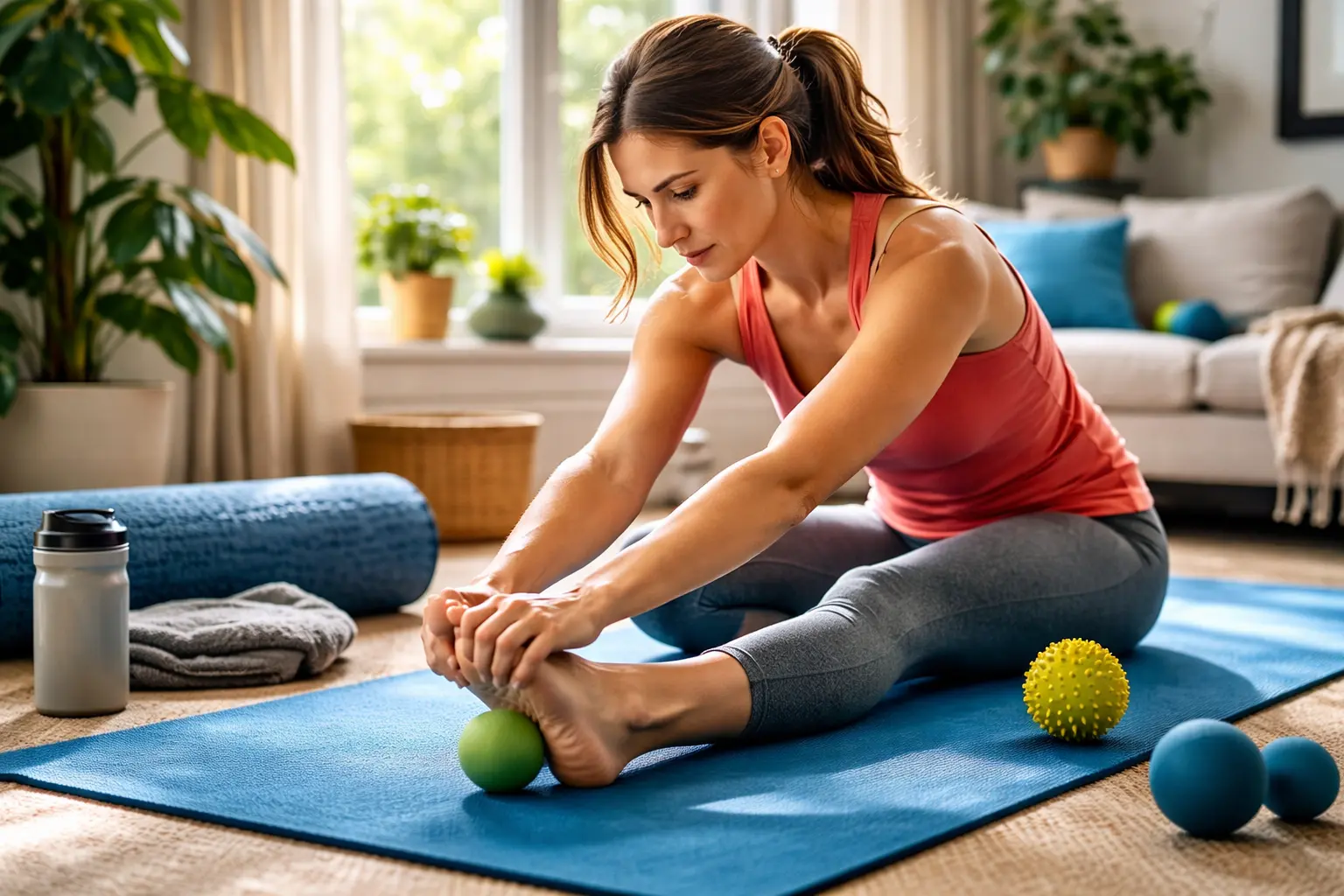
Every morning you roll out of bed and that sharp, stabbing pain shoots through your heel the moment your foot hits the floor, making even a simple walk to the kitchen feel like an obstacle course, but plantar fasciitis exercises can actually change that.
Understanding plantar fasciitis
Plantar fasciitis happens when the thick band of tissue running along the bottom of your foot becomes inflamed, creating that distinctive heel pain that often feels worse first thing in the morning or after long periods of rest. For many women, this condition develops gradually, sometimes without a clear trigger, which makes it especially frustrating. You might notice the pain starts as a mild ache and progressively worsens, particularly if you spend hours on your feet, wear unsupportive shoes, or have tight calf muscles. Understanding this condition is your first step toward relief. The plantar fascia acts like a shock absorber for your foot, so when it becomes irritated or strained, every step becomes a reminder. By learning what causes your pain and how your foot structure contributes to the problem, you can make informed decisions about which plantar fasciitis exercises will work best for your specific situation. This knowledge empowers you to take control of your healing rather than simply accepting the discomfort as permanent.
- Stretches can help improve flexibility and reduce tension in the affected area.
- Strengthening exercises can support the muscles around the heel, promoting stability.
- Low-impact activities like swimming or biking can be great alternatives to high-impact exercises.
Plantar fasciitis stretching techniques
Stretching is genuinely one of the most effective ways to manage plantar fasciitis pain, and the good news is that these exercises are simple enough to do at home without any special equipment. Start with calf stretches by standing facing a wall, placing one foot forward and one back, then gently leaning into the wall until you feel a stretch in your back leg’s calf. Hold this for 30 seconds and repeat on both sides, ideally three times daily. Towel stretches work wonderfully too: sit down, loop a towel around the ball of your foot, and gently pull the towel toward your body while keeping your leg straight, holding for 30 seconds. Toe curls are another gem, where you simply curl your toes downward as if trying to grip a small object, then release and repeat 10 times. Many women find that doing these stretches right after waking up, before getting out of bed, sets a better tone for the entire day. The key is consistency and patience, as these stretches work gradually to lengthen the plantar fascia and reduce the strain that causes your pain.
📘 Fix your day in under 2 minuteschoose where to begin:
Strength-building exercises for plantar fasciitis
While stretching addresses tightness, strengthening the muscles around your foot and ankle provides the stability needed to reduce pressure on the plantar fascia itself. Heel raises are straightforward: stand with your feet hip-width apart and slowly rise up onto your toes, hold for two seconds, then lower back down. Perform three sets of 15 repetitions, and you’ll notice your calf and foot muscles becoming stronger within a few weeks. Toe spreads involve sitting down and actively spreading your toes apart as wide as possible, holding for five seconds, then relaxing. This simple movement strengthens the intrinsic muscles of your foot that support the arch. Ankle circles are equally valuable: while sitting, lift one foot slightly off the ground and slowly rotate your ankle in circles, both clockwise and counterclockwise, for 30 seconds in each direction. Many women find that adding these strength exercises to their routine creates a noticeable difference in how their feet feel during daily activities. The stronger your supporting muscles become, the less strain falls directly on the plantar fascia, which translates to less pain and better overall foot function.
Footwear tips for plantar fasciitis relief
Your shoes matter far more than you might realize when managing plantar fasciitis, and choosing the right pair can genuinely reduce your pain without any additional effort. Look for shoes with firm arch support that keeps your foot in a neutral position rather than allowing it to roll inward or outward. Cushioning in the heel is equally important, as it absorbs impact and reduces stress on the plantar fascia with every step. Avoid high heels entirely, as they shorten your calf muscles and increase tension on the plantar fascia, making pain worse. Similarly, completely flat shoes like flip-flops or ballet flats offer no support and can aggravate symptoms significantly. Many women find that supportive athletic shoes or orthopedic sandals work best for daily wear. If you love fashion, consider brands that combine style with proper support, or invest in custom orthotics that fit inside your regular shoes. The investment in good footwear often pays dividends in pain reduction, and you might be surprised how much better your feet feel simply by making this one change to your daily routine.
Lifestyle adjustments for plantar fasciitis prevention
Beyond exercises and footwear, your overall lifestyle habits significantly influence how your plantar fasciitis progresses and whether it returns after healing. Maintaining a healthy weight reduces the overall load your feet must support with every step, which directly decreases strain on the plantar fascia. If weight is a factor for you, even modest reductions can bring noticeable pain relief. Practicing good posture throughout the day prevents compensatory stress patterns that can worsen foot pain. Avoiding prolonged periods of standing or walking without breaks gives your feet recovery time, so if your job requires long hours on your feet, try to take sitting breaks every hour. Staying hydrated and eating anti-inflammatory foods like leafy greens, fatty fish, and berries can support your body’s natural healing processes. Many women also find that applying ice to their heel for 15 minutes after activities that aggravate symptoms helps manage inflammation. Implementing these lifestyle changes alongside your plantar fasciitis exercises creates a comprehensive approach that addresses the condition from multiple angles, leading to faster recovery and better long-term foot health.
Managing plantar fasciitis effectively requires a multifaceted approach combining targeted stretching exercises, strength-building routines, proper footwear choices, and supportive lifestyle adjustments. By understanding your condition and committing to consistent practice of these plantar fasciitis exercises, you can gradually reduce pain, improve foot function, and regain the ability to move through your day without that constant heel discomfort holding you back.
Are high-impact exercises suitable for women with plantar fasciitis?
High-impact exercises can aggravate plantar fasciitis symptoms. It’s best to opt for low-impact activities like swimming or biking to reduce strain on the feet.
How often should I perform plantar fasciitis exercises?
Consistency is key when it comes to plantar fasciitis exercises. Aim to incorporate stretching and strengthening routines into your daily schedule for optimal results.
Others also read:
Disclaimer: This article is for informational purposes only and is not a substitute for professional medical advice. Always consult a healthcare professional for personal guidance.
This guide has been prepared and reviewed by the GlobalHealthBeacon editorial team and reflects current medical research as of 2026. It provides structured, evidence-based information to support informed health decisions.
