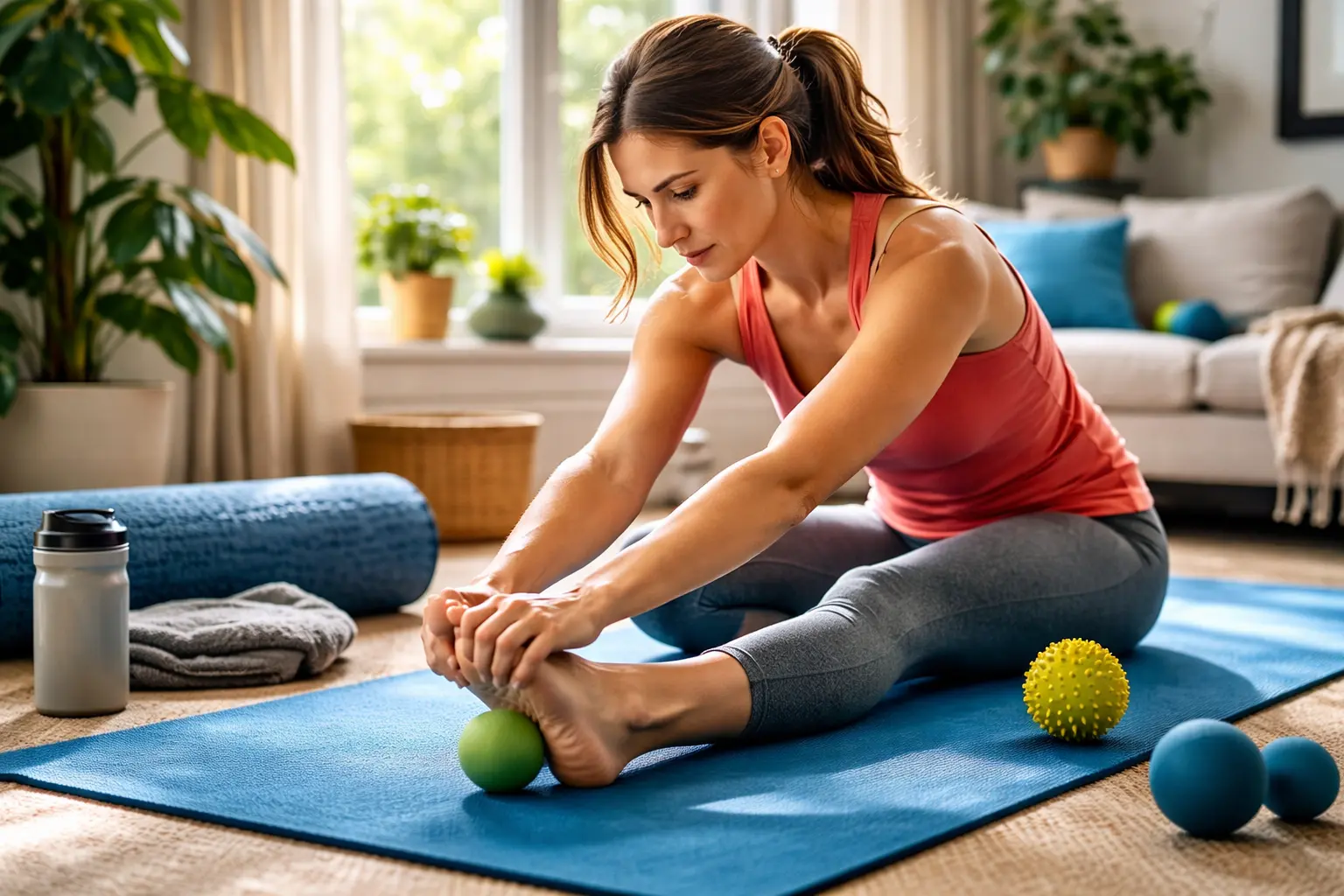
Every morning you roll out of bed and that sharp, stabbing pain shoots through your heel before your feet even hit the ground, making plantar fasciitis exercises not just helpful but absolutely necessary to reclaim your active life.
Stretching exercises for plantar fasciitis relief
Stretching is your foundation for recovery, and the good news is you can start right now without any equipment. Picture this: you wake up, and instead of limping to the bathroom, you spend two minutes on targeted stretches that loosen the tight tissues pulling on your plantar fascia. Calf stretches work by lengthening the Achilles tendon and the muscles running down your leg, which directly reduces tension on the bottom of your foot. The towel stretch is particularly effective because it isolates the plantar fascia itself. Loop a towel around the ball of your foot, sit on your bed or floor, and gently pull the towel toward your body while keeping your leg straight. Hold for 30 seconds, then release. Repeat three times per foot. Toe stretches might seem simple, but they matter more than you think. Manually pull your toes back toward your shin, holding for 15 seconds. This targets the intrinsic foot muscles that support your arch. The key mistake young adults make is rushing through stretches or skipping them entirely because they feel too basic. Consistency beats intensity here. Perform these stretches every morning before getting out of bed and again in the evening, especially after standing or activity.
- Calf stretches help alleviate the tension in the Achilles tendon, preventing strain on the plantar fascia.
- Toe stretches targeting the foot muscles can relieve tightness and improve flexibility.
- Towel stretches specifically target the plantar fascia, aiding in reducing pain and inflammation.
Strengthening exercises for plantar fasciitis recovery
Once you’ve started stretching, strengthening the small muscles in your foot becomes your next priority. These muscles act like a support system for your arch, and when they’re weak, your plantar fascia bears too much load. Marble pickups sound childish, but they work. Scatter 10 to 15 marbles on the floor, sit in a chair, and use your toes to pick them up one by one, placing them in a cup. This engages the muscles along the bottom of your foot in a functional way. Do this for five to ten minutes daily. Towel curls are equally effective. Lay a towel flat on a smooth floor, place your foot on one end, and use your toes to scrunch and curl the towel toward you. Repeat this motion for two minutes per foot. You’ll feel the muscles working immediately. Another common mistake is doing these exercises only when pain flares up. That’s backwards. Strengthening prevents flare-ups. Young adults often skip strengthening because they don’t feel the immediate relief like they do with stretching, but building arch strength is what actually allows you to return to running, hiking, or standing all day without pain returning.
📘 Fix your day in under 2 minuteschoose where to begin:
Foot rolling techniques for plantar fasciitis management
Foot rolling is the self-massage component of your recovery plan, and it feels genuinely good while providing real therapeutic benefit. A frozen water bottle works perfectly because cold reduces inflammation while the rolling action massages tight tissue. Fill a water bottle, freeze it, and roll it under your foot using moderate pressure for five to ten minutes. You’ll notice the pain often decreases immediately after rolling. A golf ball offers similar benefits with a smaller contact point, making it ideal for targeting specific tender spots along your arch. Sit in a chair, place the golf ball under your foot, and roll it slowly back and forth, pausing on any particularly tight or painful areas. The pressure should feel intense but not unbearable. Many young adults make the mistake of applying too much pressure too quickly, which can aggravate the condition. Start gentle and gradually increase pressure as tolerance improves. Rolling works best after activity or at the end of the day when inflammation peaks. The combination of cold therapy and massage improves blood flow to the area, which accelerates healing and reduces swelling naturally.
Supportive footwear and orthotic inserts
Your shoes matter more than you might realize, and this is where many young adults unknowingly sabotage their recovery. Wearing flat shoes, minimalist sneakers, or shoes without arch support forces your plantar fascia to work overtime, essentially undoing all the stretching and strengthening you’re doing. Invest in shoes with genuine arch support and cushioning in the heel. Look for shoes with a slight heel lift, which reduces tension on the plantar fascia. Brands that prioritize foot support often cost more upfront, but they’re worth it because they directly impact your healing timeline. Custom orthotic inserts take this further by providing personalized arch support tailored to your foot’s unique shape. A podiatrist can create custom orthotics, or you can start with over-the-counter inserts designed for plantar fasciitis. The key is consistency. Wear supportive shoes during all waking hours, not just when pain is severe. Young adults often make the mistake of switching back to unsupportive shoes once pain improves, which triggers a relapse. Think of supportive footwear as part of your treatment plan, not a temporary measure.
Rest and ice for plantar fasciitis symptom relief
Rest doesn’t mean complete inactivity. It means being strategic about how much stress you place on your feet while healing occurs. If you’ve been standing for hours or did an intense workout, your feet need recovery time. Reduce high-impact activities like running or jumping for a few weeks, but continue low-impact movement like walking or swimming. This keeps you active while protecting your plantar fascia from further strain. Ice is your anti-inflammatory tool, and timing matters. Apply an ice pack for 15 to 20 minutes after activity or whenever pain flares up. You can use a commercial ice pack, a bag of frozen peas, or that frozen water bottle you’re already rolling under your foot. The cold reduces swelling and numbs pain temporarily, giving you relief while your body heals. A common mistake young adults make is icing only when pain is severe. Preventive icing after activity, even when you feel fine, reduces inflammation before it builds up. Elevate your feet when resting to further reduce swelling. The combination of rest, ice, and the other exercises creates a comprehensive recovery environment that addresses pain, inflammation, and the underlying weakness simultaneously.
Effective plantar fasciitis exercises include stretching, strengthening, foot rolling techniques, supportive footwear, and rest with ice applications. These exercises aim to alleviate pain, improve flexibility, and promote healing naturally.
Can plantar fasciitis exercises cure the condition?
While exercises can help manage symptoms and promote healing, they may not provide a definitive cure for plantar fasciitis. Consistent exercise as part of a comprehensive treatment plan can aid in symptom relief and prevention.
How often should I perform these exercises?
It’s recommended to perform these exercises daily, ensuring proper form and technique to avoid further strain. Consult with a healthcare professional for personalized guidance based on your condition and needs.
Others also read:
Disclaimer: This article is for informational purposes only and is not a substitute for professional medical advice. Always consult a healthcare professional for personal guidance.
This guide has been prepared and reviewed by the GlobalHealthBeacon editorial team and reflects current medical research as of 2026. It provides structured, evidence-based information to support informed health decisions.
