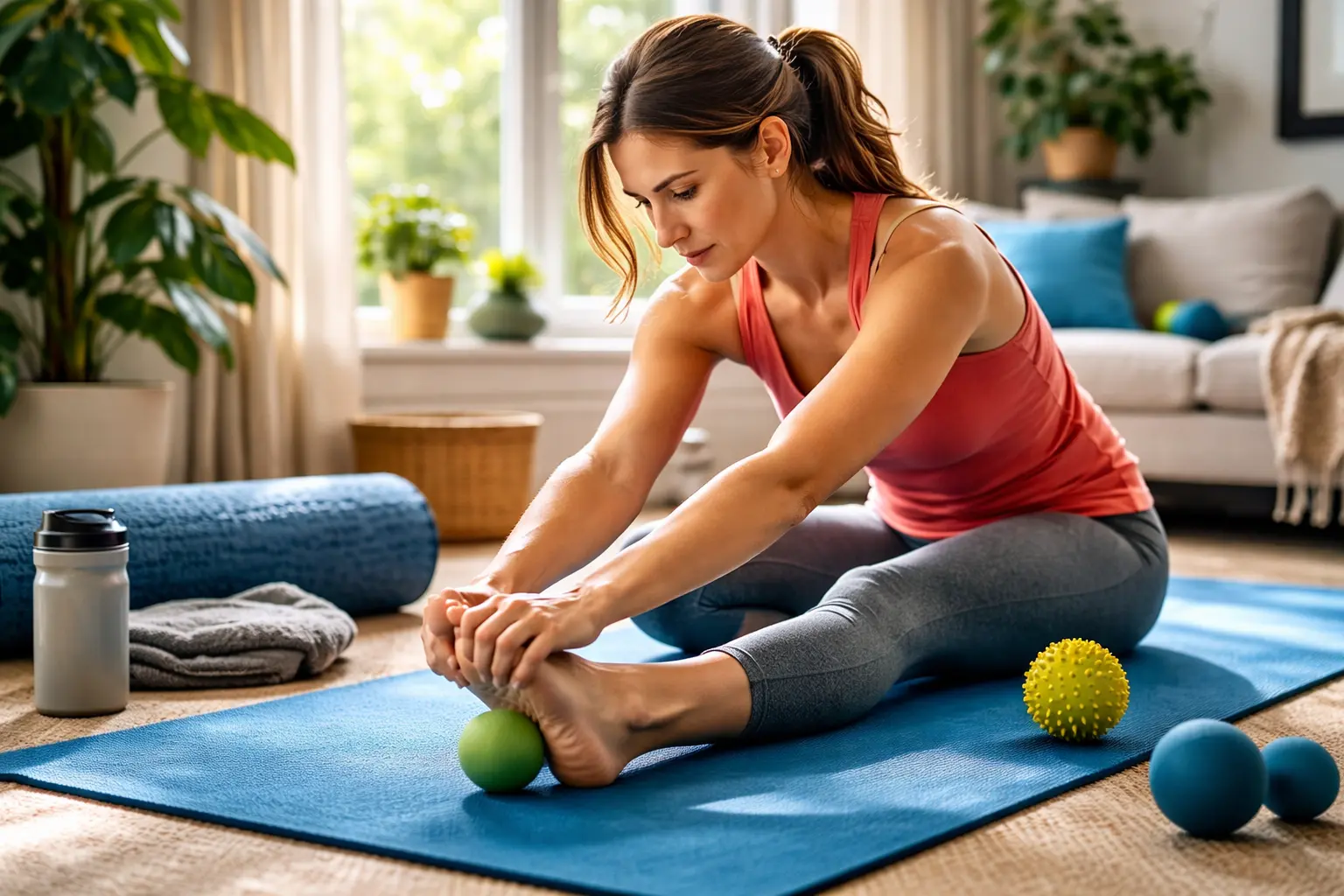
Every morning you roll out of bed and that sharp, stabbing pain shoots through your heel before your feet even touch the floor, making plantar fasciitis exercises feel like the only lifeline between you and actually enjoying your day again.
Stretching exercises for plantar fasciitis relief
Stretching is foundational to managing plantar fasciitis because tight muscles and connective tissue create constant tension on your heel. Think of your plantar fascia like a rubber band that’s been pulled too tight for too long. When you perform toe curls, you’re actively engaging the muscles along the bottom of your foot, teaching them to lengthen and release. Calf stretches work differently but equally important: your calf muscle connects directly to your Achilles tendon, which pulls on your heel. If your calves are tight, they create a domino effect of tension down to your plantar fascia. The towel stretch is particularly effective because you can do it while sitting, making it accessible even on mornings when your foot is most painful. Start by placing a rolled towel under the arch of your foot and gently pulling the ends toward you, feeling that deep stretch along the bottom of your foot. Most women find that doing these stretches for five to ten minutes each morning, before getting out of bed, significantly reduces that first-step pain that makes mornings miserable.
- Toe curls help strengthen the arch of your foot and alleviate strain on the plantar fascia.
- Calf stretches target the Achilles tendon, promoting better mobility and lessening pressure on the heel.
- The towel stretch stretches the bottom of the foot, offering relief from tightness and discomfort.
Strengthening exercises for plantar fasciitis recovery
Building strength around your foot and ankle creates a protective support system that reduces the load on your plantar fascia. Heel raises might seem simple, but they’re transformative: stand with your feet hip-width apart and slowly rise onto your toes, holding for two seconds before lowering back down. This exercise strengthens your calf muscles and the intrinsic muscles of your foot that naturally support your arch. Marble pickups are deceptively effective and oddly satisfying. Sit in a chair, place a small pile of marbles on the floor in front of you, and use your toes to pick them up one by one, dropping them into a cup. This engages the smaller muscles along the bottom of your foot that often get overlooked in typical exercise routines. Ankle circles involve rotating your ankle in slow, controlled movements in both directions, which improves proprioception and strengthens the stabilizer muscles around your ankle joint. Women often notice that after two to three weeks of consistent strengthening, their feet feel more stable during daily activities like walking or standing at work, reducing the compensatory pain that develops when your foot isn’t properly supported.
📘 Fix your day in under 2 minuteschoose where to begin:
Foot massage and self-care strategies
Self-care for plantar fasciitis extends beyond exercises into daily habits that either support or sabotage your healing. Regular foot massage using your thumbs or a massage ball increases blood flow to the affected area, delivering oxygen and nutrients that promote tissue repair. Many women find that using a frozen water bottle or massage ball and rolling it under their arch for five to ten minutes provides immediate relief while also gently stretching the plantar fascia. Ice packs are particularly helpful after activities that aggravate your symptoms, reducing inflammation that builds up throughout the day. Equally important is choosing supportive footwear: avoid flat shoes, flip-flops, or high heels that either lack arch support or create excessive tension. Look for shoes with built-in arch support and cushioning in the heel. At home, consider wearing supportive slippers rather than going barefoot, which puts additional strain on your plantar fascia. Some women also benefit from nighttime stretches or wearing a night splint that keeps the plantar fascia gently stretched while sleeping, preventing the tightness that develops overnight and causes that painful first step in the morning.
Low-impact exercises to support healing
While you’re managing plantar fasciitis, you don’t have to abandon fitness entirely. Low-impact activities like swimming and water aerobics are ideal because water supports your body weight, eliminating the impact that aggravates your heel. The resistance of water also provides strengthening benefits without the jarring forces of running or jumping. Cycling on a stationary bike keeps your cardiovascular fitness intact while your feet remain in a controlled position with minimal stress on the plantar fascia. Elliptical machines offer another excellent option because they eliminate the impact of running while still providing cardiovascular benefits. Walking is acceptable if done mindfully: wear supportive shoes, walk on even surfaces, and keep distances reasonable. Many women find that starting with fifteen to twenty minute walks and gradually increasing duration works well. Yoga and Pilates, when modified appropriately, can maintain flexibility and core strength without aggravating your foot. The key is choosing activities that don’t cause pain during or after exercise. If an activity hurts, it’s working against your healing rather than supporting it. Most healthcare providers recommend continuing some form of movement to maintain overall fitness while your foot heals, typically three to four times per week.
Incorporating orthotic inserts for added support
Orthotic inserts function as external support for your foot’s arch, reducing the strain on your plantar fascia throughout the day. Over-the-counter orthotics range from simple arch supports to more comprehensive insoles designed specifically for plantar fasciitis. These work by redistributing pressure across your foot more evenly and providing additional cushioning to your heel. For some women, over-the-counter options provide sufficient relief, while others benefit from custom orthotics created by a podiatrist or orthopedic specialist based on your specific foot structure and gait pattern. Custom orthotics are more expensive but tailored precisely to your needs, addressing any biomechanical issues that contributed to developing plantar fasciitis in the first place. When selecting inserts, look for ones that provide firm arch support without being uncomfortable, as you’ll be wearing them in your shoes throughout the day. Many women report that combining proper orthotics with the stretching and strengthening exercises mentioned earlier creates a synergistic effect, with each component supporting the others. Your healthcare provider can assess your foot structure and recommend whether over-the-counter or custom orthotics would benefit you most, and they can also rule out other conditions that might mimic plantar fasciitis symptoms.
Plantar fasciitis exercises emphasize stretching, strength-building, self-care, and low-impact activities to alleviate pain and promote healing. Orthotic inserts can offer added support for enhanced relief.
How often should I perform these exercises for plantar fasciitis?
Consistency is key. Aim to perform the exercises daily or as recommended by your healthcare provider to experience improvements in pain and mobility.
Can plantar fasciitis exercises completely eliminate foot pain?
While exercises can significantly reduce pain and discomfort, individual results may vary. It’s essential to complement exercises with proper footwear and lifestyle adjustments for optimal relief.
Others also read:
Disclaimer: This article is for informational purposes only and is not a substitute for professional medical advice. Always consult a healthcare professional for personal guidance.
This guide has been prepared and reviewed by the GlobalHealthBeacon editorial team and reflects current medical research as of 2026. It provides structured, evidence-based information to support informed health decisions.
