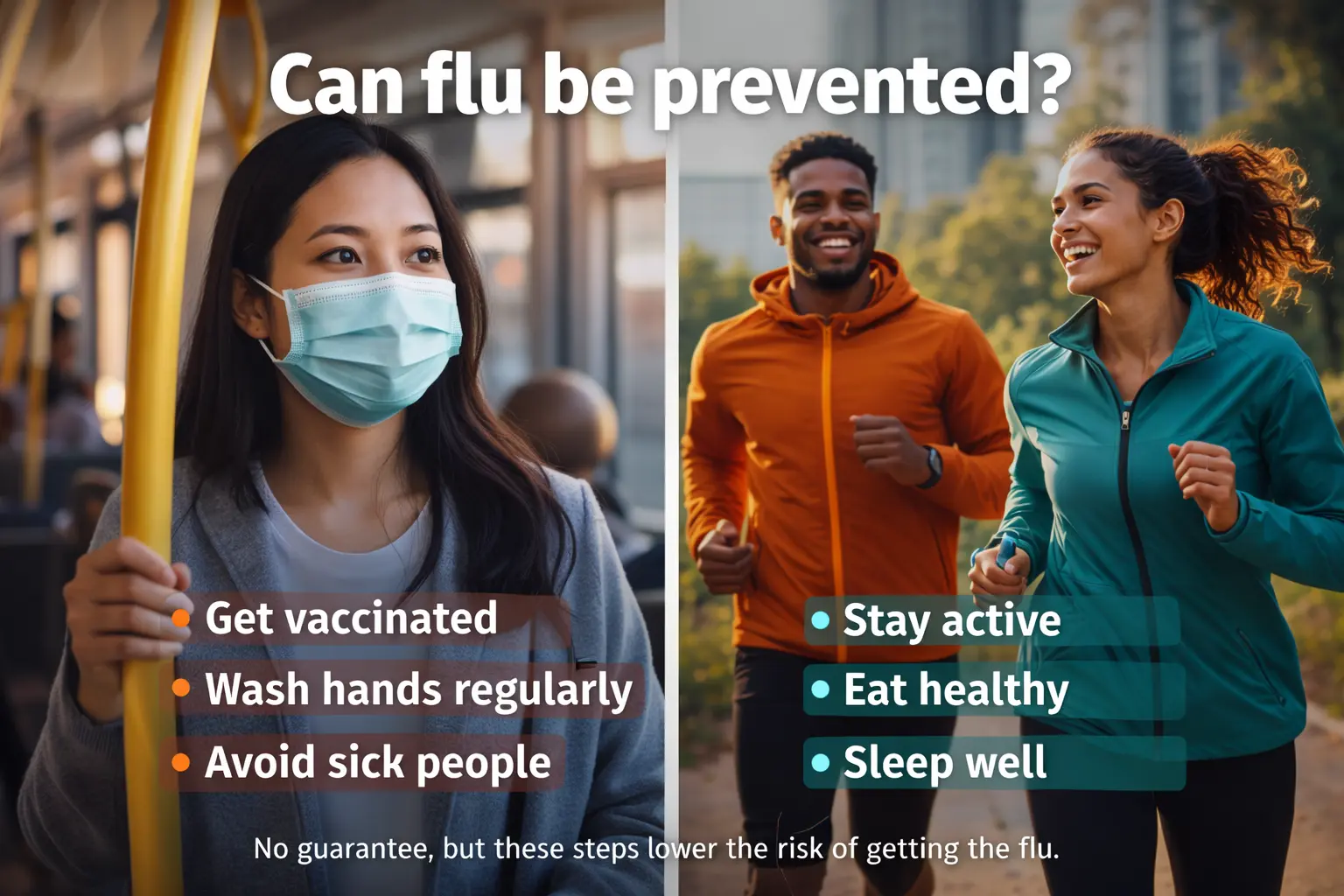
You wake up feeling like your body has been hit by a truck, your throat is on fire, and suddenly you realize you’re stuck in bed for a week when you had plans, parties, and a life to live, but here’s the thing: can flu be prevented, or are you just destined to catch it every season like clockwork?
Understanding the flu virus
The influenza virus operates through a surprisingly efficient transmission system that thrives in environments where young adults naturally congregate. When an infected person coughs or sneezes, they release respiratory droplets containing viral particles that can travel several feet through the air and land on surfaces or directly into another person’s respiratory tract. Beyond airborne transmission, the virus can also survive on contaminated surfaces like doorknobs, phones, and shared gym equipment for hours, creating a hidden risk in everyday environments. Young adults face particular vulnerability because their active lifestyles involve frequent social interaction, shared living spaces in dormitories or apartments, and regular exposure in gyms, public transportation, and workplaces. Consider a typical scenario: a college student attends a crowded party on Friday evening, unknowingly exposed to the virus through close contact with an infected friend, then returns to their dorm where they share bathrooms and common areas with dozens of other students. Within 24 to 48 hours, the virus begins replicating in their respiratory cells, and by day three, they’re contagious to everyone around them.
Key factors in flu prevention
Effective flu prevention relies on understanding how the virus spreads and implementing targeted strategies to interrupt that transmission chain. Regular handwashing serves as a critical first line of defense because it physically removes viral particles from your hands before they can enter your body through your mouth, nose, or eyes. The science is straightforward: soap breaks down the lipid membrane that surrounds the influenza virus, essentially destroying it. Annual flu vaccination works differently by training your immune system to recognize and respond to specific flu strains circulating that season, reducing both the likelihood of infection and the severity of illness if breakthrough infection occurs. Respiratory hygiene practices, such as covering your cough with your elbow rather than your hand and maintaining distance from sick individuals, prevent you from becoming a vector for transmission. These measures work synergistically, not independently. A young adult who gets vaccinated but neglects handwashing in a crowded environment still faces significant risk, while someone who practices excellent hygiene but skips vaccination lacks the specific immune preparation needed to fight the virus effectively.
Effective flu prevention strategies
Annual flu vaccination represents the most evidence-supported prevention strategy available, with research consistently showing that vaccinated individuals experience 40 to 60 percent reduction in infection risk compared to unvaccinated peers, depending on the season and strain match. The vaccine works by exposing your immune system to inactivated or weakened viral components, allowing your body to develop antibodies and memory cells that recognize the virus if you encounter it later. For young adults specifically, vaccination also provides community protection because lower infection rates mean fewer people spreading the virus to vulnerable populations like elderly relatives or immunocompromised friends. Practicing rigorous handwashing for at least 20 seconds with soap and water, especially before eating and after being in public spaces, physically removes viral particles before they can establish infection. Beyond these primary strategies, supporting your immune system through consistent sleep patterns, regular physical activity, and a nutrient-dense diet containing adequate protein, vitamin C, and zinc creates a physiological environment where your body can mount an effective immune response if exposed to the virus. A young adult who maintains these habits experiences faster recovery times and milder symptoms compared to peers who neglect these foundational health practices.
- Get vaccinated annually before flu season begins
- Practice regular handwashing with soap and water for at least 20 seconds
- Boost your immune system through consistent sleep, exercise, and balanced nutrition
🔬 Science-backed benefits in 2 minuteschoose where to begin:
The role of antiviral medications
Antiviral medications like oseltamivir (Tamiflu) and zanamivir represent a second line of defense when prevention fails and infection occurs. These drugs work by inhibiting viral neuraminidase, an enzyme that allows newly replicated virus particles to escape infected cells and spread to neighboring cells, essentially slowing viral replication and allowing your immune system to catch up. The critical timing factor cannot be overstated: these medications are most effective when started within 48 hours of symptom onset, which means recognizing early flu symptoms like sudden fever, body aches, and fatigue becomes important for young adults. A typical scenario involves a young adult who feels unwell on a Tuesday morning, contacts their healthcare provider that day, receives a prescription, and begins treatment by Tuesday evening, potentially reducing illness duration from seven days to five days and decreasing symptom severity significantly. However, antivirals are not preventive medications for healthy individuals and carry their own side effects, making vaccination and hygiene practices the preferred first-line approach. Healthcare providers reserve antivirals primarily for individuals at higher risk of complications or those with confirmed flu infection seeking to minimize illness duration.
Understanding flu prevention in young adults
Young adults occupy a unique position in flu epidemiology because they serve simultaneously as vectors for transmission and as individuals with relatively low personal risk of severe complications. This dual role creates both responsibility and opportunity. When a 22-year-old college student gets vaccinated, they protect not only themselves but also their elderly grandparents they visit on weekends, their immunocompromised roommate, and the broader community around them. The concept of herd immunity becomes tangible when you understand that if 70 to 80 percent of a population is immune through vaccination, the virus struggles to find new hosts and transmission chains break down. Young adults who follow recommended prevention strategies and seek prompt medical evaluation when symptoms develop create a protective barrier around vulnerable populations. This perspective shifts flu prevention from a purely personal health decision into a community health responsibility. By staying informed about current flu activity in your area, recognizing early symptoms in yourself and others, and taking appropriate action, you become an active participant in reducing seasonal flu burden across your entire social network.
The future of flu prevention science
Current research in virology and immunology is advancing toward more effective flu prevention tools that could transform how young adults approach seasonal illness. Scientists are developing universal flu vaccines designed to provide broader protection across multiple flu strains and seasons, potentially reducing the need for annual vaccination updates. Nasal spray vaccines and other novel delivery methods are being refined to improve immune response and convenience compared to traditional injections. Real-time surveillance systems now track flu virus evolution globally, allowing vaccine manufacturers to select strains with greater accuracy for upcoming seasons. Emerging research on immune system optimization explores how specific micronutrients, sleep patterns, and stress management directly influence flu susceptibility and recovery speed. For young adults specifically, staying informed about these advancements through reputable health sources enables more sophisticated personal health decisions. Understanding that flu prevention science continues to evolve, with new tools and strategies regularly emerging, empowers you to adapt your approach as evidence accumulates and new options become available.
Flu prevention for young adults integrates multiple evidence-based strategies working together: annual vaccination provides specific immune preparation, consistent handwashing and respiratory hygiene interrupt transmission pathways, and supporting immune function through sleep, exercise, and nutrition creates physiological resilience. Antiviral medications offer a secondary option when infection occurs within the critical 48-hour treatment window. Young adults play a crucial community role by protecting vulnerable populations through their prevention choices. Staying informed about evolving flu prevention science enables you to make decisions that protect both your health and the health of those around you.
Can the flu vaccine give you the flu?
No, the flu vaccine cannot cause flu infection. The inactivated flu vaccine contains killed virus components that cannot replicate, while the live attenuated vaccine uses weakened virus that cannot cause illness in healthy individuals. Your immune system may produce mild reactions like arm soreness or low-grade fever as it builds protection, but this is not the flu.
How long does the flu vaccine protection last?
Flu vaccine protection typically lasts for one flu season, which is why annual vaccination is recommended. Immunity wanes over months, and new flu strains emerge each season, making yearly vaccination necessary to maintain optimal protection against circulating viruses.
Others also read:
Disclaimer: This article is for informational purposes only and is not a substitute for professional medical advice. Always consult a healthcare professional for personal guidance.
This article has been prepared and reviewed by the GlobalHealthBeacon editorial team and is based on current medical research and published scientific literature available in 2026. It provides structured, evidence-based information to support informed health decisions.
