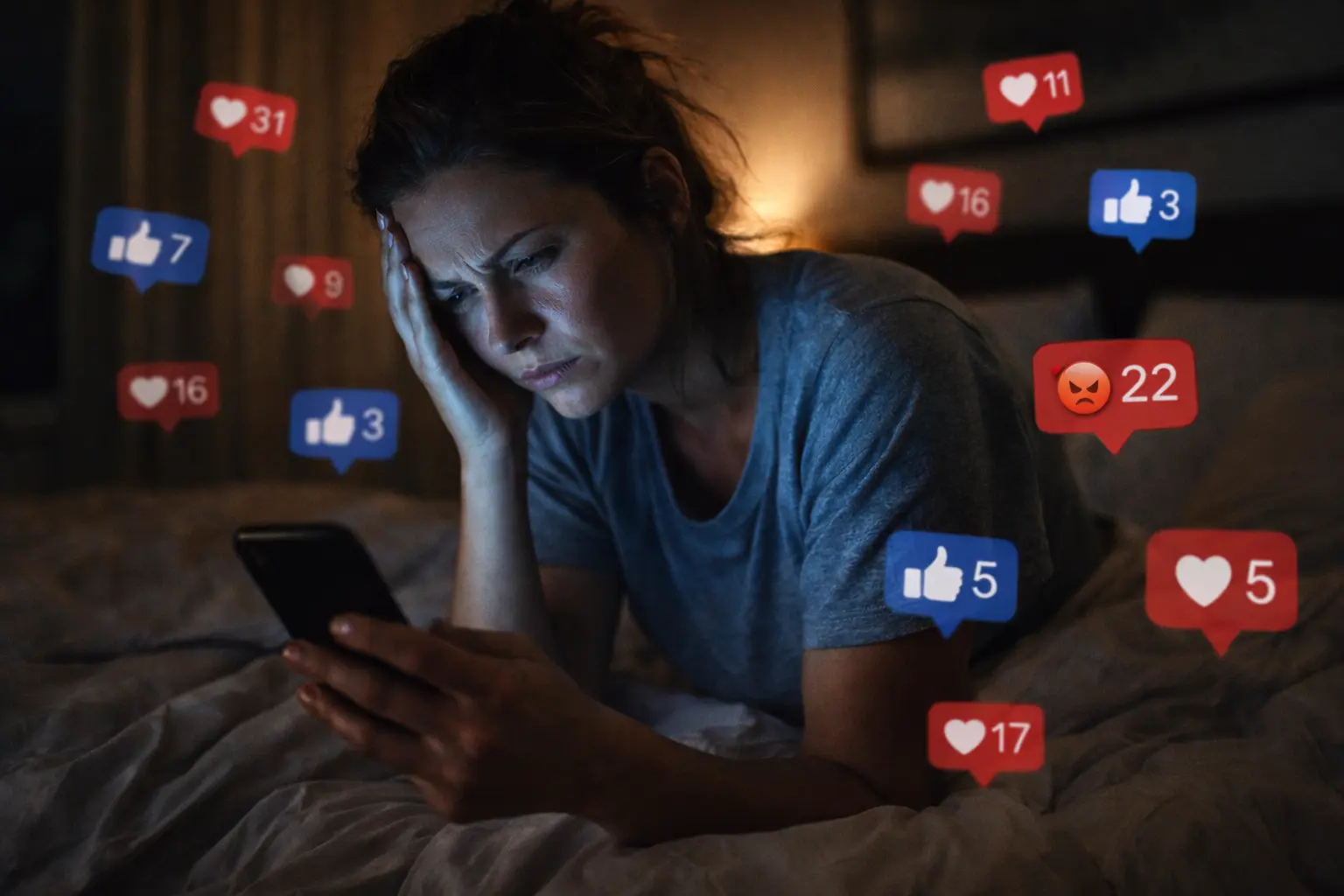
You know that hollow feeling when you scroll past someone’s perfect vacation photos for the hundredth time, or catch yourself doom-scrolling at 2 AM when you should be sleeping, and suddenly realize why social media harms health in ways that go way deeper than just wasted time.
Mental health: the consequences of likes and filters
Picture this: you’re lying in bed, refreshing your feed one more time, and there it is. Your friend’s flawless selfie with 500 likes already. Your brain does the math instantly. Why don’t your photos get that kind of attention? The endless comparison game on social media chips away at self-esteem in ways that feel almost invisible until one day you realize you’re anxious about how you look. Seeing idealized versions of other people’s lives, filtered and edited to perfection, creates a false standard that nobody can actually meet. You start feeling inadequate, like something’s wrong with you. Influencers set beauty ideals that are literally impossible. Celebrities show highlight reels, not real life. And your brain, wired to compare, starts believing that gap between their curated content and your reality is somehow your fault. The pressure to conform, to look right, to say the right thing, to be interesting enough, builds quietly until it becomes anxiety you can’t quite name.
- Constant comparison with others’ curated lives
- Pressure to conform to beauty ideals
- Unrealistic standards set by influencers and celebrities
Physical well-being: the sedentary scroll syndrome
Hours blur together when you’re scrolling. You meant to check your phone for five minutes before bed. Now it’s been an hour, your neck hurts from looking down, and your sleep is shot. Excessive social media use creates a cascade of physical problems that sneak up on you. Your posture suffers as you hunch over your screen. Your eyes strain from the blue light. Your sleep patterns get disrupted because your brain stays wired and alert when it should be winding down. Meanwhile, you’re sitting. Just sitting. Physical activity drops because the couch feels like the only place you want to be when you’re doom-scrolling. Your body gets stiff, your metabolism slows, and you feel more tired even though you haven’t done anything. It’s not laziness. It’s the way social media pulls you into a sedentary trap where movement feels impossible and rest never actually feels restful because your mind is still racing through feeds.
💬 Ready to feel better in 2 minutes?choose where to begin:
Relationships: the virtual vs. real connection dilemma
You’re sitting with friends, but everyone’s on their phone. You’re texting someone constantly online, but when you see them in person, the conversation feels flat. Social media promises connection, and it delivers something, but it’s not quite real. Virtual interactions feel easier because there’s a screen between you and the risk of being truly seen. You can craft your message, delete it, rewrite it. In real life, you can’t. The dependency on online communication starts to erode the quality of face-to-face relationships. Authentic connection requires vulnerability, presence, and the messy unpredictability of real human interaction. Social media trains you to curate and control. Real relationships demand surrender. Over time, you might notice you feel more isolated even though you have hundreds of online friends. The connections feel hollow. You’re missing the depth that comes from sitting across from someone and just being together, without performing.
Productivity: the distraction of endless notifications
You’re trying to focus on work or study. Your phone buzzes. Just one notification. You check it. Suddenly you’re in a rabbit hole of likes, comments, and messages. Thirty minutes gone. The constant buzz from notifications hijacks your attention in a way that’s almost impossible to resist. Your brain gets trained to expect and crave that dopamine hit from each ping. Multitasking between social media and actual tasks destroys your ability to focus deeply on anything. Your efficiency plummets. Your stress levels spike because you’re never fully present with what you’re doing. Part of your brain is always wondering what’s happening online. You feel scattered, unfocused, and increasingly anxious about falling behind because you can’t seem to concentrate long enough to actually accomplish anything meaningful. The notifications aren’t just distracting. They’re rewiring how your brain works, making it harder to sustain attention on things that matter.
Social media’s influence on health goes beyond just screen time. It affects mental health, physical well-being, relationships, and productivity. Recognizing these impacts can empower young adults to take steps towards a healthier relationship with social media.
Can social media impact mental health negatively?
Yes, constant comparison and exposure to idealized images on social media can contribute to feelings of inadequacy and anxiety, affecting mental health.
How can I reduce the negative effects of social media on my well-being?
Setting boundaries, limiting screen time, and curating a positive feed that promotes self-acceptance can help mitigate the negative impact of social media on your overall well-being.
Others also read:
Disclaimer: This article is for informational purposes only and is not a substitute for professional medical advice. Always consult a healthcare professional for personal guidance.
This article presents an experience-based perspective and has been reviewed by the GlobalHealthBeacon editorial team in 2026. It provides structured, evidence-based information to support informed health decisions.
