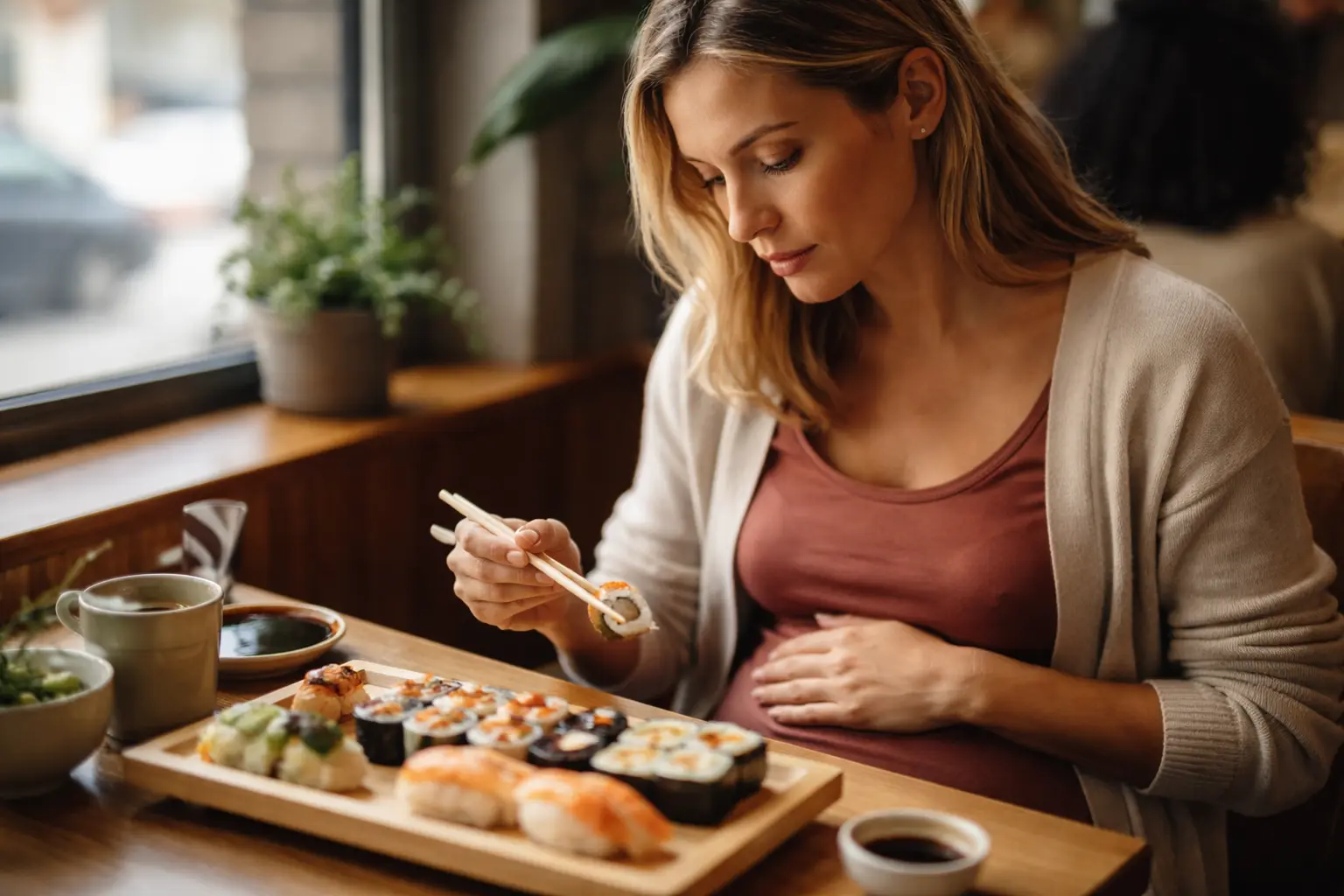
You’re craving sushi but suddenly every pregnancy forum has you second-guessing which sushi to eat when pregnant, and honestly, the conflicting advice is making you anxious about what’s actually safe to enjoy.
Understanding safe sushi options
When you’re pregnant, your body’s immune system shifts to protect your developing baby, which means certain foods require extra consideration. Low-mercury seafood like salmon and shrimp become your allies during this time. Salmon, rich in omega-3 fatty acids, supports fetal brain development and reduces inflammation in your body. Shrimp offers lean protein without the mercury accumulation found in larger predatory fish. Think of it this way: smaller fish and those lower on the food chain haven’t had time to accumulate as much mercury in their tissues. A practical example is choosing a California roll with cooked shrimp over a spicy tuna roll. The science here is straightforward. Mercury crosses the placental barrier and can affect your baby’s developing nervous system. By selecting seafood varieties that naturally contain lower mercury levels, you’re making a choice that aligns with your body’s changing nutritional needs while minimizing exposure to heavy metals.
Avoiding risky sushi varieties
High-mercury fish like swordfish, king mackerel, and tilefish represent the upper tier of mercury-accumulating seafood. These large predatory fish consume smaller fish throughout their lifespans, concentrating mercury in their tissues over decades. When you consume them during pregnancy, that accumulated mercury enters your bloodstream and crosses into your baby’s developing brain tissue. The concern isn’t theoretical. Mercury interferes with neurological development, potentially affecting cognitive function, motor skills, and language development. Imagine a young adult who struggles with attention or fine motor coordination, and trace it back to prenatal mercury exposure. That’s the real-world impact. Beyond mercury, raw fish carries additional risks including potential bacterial contamination like Listeria, which can cause miscarriage or serious infection. Your healthcare provider likely mentioned this, but it’s worth understanding why. During pregnancy, your immune system is intentionally suppressed to prevent rejection of your baby, making you more vulnerable to foodborne pathogens. Avoiding these high-risk varieties isn’t about restriction; it’s about protecting your baby’s neurological future.
Choosing cooked sushi alternatives
Cooked sushi opens up a world of safe, delicious options you might not have considered. California rolls with imitation crab (which is cooked) and avocado deliver satisfying flavors without raw fish concerns. Tempura shrimp rolls offer crispy texture and protein. Spicy mayo-based rolls with cooked ingredients provide that umami satisfaction you’re craving. Here’s a practical scenario: you’re at a restaurant with friends, and everyone’s ordering traditional sushi. You request a custom roll with cooked shrimp, cucumber, avocado, and spicy mayo. It arrives looking just as appealing as their plates, tastes incredible, and you avoid any risk. The beauty of cooked sushi is that heat eliminates both bacterial and parasitic concerns while preserving nutritional value. Vegetables like cucumber, avocado, and pickled ginger add fiber, healthy fats, and digestive support. Vegetarian rolls become surprisingly satisfying when you focus on texture variety. Sweet potato tempura rolls, asparagus rolls, and cucumber rolls with sesame seeds offer complete meals. Many young adults discover they actually prefer cooked options for their texture and flavor complexity. The key is communicating clearly with chefs about your needs and being specific about ingredients.
- Select sushi rolls that include fully-cooked ingredients like tempura shrimp, cooked crab, or grilled vegetables.
- Avoid sushi with raw fish, high-mercury seafood, or unpasteurized ingredients that could harbor harmful bacteria.
- Enjoy vegetarian sushi options like avocado, cucumber, sweet potato tempura, or asparagus rolls for added variety and fiber.
🔬 Science-backed benefits in 2 minuteschoose where to begin:
Nutritional benefits of pregnancy-friendly sushi
Pregnancy-safe sushi choices deliver a remarkable nutritional profile that supports both your health and your baby’s development. Cooked salmon provides omega-3 fatty acids that reduce pregnancy complications and support fetal brain development. Shrimp offers selenium, a mineral crucial for thyroid function and immune support during pregnancy. Vegetables in sushi rolls contribute folate, which prevents neural tube defects and supports DNA synthesis. Avocado delivers potassium, helping regulate blood pressure and fluid balance as your blood volume increases during pregnancy. Rice provides carbohydrates for sustained energy, which matters when pregnancy fatigue hits hard. Nori seaweed contains iodine, essential for fetal thyroid development. When you choose a well-constructed sushi meal, you’re not just eating; you’re assembling a nutrient-dense package. Consider a typical cooked sushi dinner: California roll with shrimp, vegetable tempura roll, and cucumber roll. You’ve consumed protein, healthy fats, carbohydrates, vitamins, minerals, and fiber in one satisfying meal. This nutritional density matters because pregnancy increases your caloric and micronutrient needs. Sushi becomes a practical vehicle for delivering these nutrients in a format that’s often more appealing than traditional prenatal meals.
Dining out safely while pregnant
Restaurant dining while pregnant requires a shift in how you communicate your needs. Most sushi chefs understand pregnancy restrictions and appreciate clear communication. When you arrive, don’t just order; explain that you’re pregnant and need cooked ingredients only. Specify no raw fish, no high-mercury varieties, and confirm that ingredients are fresh and properly handled. A real-world example: you’re at a trendy sushi spot with your partner. You tell your server you’re pregnant and ask the chef to prepare a custom roll with cooked shrimp, avocado, cucumber, and spicy mayo. The chef accommodates enthusiastically because you’ve been clear and specific. This transparency prevents miscommunication that could compromise your safety. Ask about ingredient sourcing if the restaurant seems uncertain about mercury content. Reputable establishments track their seafood origins. Avoid all-you-can-eat sushi restaurants during pregnancy because quality control and ingredient freshness become harder to verify. Choose restaurants where you can see the preparation area or where staff can answer detailed questions about ingredients. Trust your instincts. If something feels off or staff seems dismissive of your concerns, leave and find another restaurant. Your peace of mind matters as much as the meal itself.
Making informed sushi choices for a healthy pregnancy
The science of safe sushi during pregnancy boils down to understanding mercury accumulation, bacterial risks, and nutritional needs. Armed with this knowledge, you can navigate sushi menus confidently rather than anxiously. Start by identifying which fish are low-mercury options: salmon, shrimp, and cooked varieties become your go-to choices. Eliminate high-mercury fish from consideration entirely. Embrace cooked sushi alternatives, recognizing that they’re not compromises but legitimate culinary choices with their own appeal. When dining out, communicate your pregnancy status and specific needs clearly. Request custom rolls if standard options don’t meet your requirements. Read restaurant menus carefully, looking for cooked ingredients and vegetarian options. At home, you can prepare sushi with complete control over ingredients. Store-bought cooked sushi from reputable sources offers convenience. The overarching principle is informed choice. You’re not avoiding sushi; you’re selecting sushi varieties that align with your body’s current needs and your baby’s development. This approach transforms pregnancy eating from restriction into intentional nourishment. Young adults navigating pregnancy often feel caught between wanting to maintain their lifestyle and protecting their baby. Sushi can absolutely be part of that lifestyle when you understand the science and make deliberate choices.
Pregnant individuals can safely enjoy sushi by selecting low-mercury seafood like salmon and shrimp, avoiding high-mercury fish varieties, and considering cooked sushi alternatives. Understanding the science behind these choices empowers you to make informed decisions that support both your health and your baby’s development.
Can I eat sushi when pregnant?
Yes, pregnant individuals can safely enjoy sushi by choosing low-mercury seafood options and avoiding raw fish and high-mercury varieties. Cooked sushi alternatives like California rolls, tempura shrimp rolls, and vegetarian options provide safe, nutritious choices. The key is selecting ingredients carefully and communicating your pregnancy status to restaurant staff to ensure proper handling and preparation.
Which sushi varieties should pregnant women avoid?
Pregnant women should avoid sushi varieties containing high-mercury fish like swordfish, king mackerel, and tilefish, as mercury can affect fetal neurological development. Raw fish sushi should also be avoided due to potential bacterial contamination like Listeria, which poses increased risk during pregnancy when immune function is naturally suppressed. Stick to cooked seafood and vegetarian options instead.
Others also read:
Disclaimer: This article is for informational purposes only and is not a substitute for professional medical advice. Always consult a healthcare professional for personal guidance.
This article has been prepared and reviewed by the GlobalHealthBeacon editorial team and is based on current medical research and published scientific literature available in 2026. It provides structured, evidence-based information to support informed health decisions.
← Back to the Main page on: which sushi to eat when pregnant
