You’re tired, thirsty all the time, and your doctor mentions your A1C is creeping up, but nobody really explains what that number actually means or why it matters for your future, so here’s the a1c test explained in plain language that actually makes sense.
Understanding the A1C test
The A1C test measures your average blood sugar levels over the past 2 to 3 months, giving you and your healthcare provider a clear picture of how your body has been managing glucose. Think of it like a report card for your blood sugar, except instead of grades, you get a percentage. Unlike a single blood sugar reading taken at your doctor’s office, which only shows a snapshot of that moment, the A1C reveals patterns and trends. Imagine checking your bank account on one random day versus looking at your spending over an entire season, that’s the difference. The test works by measuring hemoglobin A1C, a form of hemoglobin that glucose attaches to in your red blood cells. Since red blood cells live about 3 months, the A1C captures your average glucose control during that window. This is crucial for managing diabetes and assessing your risk of developing serious complications like heart disease, kidney damage, or vision problems. Young adults often think they have time to worry about this later, but your A1C today directly influences your health tomorrow.
- The A1C test does not require fasting prior to the test.
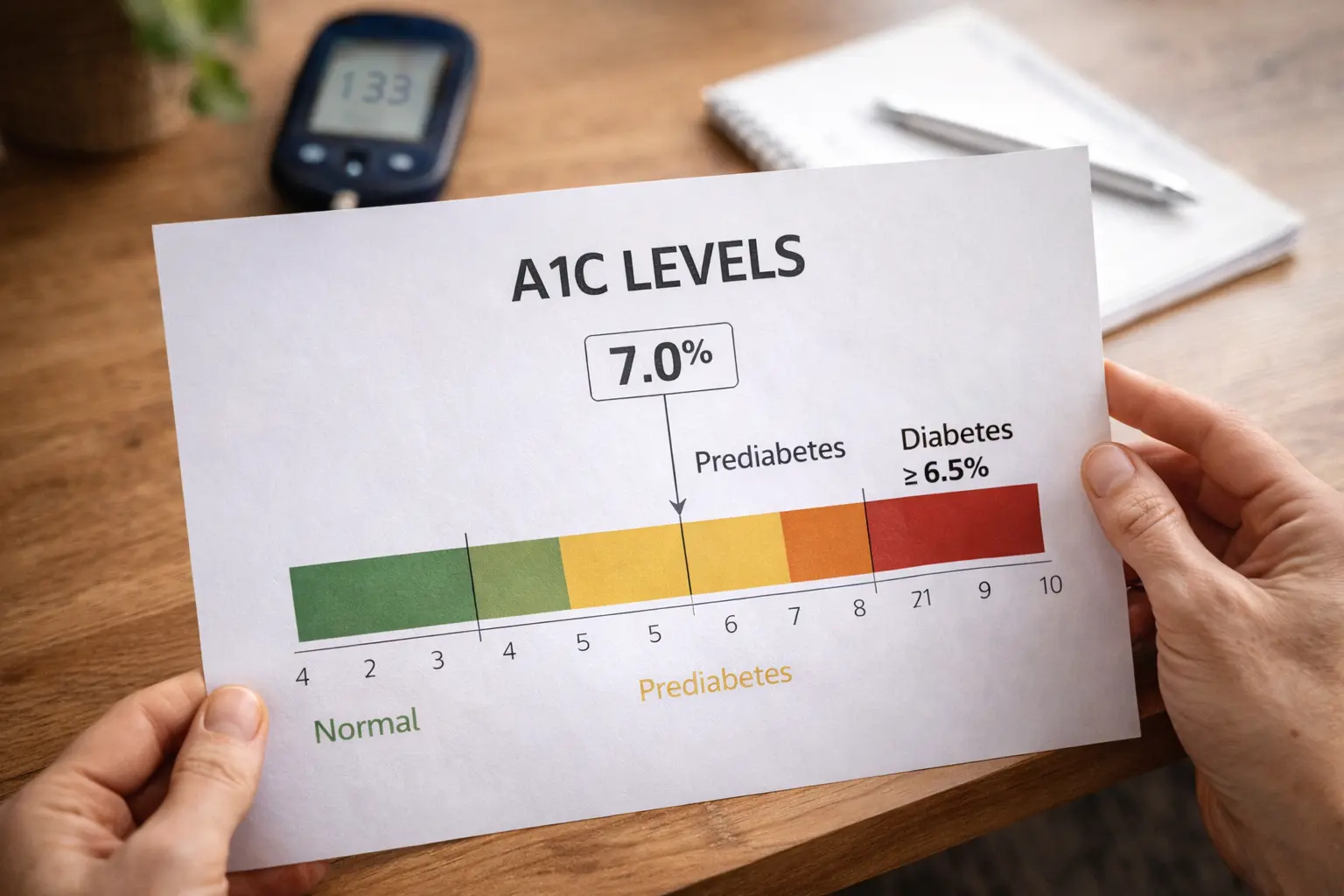
- A result of less than 5.7% is considered normal, while 5.7% to 6.4% indicates prediabetes, and 6.5% and above signals diabetes.
- Regular monitoring of your A1C levels can help you and your healthcare provider adjust your treatment plan effectively.
Interpreting A1C results
Your A1C number tells a story about your blood sugar control, but understanding what that story means requires breaking down the ranges. A normal A1C sits below 5.7%, which means your body is handling glucose efficiently. If your result lands between 5.7% and 6.4%, you’re in the prediabetes zone, a critical warning sign that changes now can prevent full-blown diabetes. At 6.5% or higher, you have diabetes, and your focus shifts to managing it effectively. Consider Sarah, a 28-year-old who got her first A1C result of 6.2% and felt shocked, thinking she was healthy. That number became her wake-up call to examine her eating habits and exercise routine. Within 6 months of consistent effort, she brought it down to 5.9%. The key is understanding that your A1C isn’t permanent. Lowering your A1C through diet changes, regular exercise, and medication adherence can prevent complications and significantly improve your quality of life. Work closely with your healthcare provider to set realistic goals based on your individual situation, not generic targets.
📘 Fix your day in under 2 minuteschoose where to begin:
Managing A1C levels
Managing your A1C requires a three-pronged approach: what you eat, how much you move, and whether you take medications as prescribed. Start with carbohydrates, since they have the biggest impact on blood sugar. This doesn’t mean cutting them out entirely, but choosing whole grains, legumes, and vegetables over processed options makes a measurable difference. A practical example: swapping white bread for whole grain bread, or choosing steel-cut oats instead of sugary cereal, reduces blood sugar spikes throughout your day. Exercise is equally powerful. You don’t need to become a gym rat, but 150 minutes of moderate activity per week, like brisk walking or cycling, helps your muscles use glucose more efficiently. Even a 20-minute walk after meals can lower blood sugar peaks. Medication adherence matters too, if your doctor prescribed it. Skipping doses or taking them inconsistently defeats the purpose. Small, consistent changes compound over time. One young adult who struggled with motivation found success by making one change per week: week one was swapping sugary drinks for water, week two was adding a 15-minute walk, week three was meal prepping on Sundays. By month three, these habits felt normal, and his A1C dropped noticeably.
The importance of regular monitoring
Regular A1C testing creates accountability and reveals whether your current strategy is working. Most people with diabetes should get tested at least twice yearly, but your doctor might recommend quarterly testing if your levels are unstable or you recently changed your treatment plan. Each test is a data point that helps you and your healthcare team understand patterns. Maybe your A1C rises in winter when you’re less active, or drops in summer when you’re more outdoors. Maybe stress at work triggers higher readings. These patterns only become visible through consistent monitoring. Think of it like tracking your fitness progress, you wouldn’t expect to see results without stepping on the scale regularly. The same applies to blood sugar. Testing also prevents you from drifting into complacency. It’s easy to think you’re doing fine without concrete numbers. A test result that’s worse than expected can reignite motivation. Conversely, a result that improved validates your efforts and reinforces positive behaviors. Your healthcare team uses these results to make informed decisions about adjusting medications, recommending lifestyle changes, or referring you to a diabetes educator or nutritionist for specialized support.
Seeking support and guidance
Managing your A1C is not a solo mission, and trying to do it alone often leads to burnout and inconsistency. Your healthcare provider is your starting point, but don’t stop there. Diabetes educators are trained specialists who teach practical skills like reading food labels, counting carbohydrates, and problem-solving when life gets messy. Many insurance plans cover these services. Support groups, whether in-person or online, connect you with people facing the same challenges. Hearing how others handle cravings, travel, or stress eating normalizes your struggles and offers real solutions. Nutritionists can create meal plans tailored to your preferences and lifestyle, not generic advice that doesn’t fit. Family and friends matter too, let them know what you’re working on so they can support rather than sabotage your efforts. Young adults sometimes feel embarrassed about having diabetes or prediabetes, but it’s increasingly common. Managing it well is a sign of strength and self-awareness, not weakness. Building a team around you makes the journey sustainable and less isolating.
Your A1C test is a powerful tool for understanding your blood sugar control and preventing serious health complications. Regular testing, combined with consistent lifestyle changes and medication adherence, puts you in control of your health trajectory. Seek support from healthcare providers, educators, and communities to make this journey manageable and sustainable.
How often should I get an A1C test?
It is recommended to get an A1C test at least twice a year if you have diabetes. Your healthcare provider may recommend more frequent testing based on your individual health needs.
Can my A1C levels be improved?
Yes, with lifestyle modifications such as healthy eating, regular exercise, and medication adherence, you can lower your A1C levels and improve your overall health.
Disclaimer: This article is for informational purposes only and is not a substitute for professional medical advice. Always consult a healthcare professional for personal guidance.
This guide has been prepared and reviewed by the GlobalHealthBeacon editorial team and reflects current medical research as of 2026. It provides structured, evidence-based information to support informed health decisions.
