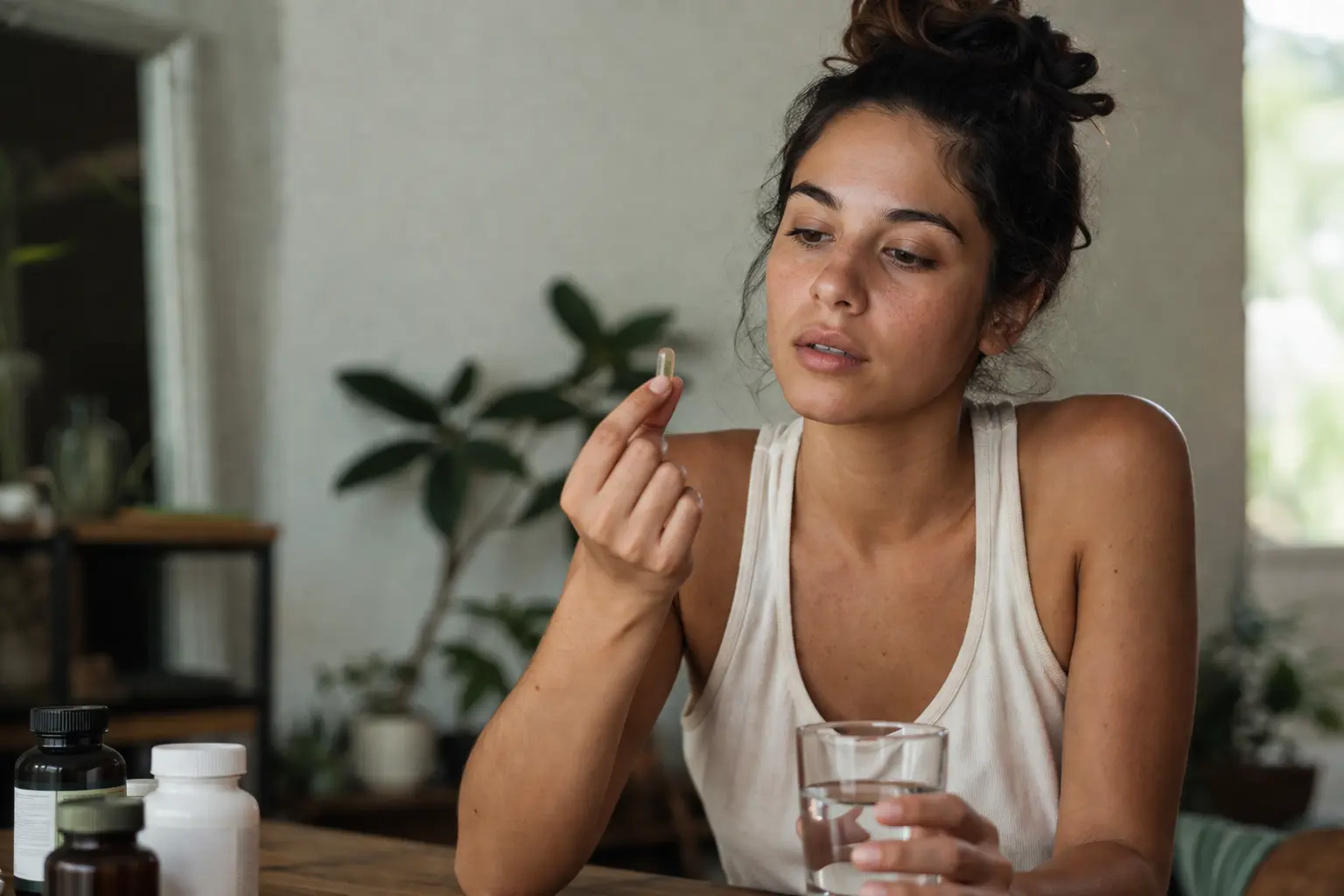
Your skin feels dull, tired, and no amount of moisturizer seems to fix it from the outside, so it’s time to work from within with the right supplements for skin glow that actually deliver results.
Vitamins for skin glow
Think of vitamins as your skin’s internal defense system and repair crew working 24/7. Vitamin C is the brightener that tackles dark spots and uneven tone, especially if you spend time in the sun or deal with post-inflammatory hyperpigmentation from breakouts. Vitamin E acts as a moisture barrier, keeping your skin plump and hydrated from the cellular level, which is why many women notice their skin feels softer within weeks. Vitamin A, the powerhouse retinoid precursor, accelerates cell turnover so dead skin cells shed faster, revealing fresher, younger-looking skin beneath. Imagine your skin cells as a factory assembly line: without these vitamins, the line moves slowly and produces dull output. With them, production speeds up and quality improves. Start with a daily multivitamin or targeted vitamin serums, then monitor your skin’s response over 4 to 6 weeks.
- Vitamin C brightens and evens skin tone.
- Vitamin E moisturizes and rejuvenates the skin.
- Vitamin A promotes cell turnover for a youthful appearance.
Antioxidants for skin health
Free radicals are invisible attackers that damage your skin every single day, from UV exposure to pollution to stress. Coenzyme Q10 and Alpha-Lipoic Acid work like bodyguards, neutralizing these harmful molecules before they age your skin prematurely. Picture a woman in her 40s who spent years in the sun without protection: her skin shows fine lines, dryness, and a tired texture. After adding a CoQ10 supplement to her routine for three months alongside sunscreen, her skin regains elasticity and that underlying glow returns. Alpha-Lipoic Acid goes deeper, supporting your skin’s natural repair mechanisms and improving circulation so nutrients reach skin cells more efficiently. These antioxidants also reduce inflammation, which is why women with sensitive or reactive skin often see calmer, less irritated complexions. The key is consistency: antioxidants work best when taken daily over weeks and months, not as a quick fix.
📘 Fix your day in under 2 minuteschoose where to begin:
Omega fatty acids for hydration
Your skin barrier is like a brick wall, and omega fatty acids are the mortar holding it together. Without enough omega-3 and omega-6, your skin becomes dry, flaky, and prone to irritation no matter how many creams you apply topically. Fish oil supplements deliver EPA and DHA, which reduce inflammation from within and strengthen your skin’s moisture-retention capacity. A common scenario: a woman switches from her usual skincare to fish oil supplements and within 6 to 8 weeks notices her skin feels less tight, makeup applies more smoothly, and that persistent dry patch on her cheek finally clears. Flaxseed oil offers a plant-based alternative if you prefer vegetarian options. These fatty acids also support your skin’s natural oil production, so your complexion finds balance between hydrated and not overly oily. Start with 1000 to 2000 mg daily and adjust based on how your skin responds.
Collagen boosters for firmness
Collagen is the structural protein that keeps your skin firm, bouncy, and resistant to sagging. After age 25, your body produces less collagen each year, which is why fine lines and loss of elasticity become noticeable. Hydrolyzed Collagen Peptides are broken down into amino acids your body can absorb and use to rebuild skin structure from the inside out. Consider a 35-year-old woman noticing her jawline softening and fine lines deepening around her mouth: she starts taking collagen peptides mixed into her morning coffee, and after 8 to 12 weeks, her skin feels firmer, her jawline definition improves, and those lines appear less pronounced. The science is solid: studies show consistent collagen supplementation increases skin elasticity and hydration. Pair collagen with vitamin C for best results, since vitamin C is essential for collagen synthesis. Aim for 10 to 20 grams daily, and give it at least 8 weeks before evaluating results.
Herbal supplements for radiant skin
Herbs have been used for centuries to support skin health, and modern research confirms their power. Turmeric contains curcumin, a potent anti-inflammatory that calms redness and irritation, making it especially helpful for women with acne-prone or rosacea-prone skin. Ginseng boosts circulation and energy at the cellular level, so your skin receives more oxygen and nutrients, resulting in a natural flush and glow. Green Tea is loaded with polyphenols that protect against environmental damage and support collagen preservation. Picture a woman with stressed, inflamed skin from a demanding job and poor sleep: she adds a turmeric supplement and green tea extract to her routine, and within 3 to 4 weeks, her skin tone evens out, redness diminishes, and she stops needing heavy concealer. These herbs work synergistically with your body’s natural healing processes rather than forcing results. The gentle, cumulative effect means you feel better overall, not just see skin improvements. Start with one herbal supplement at a time so you can identify what works best for your unique skin.
Enhance your skin’s natural radiance with essential vitamins, antioxidants, omega fatty acids, collagen boosters, and herbal supplements. Incorporating these skin glow supplements into your daily routine can help revitalize your complexion and promote a healthy glow.
How long does it take to see results from skin glow supplements?
Results may vary depending on individual skin conditions and dietary habits. It can take several weeks to months of consistent use to notice significant improvements in skin glow and texture.
Are there any side effects of using skin glow supplements?
While generally safe, it’s important to consult with a healthcare provider before starting any new supplement regimen. Some individuals may experience minor side effects like digestive upset or allergic reactions.
Others also read:
Disclaimer: This article is for informational purposes only and is not a substitute for professional medical advice. Always consult a healthcare professional for personal guidance.
This guide has been prepared and reviewed by the GlobalHealthBeacon editorial team and reflects current medical research as of 2026. It provides structured, evidence-based information to support informed health decisions.
