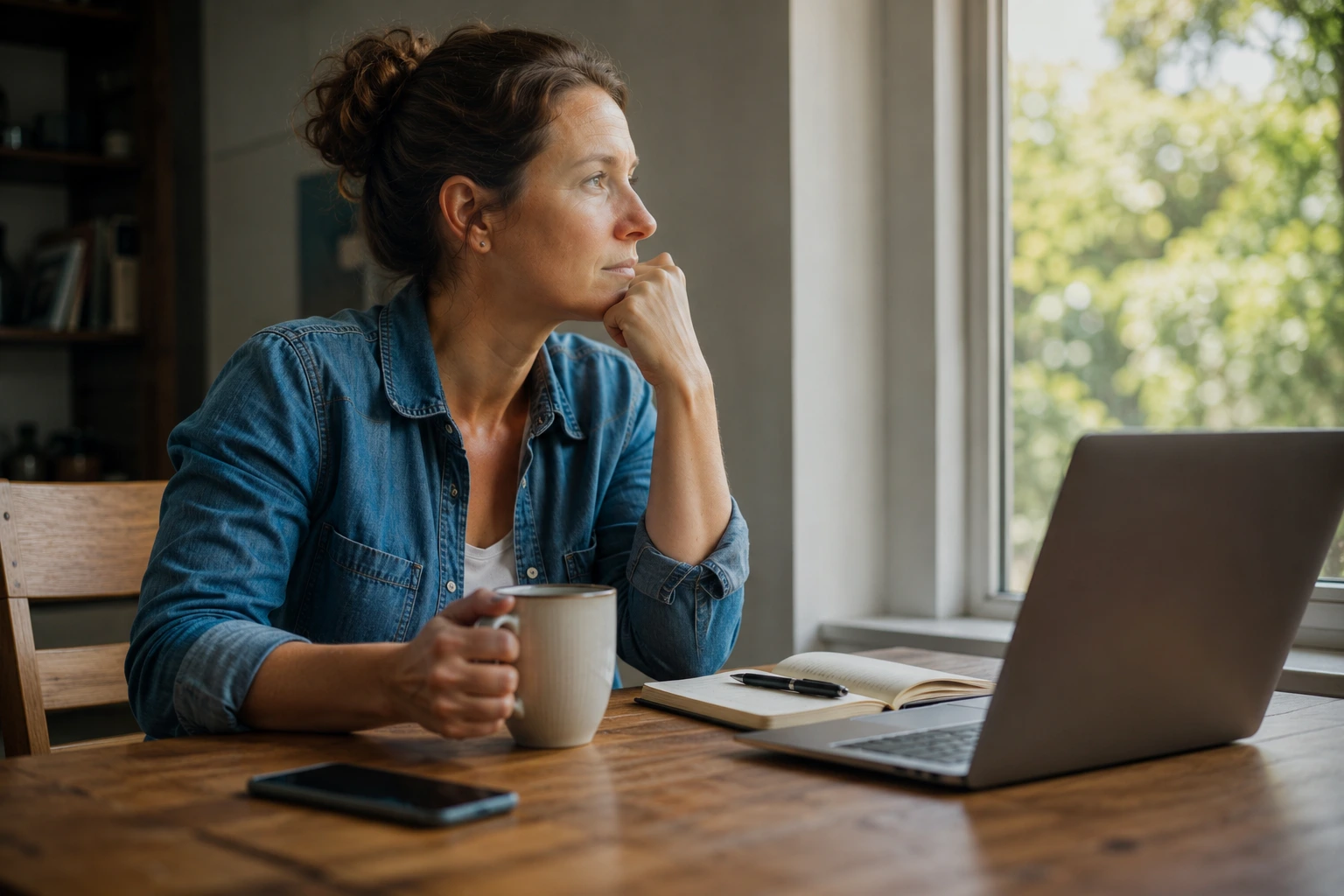
Your chest tightens, your mind races, and you can’t remember the last time you actually felt calm, but here’s the truth: stress relief techniques work, and you don’t need hours or expensive programs to feel the difference.
Practice deep breathing exercises
Deep breathing is one of the most accessible stress-relief tools available, and it works because it directly signals your nervous system to downshift from fight-or-flight mode. When stress hits, your breathing becomes shallow and rapid, which your body interprets as ongoing danger. By deliberately slowing your breath, you’re essentially telling your nervous system that the threat has passed. Start by finding a quiet corner, even if it’s just your bathroom for five minutes. Place one hand on your chest and one on your belly. Breathe in slowly through your nose for a count of four, feeling your belly expand rather than just your chest. Hold for a count of four, then exhale through your mouth for a count of six. The longer exhale is key because it activates your parasympathetic nervous system, the part responsible for relaxation. Many women find that after just three to five minutes of this practice, their shoulders drop, their jaw unclenches, and the mental chatter quiets down. Some practice this while sitting in their car before heading into a stressful meeting, others do it first thing in the morning to set a calm tone for the day.
- Inhale deeply through your nose for a count of four, expanding your belly with each breath.
- Hold your breath for a count of four to allow oxygen to circulate fully.
- Exhale slowly through your mouth for a count of six, releasing tension and stress with intention.
- Repeat this cycle for at least 5-10 minutes daily, or whenever you feel stress building.
Mindful meditation sessions
Meditation doesn’t require you to empty your mind or sit in perfect silence for an hour. Instead, think of it as training your attention the way you’d train a muscle at the gym. You’re building the ability to notice when your mind wanders and gently bringing it back without judgment. Start small, even two minutes counts. Find a comfortable seated position, close your eyes, and focus on your natural breath or repeat a simple phrase like ‘I am calm’ or ‘This will pass.’ When your mind inevitably wanders to your to-do list, a work conflict, or what’s for dinner, that’s not failure. That’s the practice. Simply notice the thought and return your focus to your breath. Many women report that regular meditation helps them respond to stress more thoughtfully rather than react impulsively. Over time, you develop a kind of mental buffer between a stressful situation and your response to it. Some people use guided meditation apps for structure, while others prefer silent practice. The key is consistency, even if sessions are brief. A woman who meditates for five minutes every morning often experiences less anxiety throughout the day than someone who meditates for thirty minutes once a month.
📘 Fix your day in under 2 minuteschoose where to begin:
Engage in physical activity
Exercise is one of the most scientifically proven stress relievers available, yet many women skip it when stress is highest, thinking they don’t have time. The truth is that movement is exactly what your body needs when stress hormones like cortisol are elevated. Physical activity metabolizes these stress chemicals and releases endorphins, your brain’s natural mood elevators. You don’t need to run a marathon or spend an hour at the gym. A twenty-minute walk, a yoga session, dancing to your favorite songs, or even a quick strength-training routine can shift your nervous system state. The type of activity matters less than consistency and enjoyment. A woman who dreads running won’t stick with it, but one who loves swimming will make time for it even on busy days. Consider what movement feels good to your body right now. Some days that might be gentle stretching, other days it might be intense cardio. The goal is to move regularly enough that your body learns to process stress through physical release rather than storing it as tension. Many women find that their best ideas come during or after exercise, and their sleep improves significantly when they move their body regularly.
Create a relaxing routine
Your evening routine signals to your body whether it’s time to wind down or stay in high alert. Many women struggle with sleep because they scroll their phones until bedtime, keeping their brains stimulated and their cortisol levels elevated. A relaxing bedtime routine is essentially a contract with yourself that prioritizes rest. Start by setting a consistent bedtime and working backward. About an hour before sleep, begin dimming lights and putting away screens. This allows your body to naturally produce melatonin, the hormone that makes you sleepy. Fill that hour with activities that genuinely calm you: a warm bath with Epsom salts, reading a physical book, gentle stretching, journaling, or listening to calming music. Some women find that a warm cup of herbal tea becomes part of their ritual, signaling transition time. The key is consistency. Your body learns routines and begins preparing for sleep when it recognizes the pattern. A woman who follows the same wind-down sequence each night will fall asleep faster and sleep more deeply than one whose evening is chaotic and unpredictable. Even small additions like changing into comfortable clothes or lighting a candle can become powerful cues that tell your nervous system it’s safe to relax.
Connect with supportive people
Stress thrives in isolation. When you keep worries bottled up, they grow larger in your mind and your nervous system stays activated. Sharing your feelings with trusted friends, family, or a therapist provides both practical relief and emotional validation. Simply saying your stress out loud often makes it feel more manageable because you’re no longer carrying it alone. The key is choosing the right people. A supportive person listens without immediately trying to fix everything, validates your feelings, and offers perspective without judgment. This might be a close friend, a family member, a therapist, or even a support group of women facing similar challenges. Many women find that regular check-ins with trusted people, whether weekly coffee dates or monthly phone calls, significantly reduce their overall stress levels. You’re not burdening others by sharing; you’re actually strengthening relationships and modeling healthy emotional expression. Some women hesitate to reach out because they fear being seen as weak or needy, but vulnerability is actually a sign of strength and self-awareness. When you connect authentically with others, you often discover that your struggles are more common than you thought, which itself is deeply reassuring.
Stress relief techniques work when you practice them consistently. Deep breathing calms your nervous system instantly, meditation builds mental resilience, physical activity metabolizes stress hormones, a relaxing routine supports quality sleep, and connecting with supportive people provides essential emotional grounding. Start with one technique that resonates with you, practice it for two weeks, then add another. Small, consistent actions create lasting change.
How long should I practice deep breathing exercises for stress relief?
Start with five to ten minutes daily for noticeable results. However, even two to three minutes of deep breathing during a stressful moment can provide immediate relief. The key is consistency rather than duration. Many women practice deep breathing in the morning to set a calm tone, during midday stress spikes, and before bed. Some find that practicing throughout the day in short bursts works better than one longer session.
What are some calming mantras for meditation sessions?
Choose mantras that resonate personally with you. Common options include ‘I am calm and centered,’ ‘I am at peace with myself,’ ‘I release all tension and stress,’ ‘This moment is safe,’ or ‘I am stronger than my stress.’ Some women prefer simple mantras like ‘breathe’ or ‘let go.’ The mantra should feel natural, not forced. Repeat it silently during meditation, especially when your mind wanders, to gently redirect your focus.
Others also read:
Disclaimer: This article is for informational purposes only and is not a substitute for professional medical advice. Always consult a healthcare professional for personal guidance.
This guide has been prepared and reviewed by the GlobalHealthBeacon editorial team and reflects current medical research as of 2026. It provides structured, evidence-based information to support informed health decisions.
