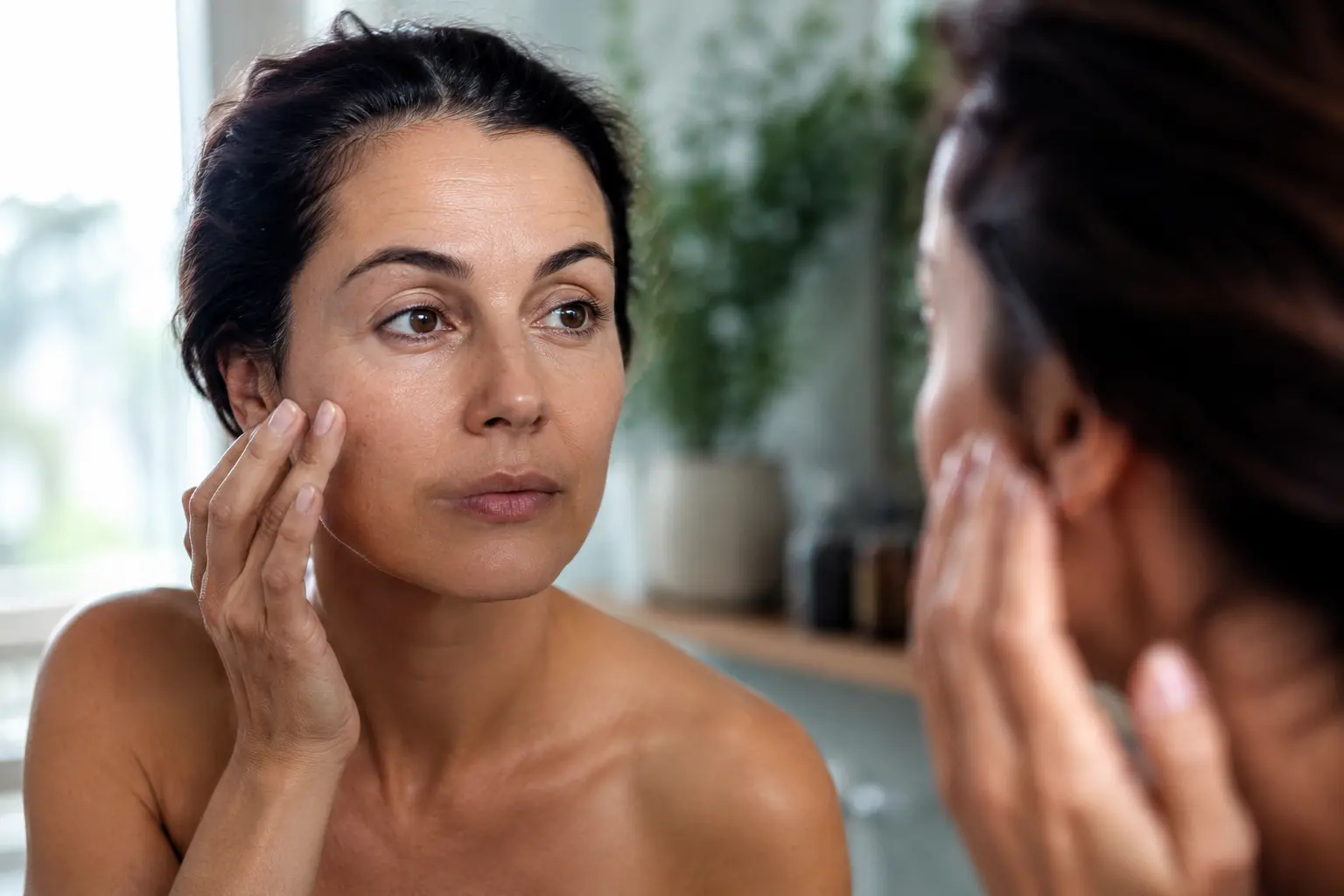
Your skin is literally falling apart in slow motion, and nobody tells you why or what to actually do about it, but understanding skin longevity explained changes everything.
Understanding skin aging process
Skin aging isn’t just one thing happening all at once. It’s actually two completely different processes working against you simultaneously. Intrinsic aging is the stuff you can’t escape, driven by your genetics and the biological clock ticking inside your cells. Your parents’ skin timeline is basically your skin’s instruction manual. But here’s where it gets interesting: extrinsic aging is the stuff you can actually influence. Every time you step outside without protection, spend hours under harsh fluorescent lights, or breathe in pollution from traffic, you’re accelerating how fast your skin ages. UV radiation damages the DNA in your skin cells, pollution particles settle into your pores and trigger inflammation, and even stress hormones like cortisol can break down collagen faster. Think of intrinsic aging as the speed your body naturally ages, and extrinsic aging as pressing the fast-forward button. The good news is you have real control over that second one.
Factors affecting skin longevity
Three major culprits are destroying your skin’s youthful structure right now: collagen and elastin breakdown, oxidative stress, and chronic inflammation. Collagen is literally the scaffolding holding your skin firm and plump. As you age, your body produces less of it, and the collagen that remains gets damaged by free radicals and UV exposure. Elastin, the protein that lets your skin bounce back, degrades the same way. Oxidative stress happens when free radicals outnumber your antioxidants, creating cellular damage that accelerates aging. Imagine rust forming on metal, except it’s happening inside your skin cells. Inflammation is the silent saboteur, quietly breaking down healthy tissue and triggering more collagen loss. A 25-year-old who smokes and tans will have visibly older skin than a 35-year-old who uses sunscreen and avoids smoking. The difference isn’t genetics, it’s these three factors being actively managed or ignored. Sun exposure, smoking, poor diet, and stress are the main accelerators you can actually control.
Promoting skin health for longevity
Building a skin longevity strategy means addressing three foundational areas: hydration, antioxidant protection, and cellular repair. Hydration isn’t just about drinking water, though that matters. Your skin cells need water inside them to function properly, maintain elasticity, and support the production of natural moisturizing factors. When you’re dehydrated, your skin looks dull, fine lines appear deeper, and your skin barrier weakens, letting irritants penetrate more easily. Antioxidants are your defense against free radical damage. They neutralize the unstable molecules that damage collagen and elastin before they cause harm. Vitamins C and E, green tea extract, and resveratrol are proven antioxidants that actually penetrate skin. Sleep is when your body ramps up growth hormone production and shifts into repair mode. During deep sleep, blood flow to your skin increases, collagen synthesis accelerates, and damaged cells get replaced. Skipping sleep literally ages your skin faster because you’re missing this critical repair window. These three elements work together to slow down the aging process at the cellular level.
- Hydrate your skin by drinking an adequate amount of water daily and using a hydrating moisturizer that contains humectants like glycerin or hyaluronic acid to draw moisture into skin cells.
- Incorporate antioxidant serums or creams into your skincare regimen, focusing on products with vitamin C, vitamin E, or niacinamide applied before moisturizer for maximum absorption.
- Prioritize quality sleep to boost skin rejuvenation, aiming for seven to nine hours nightly when your body naturally increases collagen production and cellular repair processes.
🔬 Science-backed benefits in 2 minuteschoose where to begin:
Role of hormones and cellular metabolism
Your hormones are basically the control panel for how your skin ages. Estrogen, which peaks during your reproductive years, keeps skin thick, hydrated, and collagen-rich. When estrogen levels drop, your skin becomes thinner and drier, which is why many people notice skin changes during hormonal shifts. Testosterone influences sebum production and skin thickness in different ways depending on your biology. Thyroid hormones control your metabolic rate, which affects how efficiently your cells repair themselves. Growth hormone, released during sleep, directly stimulates collagen production. This is why hormonal imbalances often show up on your face first. Cellular metabolism, powered by the nutrients you eat and the exercise you do, determines how efficiently your cells produce energy and repair damage. When your metabolism is sluggish, your skin cells can’t keep up with damage, and aging accelerates. Regular exercise increases blood flow to your skin, delivering oxygen and nutrients while removing waste products. A diet rich in amino acids, healthy fats, and micronutrients gives your cells the raw materials they need to rebuild collagen and maintain skin structure. This is why someone with excellent metabolism and hormonal balance often looks younger than their chronological age.
The power of sun protection
UV radiation is the single most damaging environmental factor for skin aging, and it’s not even close. When UV rays hit your skin, they penetrate deep into the dermis and directly damage the DNA inside your cells. Your body tries to repair this damage, but repeated exposure overwhelms the repair systems. UV radiation also generates massive amounts of free radicals, which attack collagen and elastin fibers, breaking them down faster than your body can rebuild them. This is why sun-damaged skin looks leathery, deeply wrinkled, and discolored. The damage accumulates over decades, which is why someone who spent their twenties at the beach often has noticeably older-looking skin by their forties compared to someone who used sunscreen consistently. Daily sunscreen use, even on cloudy days, blocks both UVA and UVB rays before they damage your skin. Seeking shade during peak sun hours (10am to 4pm) reduces your overall UV exposure significantly. Protective clothing, hats, and sunglasses add another layer of defense. The key insight is that sun damage is cumulative and largely irreversible, so prevention is infinitely easier than trying to repair damage after the fact.
Lifestyle choices for skin longevity
Your daily choices compound into either youthful skin or accelerated aging. A balanced diet rich in antioxidants, omega-3 fatty acids, and vitamins directly feeds your skin cells the nutrients they need to stay healthy. Berries, leafy greens, fatty fish, and nuts aren’t just healthy foods, they’re literally building blocks for collagen and protection against free radical damage. Alcohol dehydrates your skin from the inside out and triggers inflammation, which accelerates collagen breakdown. One drink occasionally won’t age you, but regular heavy drinking visibly ages your skin faster. Stress elevates cortisol, a hormone that breaks down collagen and impairs your skin barrier. Chronic stress literally makes you look older because your skin can’t repair itself properly under constant hormonal pressure. Sleep deprivation compounds this by preventing the cellular repair that happens during deep sleep. Exercise improves circulation, reduces stress, and increases growth hormone production, all of which benefit skin. Smoking is perhaps the most visibly aging habit because it generates free radicals, constricts blood vessels, and directly damages collagen. A 40-year-old who smokes often looks ten years older than a 40-year-old who doesn’t. These lifestyle factors aren’t separate from skin aging, they’re the primary drivers of it.
Skin longevity explained comes down to understanding two aging processes: the genetic clock you can’t stop and the environmental and lifestyle factors you can control. Collagen breakdown, oxidative stress, and inflammation are the biological mechanisms driving visible aging, but they’re all influenced by sun exposure, diet, sleep, stress, and daily habits. Protecting your skin from UV damage, maintaining hormonal balance through proper nutrition and exercise, staying hydrated, and using antioxidant skincare creates a comprehensive approach to slowing aging at the cellular level. Your skin today reflects the choices you made months and years ago, which means your skin tomorrow is determined by what you do right now.
How does collagen loss affect skin aging?
Collagen is the protein that gives your skin structure, firmness, and volume. As collagen breaks down and production decreases with age, your skin loses its ability to bounce back, resulting in wrinkles, sagging, and a loss of that plump, youthful appearance. This process accelerates with sun exposure, smoking, and poor diet. While you can’t completely stop collagen loss, you can slow it significantly by protecting your skin from UV damage, eating protein-rich foods, staying hydrated, and using skincare products with ingredients that support collagen production or protect existing collagen from damage.
Can genetics determine skin longevity?
Genetics absolutely influence how your skin ages, determining your natural collagen production rate, skin thickness, and how quickly you develop wrinkles. However, genetics is not destiny. Two siblings with identical genes can have dramatically different-looking skin at the same age based on their sun exposure, diet, sleep, stress levels, and skincare habits. Studies show that lifestyle factors account for roughly 70 percent of visible skin aging, while genetics accounts for about 30 percent. This means you have significant control over your skin longevity regardless of your family history. Someone with genetically thin skin can maintain healthy skin through diligent protection and care, while someone with genetically thick skin can accelerate aging through poor habits.
Others also read:
Disclaimer: This article is for informational purposes only and is not a substitute for professional medical advice. Always consult a healthcare professional for personal guidance.
This article has been prepared and reviewed by the GlobalHealthBeacon editorial team and is based on current medical research and published scientific literature available in 2026. It provides structured, evidence-based information to support informed health decisions.
