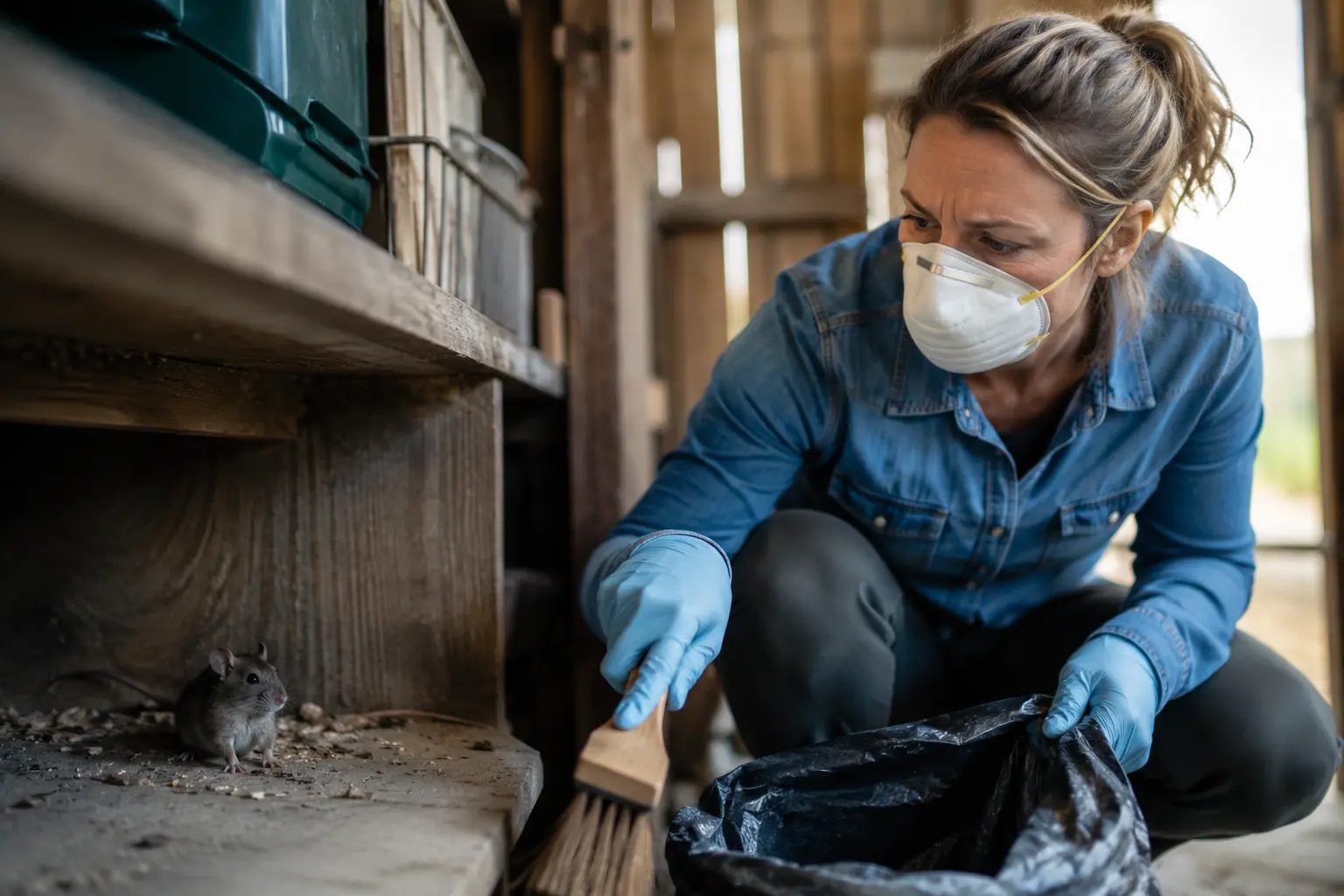
You find mouse droppings in your garage and suddenly your mind spirals into worst-case scenarios, but understanding hantavirus transmission basics might actually put your mind at ease instead of amplifying the panic.
Understanding hantavirus transmission
Hantavirus spreads primarily through contact with infected rodents or their droppings, and knowing exactly how this happens helps you take smart precautions without obsessing over every shadow. The virus lives in the saliva, urine, and feces of infected rodents like deer mice and cotton rats. When you clean an area where rodents have nested, you might inhale dust particles containing the virus if you are not careful. Picture this: you are sweeping out a shed and stirring up old droppings without protection. That airborne dust is the real risk. Direct skin contact with a living rodent is less likely to transmit the virus than you might think, but handling a dead rodent or touching contaminated surfaces and then your face is where exposure typically occurs. The good news is that hantavirus transmission basics show us this is preventable through simple awareness and proper technique.
- Avoid direct contact with rodents or their droppings.
- Wear gloves and a mask when cleaning potentially contaminated areas.
- Ensure good ventilation during cleanup to avoid inhaling particles.
Symptoms and early warning signs
Early symptoms of hantavirus infection typically appear between two to four weeks after exposure, and they often mimic flu at first, which is why many cases go unrecognized initially. You might feel unusually fatigued, develop a fever that comes and goes, experience muscle aches especially in the thighs and back, and feel dizzy or lightheaded. Some women report headaches and chills before respiratory symptoms emerge. The tricky part is that these early signs are so common that you might dismiss them as a regular cold or seasonal illness. However, if you remember a potential rodent exposure within the past month and these symptoms appear, that connection matters. The critical window is when symptoms progress to shortness of breath, chest tightness, or a persistent cough. If you suspect exposure to hantavirus after cleaning a rodent-infested space or finding droppings in your home, seek medical attention promptly. Tell your doctor about the exposure so they can run the right tests and provide proper diagnosis and treatment.
📘 Fix your day in under 2 minuteschoose where to begin:
Risks and complications
Hantavirus infection can escalate from mild flu-like symptoms to severe respiratory distress, and in rare cases, it becomes life-threatening. The virus attacks the lungs and can cause hantavirus pulmonary syndrome, where fluid builds up in the lungs and oxygen levels drop dangerously. Women should understand that while the overall risk of infection is low if you take precautions, the consequences of missing a diagnosis are serious. About one-third of people who develop hantavirus pulmonary syndrome experience fatal outcomes, which is why early recognition and medical care are critical. The progression can happen quickly, sometimes within days of respiratory symptoms appearing. Complications include respiratory failure, shock, and organ damage. However, these severe outcomes are rare in the general population, especially among women who practice basic preventive measures. Understanding the risks does not mean living in fear; it means respecting the virus and taking straightforward steps to protect yourself.
Preventive measures and safety tips
Reducing hantavirus risk involves a combination of rodent prevention and smart cleanup practices that fit into your regular home maintenance routine. Start by sealing entry points around your home, including gaps around pipes, vents, and foundation cracks where rodents squeeze through. Store food in sealed containers, remove clutter where rodents hide, and keep your kitchen and living spaces clean. If you find droppings or signs of rodent activity, do not sweep or vacuum them dry, as this spreads particles into the air. Instead, spray the area with a disinfectant solution, let it sit for five minutes, then wipe it up with paper towels. Wear gloves and a fitted mask during this process. Ventilate the space well by opening windows. For larger infestations, consider hiring a professional pest control service rather than handling it yourself. Seal up dead rodents in a plastic bag before disposal. These steps transform hantavirus prevention from something scary into a manageable part of responsible home care.
Seeking medical advice
If you suspect exposure to hantavirus or experience symptoms, consulting a healthcare professional is your next step, and being clear about your exposure history helps them make the right diagnosis. When you call your doctor or visit an urgent care clinic, mention that you were exposed to rodents or their droppings and describe when that exposure happened. Describe your symptoms in detail, including when they started, how they have progressed, and any respiratory changes you have noticed. Your doctor may order blood tests to check for hantavirus antibodies or perform other diagnostic tests. Early medical evaluation is important because treatment focuses on supportive care like oxygen therapy and monitoring, which work best when started promptly. Do not wait for symptoms to worsen before reaching out. Even if you are uncertain whether your exposure was significant, mentioning it to your doctor ensures they consider hantavirus in their assessment. Having this conversation early can make the difference between a manageable illness and a serious complication.
Hantavirus transmission basics involve understanding how the virus spreads through rodent contact, recognizing early symptoms like fatigue and fever, taking preventive measures such as sealing your home and using proper cleanup techniques, and seeking prompt medical attention if you suspect exposure or develop symptoms.
Can hantavirus be transmitted from person to person?
No, hantavirus is not transmitted between humans. The primary mode of transmission is through contact with infected rodents or their excreta. You cannot catch hantavirus from another person, so caring for someone with hantavirus does not put you at risk as long as you practice standard hygiene.
How can I protect myself from hantavirus?
To protect yourself from hantavirus, avoid contact with rodents, maintain a clean living environment, seal entry points to prevent rodent infestations, use protective gear like gloves and masks when cleaning suspicious areas, and seek medical advice if you suspect exposure. These straightforward steps significantly reduce your risk.
Others also read:
Disclaimer: This article is for informational purposes only and is not a substitute for professional medical advice. Always consult a healthcare professional for personal guidance.
This guide has been prepared and reviewed by the GlobalHealthBeacon editorial team and reflects current medical research as of 2026. It provides structured, evidence-based information to support informed health decisions.

