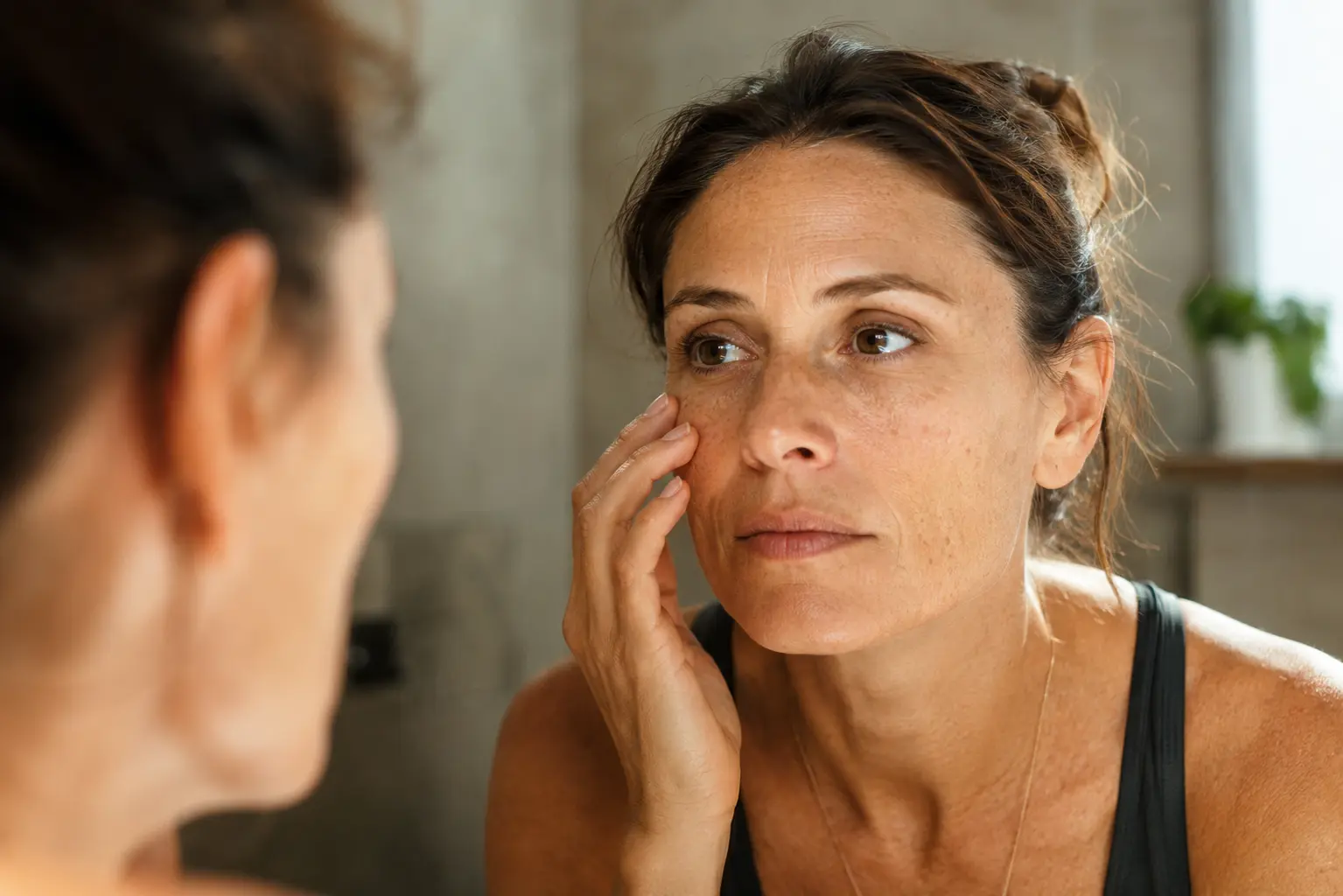
Your skin used to bounce back, but now those fine lines won’t quit and everything feels a bit looser than it should – welcome to collagen loss prevention, the one thing every senior needs to understand about what’s actually happening beneath the surface.
Collagen loss mechanisms explained
Collagen loss isn’t some mysterious force of nature – it’s a predictable biological process that accelerates with age. Think of collagen as the scaffolding holding your skin together. In your twenties and thirties, your body produces collagen steadily, maintaining that firm, elastic quality. But around age 25, production begins declining by roughly 1 percent annually. By the time you reach 60, you’ve lost a significant percentage of your original collagen stores. Sun exposure damages collagen fibers directly through ultraviolet radiation, breaking down existing structures faster than your body can repair them. Smoking introduces free radicals that attack collagen molecules. Poor nutrition deprives your body of the amino acids and vitamin C needed to synthesize new collagen. Environmental pollution, chronic stress, and inadequate sleep all contribute to this decline. Understanding these specific mechanisms helps you identify which factors you can actually control and where to focus your prevention efforts.
Comparing collagen production to a stopwatch
Imagine your collagen production as a stopwatch that starts running at full speed when you’re born. During your youth, this biological clock ticks steadily, delivering consistent collagen synthesis to maintain skin resilience and firmness. Your fibroblasts, the cells responsible for collagen production, work efficiently and respond quickly to your body’s needs. As you enter your forties and fifties, the stopwatch begins to slow noticeably. Your fibroblasts become less active, producing collagen more slowly and sometimes with slightly lower quality. By your sixties and seventies, the clock has slowed to perhaps half its original pace. This isn’t a sudden switch but a gradual deceleration influenced by genetics, lifestyle choices, and cumulative environmental damage. Some people’s stopwatches slow faster due to family history, while others maintain relatively steady production through protective habits. Understanding this timeline helps you recognize that prevention is most effective when started early, though improvements are possible at any age.
Effective strategies for collagen preservation
Collagen preservation requires a multi-pronged approach combining nutrition, protection, and targeted interventions. A nutrient-rich diet forms the foundation. Foods containing vitamin C, copper, and amino acids support collagen synthesis. Bone broth provides bioavailable collagen peptides and gelatin. Leafy greens like spinach and kale offer vitamin C and antioxidants. Fatty fish supplies omega-3 fatty acids that reduce inflammation. Sun protection is non-negotiable – ultraviolet radiation causes roughly 80 percent of visible skin aging. Broad-spectrum sunscreen with SPF 30 or higher blocks both UVA and UVB rays. Protective clothing, hats, and seeking shade during peak sun hours (10 AM to 4 PM) provide additional defense. Some individuals explore collagen supplements, which come in various forms including hydrolyzed collagen peptides and marine collagen. These supplements may support collagen levels when combined with healthy habits, though results vary by individual. Professional guidance ensures you choose appropriate products and dosages for your specific situation.
- Incorporate collagen-boosting foods like bone broth and leafy greens into your daily meals.
- Apply a broad-spectrum sunscreen with an SPF of at least 30 before sun exposure.
- Consult a healthcare provider or dermatologist before adding collagen supplements to your routine.
🔬 Science-backed benefits in 2 minuteschoose where to begin:
Understanding collagen loss severity
Collagen loss severity varies dramatically from person to person, making personalized assessment crucial. Your genetics play a foundational role – if your parents experienced significant skin aging, you’re more likely to follow a similar pattern. Lifestyle factors create substantial variation. Someone who spent decades protecting their skin from sun exposure and maintaining excellent nutrition will show markedly less collagen loss than someone with opposite habits. Environmental exposures matter too. Living in a sunny climate, working outdoors, or smoking accelerates collagen breakdown. Stress levels and sleep quality influence collagen production through hormonal pathways. A 65-year-old who prioritized sun protection and skincare might have collagen density similar to someone ten years younger who neglected these habits. Conversely, someone with ideal genetics but poor lifestyle choices may show accelerated aging. Assessing your personal collagen loss severity requires honest evaluation of your history, current habits, and visible changes. This self-awareness guides which prevention strategies will benefit you most.
Measurable changes in collagen levels
Modern science offers several methods to quantify collagen changes, moving beyond subjective observation. Skin biopsies involve removing a small tissue sample and examining collagen density, organization, and quality under microscopy. This provides precise measurement but requires a medical procedure. Non-invasive imaging techniques like ultrasound can assess skin thickness and collagen structure without tissue removal. Optical coherence tomography creates detailed cross-sectional images of skin layers. Some dermatologists use specialized photography with standardized lighting to track visible changes over months or years. At-home assessment involves photographing your skin under consistent conditions monthly or quarterly, noting changes in firmness, texture, and fine line depth. Keeping detailed records helps you evaluate whether your prevention strategies are working. Many people notice subjective improvements in skin feel and appearance before objective measurements show changes. Monitoring these changes over time provides motivation and helps you adjust strategies if needed, creating a feedback loop that supports long-term collagen preservation efforts.
Future perspectives on collagen preservation
Scientific research into collagen preservation continues advancing rapidly, offering new possibilities for seniors. Advanced skincare products now incorporate peptides that may stimulate fibroblast activity and collagen synthesis. Retinoids remain among the most evidence-supported ingredients for promoting collagen production and improving skin texture. Emerging treatments like microneedling create controlled micro-injuries that trigger the body’s natural collagen repair response. Some research explores growth factors and stem cell therapies, though these remain largely experimental. Oral collagen supplements with specific peptide profiles show promising results in some studies, though quality and effectiveness vary widely. Anti-inflammatory approaches targeting systemic inflammation may support collagen preservation at the cellular level. Personalized skincare based on genetic testing represents a frontier, potentially allowing targeted interventions based on your unique collagen metabolism. Staying informed about these developments empowers you to make educated decisions about new options as they become available. The key is evaluating new approaches critically, consulting healthcare providers, and maintaining realistic expectations about what’s possible at any age.
Collagen loss prevention strategies center around understanding the mechanisms, regulating collagen production, and implementing effective preservation methods. By adopting tailored approaches to combat collagen decline, individuals can proactively address this common aging concern and maintain skin health.
Can I reverse collagen loss naturally?
While natural interventions like a healthy diet and sun protection can slow down collagen loss, complete reversal may not be achievable due to the natural aging process. However, proactive measures can significantly preserve collagen levels and skin health.
Are collagen supplements effective for prevention?
Collagen supplements may offer additional support in collagen preservation when used alongside a balanced diet and skincare routine. Consult a healthcare provider for personalized advice on supplement usage.
Others also read:
Disclaimer: This article is for informational purposes only and is not a substitute for professional medical advice. Always consult a healthcare professional for personal guidance.
This article has been prepared and reviewed by the GlobalHealthBeacon editorial team and is based on current medical research and published scientific literature available in 2026. It provides structured, evidence-based information to support informed health decisions.

