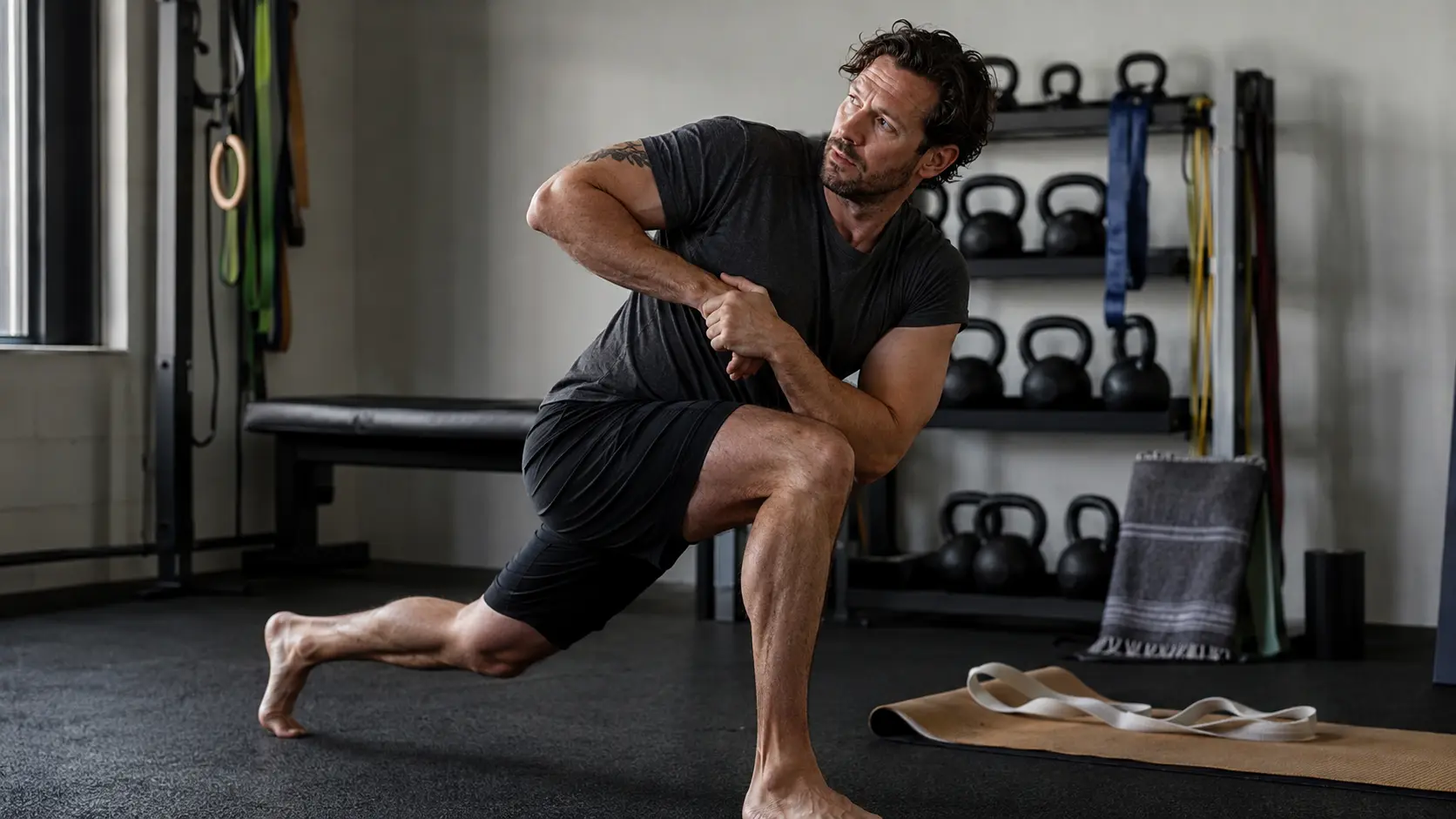
Your shoulders feel stiff when you reach for something, your hips lock up after sitting all day, and you’re not even sure if stretching is actually helping or if you need something completely different – that’s the mobility versus flexibility confusion hitting you hard, and you’re definitely not alone in feeling lost about what your body actually needs.
Understanding mobility
Mobility is far more than just being able to touch your toes or do a split. It’s your joint’s ability to move freely through its complete range of motion while maintaining control and stability throughout that movement. Think of it as the full package: your shoulder joint needs flexibility in the muscles, but it also needs strength in the rotator cuff muscles and stability in the shoulder blade to move smoothly. When you’re doing a push-up, for example, your shoulder isn’t just stretching – it’s moving through space with power and precision. Mobility incorporates flexibility, yes, but it layers in strength, neuromuscular control, and functional movement patterns. A young adult might have tight hamstrings but still have excellent hip mobility because they’ve built strength around the joint. Improving mobility means addressing joint health holistically, working on balance and coordination through activities that challenge your body in multiple planes of motion, and building strength to support your joints during real-world movements.
- Include dynamic stretches in your warm-up routine to prepare your joints for movement.
- Engage in exercises that promote balance and coordination, such as yoga or Pilates.
- Work on strength training to support your joints and improve overall mobility.
Flexibility essentials
Flexibility is the specific capacity of your muscles to lengthen and stretch. It’s one component of mobility, but it stands alone as a crucial element of fitness. When your muscles are flexible, they can extend to their full length without resistance, which reduces tension and allows for greater ease of movement. For young adults, flexibility often gets overlooked because you might feel fine in your twenties, but poor flexibility now creates problems later. Tight muscles restrict your range of motion, pull on your joints, and can throw your posture out of alignment. Consider someone who sits at a desk for eight hours daily: their hip flexors shorten, their chest tightens, and their hamstrings become rigid. Static stretching after workouts, consistent yoga practice, or even dedicated stretching sessions help lengthen muscle fibers and improve flexibility. The key is consistency. Stretching once a week won’t create lasting change, but incorporating flexibility work three to four times weekly shows measurable improvements within weeks.
📘 Fix your day in under 2 minuteschoose where to begin:
Combining both for optimal health
The real magic happens when you blend mobility and flexibility into a cohesive approach. Imagine you’re a young adult who plays recreational sports or hits the gym regularly. You need flexibility so your muscles can lengthen without restriction, but you also need mobility so your joints can move through full ranges of motion with stability and power. A practical scenario: you’re doing a deep squat. Flexibility allows your hamstrings and calves to lengthen. Mobility ensures your ankles, knees, and hips all move in coordinated patterns without compensation. If you only stretch but don’t build strength, you’ll have flexible muscles attached to unstable joints. If you only lift weights without stretching, you’ll develop strength in shortened ranges of motion, limiting your athletic potential and increasing injury risk. The balanced approach means your weekly routine includes dynamic warm-ups for mobility, strength training that builds joint stability, and dedicated stretching sessions for flexibility. This combination reduces injury risk, improves performance, and keeps your body feeling capable and pain-free.
Practical tips for improvement
Start by assessing where you actually are right now. Can you touch your toes comfortably? Can you do a full bodyweight squat with good form? Can you reach your hands behind your back? These simple tests reveal which areas need work. Swimming is exceptional for building mobility because water supports your body weight while you move through full ranges of motion without impact stress. Cycling builds lower body strength while improving hip and knee mobility. Bodyweight exercises like push-ups, lunges, and planks develop strength and mobility simultaneously. Foam rolling addresses muscle tightness and improves tissue quality, which enhances flexibility. A realistic weekly plan might include two strength sessions, two flexibility-focused sessions like yoga or dedicated stretching, and one mobility-focused activity like swimming or dynamic movement work. The critical mistake young adults make is pushing too hard too fast. Your body adapts gradually. If you’ve been sedentary, jumping into intense stretching or heavy lifting causes soreness and discourages consistency. Progress slowly, listen to what your body tells you, and prioritize consistency over intensity.
Seek professional guidance
If you’re experiencing pain, limited movement, or uncertainty about where to start, professional assessment is worth the investment. A physical therapist can identify movement dysfunctions you might not notice yourself. They’ll watch how you move, spot compensation patterns, and understand whether your limitations stem from flexibility, mobility, strength, or a combination. A fitness trainer with mobility expertise can design a program tailored to your specific goals and limitations. A healthcare provider can rule out underlying conditions that might be restricting your movement. Young adults often assume they should just push through discomfort, but that mindset creates chronic problems. Getting professional eyes on your movement early prevents years of compensatory patterns. Many physical therapists offer initial consultations that clarify your situation and point you toward self-directed work or ongoing treatment. This guidance is especially valuable if you have previous injuries, chronic pain, or specific athletic goals.
Understanding the difference between mobility and flexibility is crucial for designing an effective fitness routine. By focusing on joint health, balance, strength, and flexibility, you can achieve optimal mobility and reduce the risk of injuries.
Is flexibility more important than mobility?
Both flexibility and mobility are essential for overall fitness and injury prevention. While flexibility allows your muscles to stretch, mobility ensures that your joints have a full range of motion. Balancing both aspects is the key to a well-rounded fitness regimen.
Can I improve my mobility and flexibility at any age?
Yes, you can enhance your mobility and flexibility at any age through targeted exercises, proper nutrition, and regular physical activity. It’s never too late to work on improving your joint health and muscle flexibility.
Disclaimer: This article is for informational purposes only and is not a substitute for professional medical advice. Always consult a healthcare professional for personal guidance.
This guide has been prepared and reviewed by the GlobalHealthBeacon editorial team and reflects current medical research as of 2026. It provides structured, evidence-based information to support informed health decisions.
