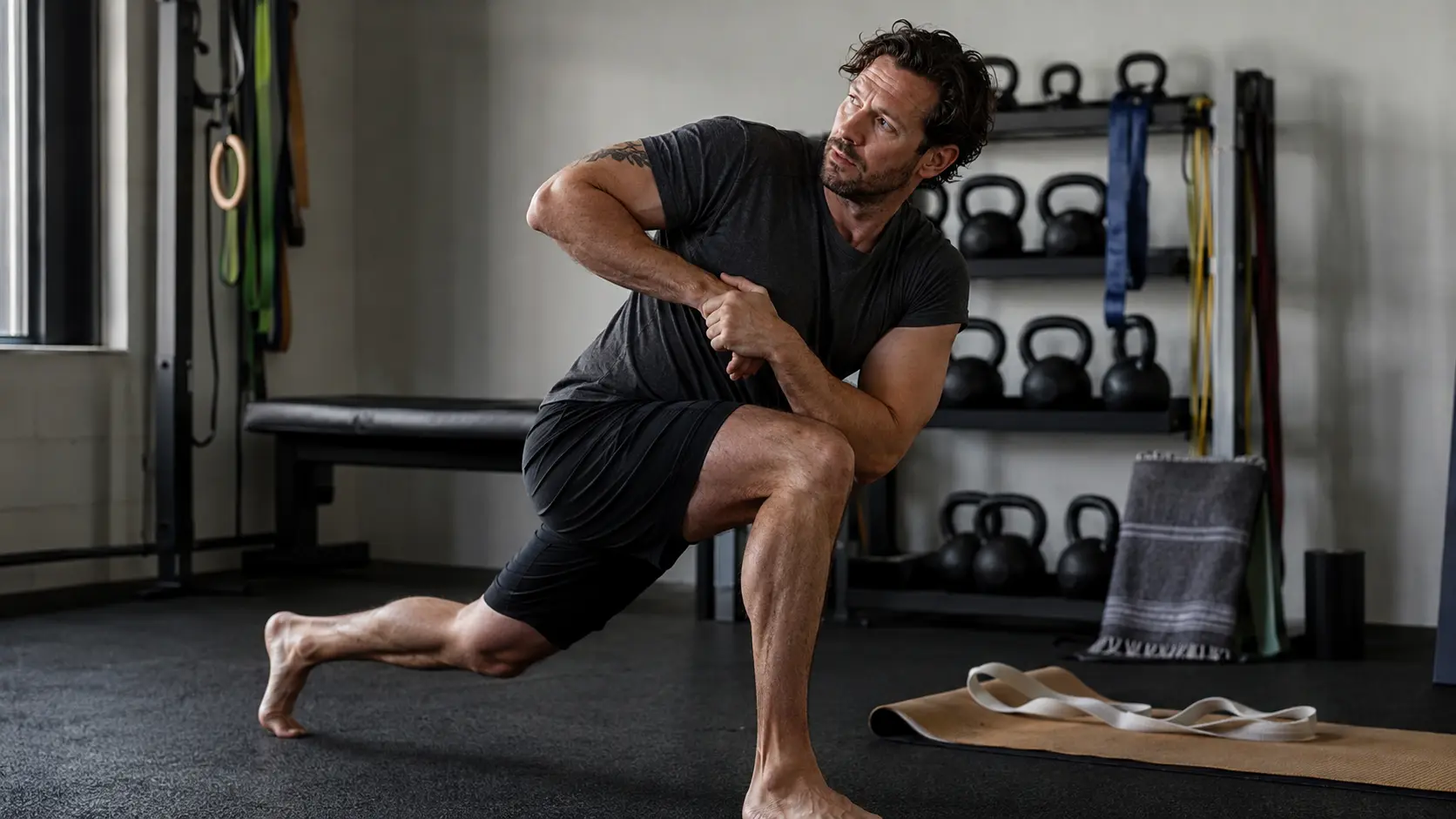
You’re stretching every day, touching your toes without breaking a sweat, yet your knees still ache when you climb stairs and your shoulders feel stiff during workouts, so let’s stop confusing mobility versus flexibility and actually understand what your body needs.
Understanding mobility and flexibility
Mobility and flexibility are often used interchangeably, but they represent distinctly different physical capacities that work together to support movement. Flexibility refers to the passive range of motion in your muscles and connective tissues, the ability of a muscle to lengthen when stretched without active effort from you. Think of it like pulling a rubber band, the tissue itself extends. Mobility, by contrast, is the active range of motion available at a joint, combining flexibility with strength, coordination, and neuromuscular control. When you perform a deep squat with control or lift your leg high while maintaining balance, you’re demonstrating mobility. A woman might have excellent flexibility in her hamstrings, able to touch her toes easily, yet lack the mobility to perform a controlled leg lift because the supporting muscles around her hip joint lack the strength and coordination required. Understanding this distinction changes how you approach your training and why some stretching routines alone don’t solve movement problems.
Importance of mobility for women
Research consistently demonstrates that mobility is foundational for women’s functional health and injury prevention. Women face unique biomechanical considerations, including wider pelvic structures and different muscle activation patterns, which influence how mobility impacts daily life. Studies show that women with optimal mobility experience fewer lower back injuries, improved posture during prolonged sitting, and enhanced athletic performance across various activities. Consider a woman in her fifties who struggles with stiffness when getting out of bed or climbing stairs, problems that stem not from inflexibility but from reduced mobility in her hips and ankles. By improving her active range of motion through targeted mobility work, she regains independence and confidence in movement. Beyond injury prevention, mobility supports metabolic function, reduces compensatory movement patterns that lead to chronic pain, and improves proprioception, your body’s awareness of itself in space. Women who prioritize mobility report better balance, reduced fall risk as they age, and greater ease performing everyday tasks like reaching overhead, bending, and rotating.
Key differences between mobility and flexibility
The distinction between mobility and flexibility becomes clear when you examine how each functions in real movement. Mobility involves coordination and strength because your nervous system must activate muscles to control movement through a range of motion, whereas flexibility focuses purely on tissue lengthening without requiring muscular effort or control. Mobility is dynamic and functional, reflecting how your body actually moves during exercise or daily activities, while flexibility is static and passive, measured by how far a muscle can stretch when external force is applied. Improving mobility requires a balanced approach combining strength training to stabilize joints, dynamic stretching to prepare tissues, and neuromuscular coordination work to teach your body how to use that range safely. A woman might spend months stretching her hip flexors to increase flexibility, yet still struggle with hip mobility during a lunge because her glutes lack the strength to stabilize her pelvis. This is why physical therapists and coaches emphasize that mobility training is more comprehensive than flexibility work alone. The research shows that women who combine strength training with dynamic movement patterns see faster improvements in functional movement than those who stretch passively.
- Engage in regular strength training focused on stabilizing muscles around major joints like hips, shoulders, and ankles, performing exercises such as glute bridges, side-lying leg lifts, and shoulder external rotations to build the muscular foundation mobility requires.
- Incorporate dynamic movements like walking lunges, bodyweight squats, and arm circles into your routine to enhance mobility through active range of motion, moving deliberately through full ranges while maintaining control and proper alignment.
- Include both static and dynamic stretching exercises in your routine, performing gentle holds after workouts to improve flexibility while also practicing movement-based stretches like leg swings and torso rotations to reinforce mobility patterns.
🔬 Science-backed benefits in 2 minuteschoose where to begin:
Factors influencing mobility and flexibility
Multiple interconnected factors shape an individual woman’s mobility and flexibility profile, and understanding these helps explain why two women of similar age might have vastly different movement capabilities. Age naturally influences both qualities, with flexibility typically declining after the third decade due to collagen changes in connective tissues, though mobility can be maintained or even improved through consistent training regardless of age. Genetics play a significant role, determining baseline tissue elasticity and joint structure, yet research shows that lifestyle factors override genetic predisposition in most cases. Hormonal fluctuations throughout a woman’s menstrual cycle, pregnancy, and menopause affect tissue hydration and ligament laxity, temporarily influencing both mobility and flexibility. Sedentary behavior is perhaps the most modifiable factor, as prolonged sitting shortens muscles and reduces neuromuscular activation patterns, degrading both qualities over time. Previous injuries, including minor ones that seemed to heal fully, often leave scar tissue that restricts mobility in specific directions. Stress and sleep deprivation impair recovery and increase muscle tension, reducing both flexibility and the coordination required for mobility. A woman returning to exercise after months of inactivity might discover her flexibility hasn’t changed much, but her mobility has declined significantly because her muscles have forgotten how to coordinate movement patterns.
Measuring mobility and flexibility
Objective assessment tools allow researchers and practitioners to quantify mobility and flexibility, providing baseline measurements and tracking progress over time. The Functional Movement Screen (FMS) evaluates mobility through seven standardized movement patterns including deep squats, lunges, and shoulder mobility tests, scoring how well someone moves through functional ranges without compensation. The Sit-and-Reach test measures hamstring and lower back flexibility by having someone reach forward from a seated position, a simple but widely used metric. Other assessments include the Overhead Squat Assessment, which reveals mobility limitations in ankles, hips, and shoulders through observation of movement quality, and the Shoulder Mobility Test using a simple stick or towel to measure active range of motion. Goniometers, basic angle-measuring tools, provide precise measurements of joint range of motion at specific angles. For women, these tests offer valuable insights because they reveal not just how far tissues can stretch, but whether movement quality is maintained through ranges, identifying compensation patterns that might lead to injury. A woman might score well on flexibility tests yet show poor movement quality on the FMS, indicating her mobility needs attention despite adequate tissue length. Regular reassessment every four to eight weeks provides motivation and helps adjust training programs based on objective progress.
Research-based recommendations for women
Scientific evidence supports a comprehensive approach to maintaining optimal mobility and flexibility that goes beyond traditional stretching routines. Women benefit most from integrated training programs combining strength work targeting stabilizer muscles, dynamic movement practice that trains coordination and control, and flexibility work that addresses tissue length. Research suggests dedicating at least two days weekly to strength training focusing on compound movements like squats, deadlifts, and push variations, which build the muscular foundation mobility requires. Dynamic warm-ups before exercise, including leg swings, arm circles, and movement-based stretches, prepare tissues and activate neuromuscular patterns more effectively than static stretching before activity. Post-workout static stretching and dedicated flexibility sessions on separate days allow tissues to adapt without compromising strength gains. Women over forty benefit particularly from mobility work because age-related changes in collagen and reduced hormonal support make consistent training increasingly important. Working with a physical therapist or qualified fitness professional provides personalized assessment and programming, identifying individual limitations and designing targeted interventions. The research consistently shows that women who follow structured, progressive mobility and flexibility programs report improved movement quality, reduced pain, enhanced athletic performance, and greater confidence in physical activities.
Scientific research demonstrates that mobility and flexibility, while related, serve distinct roles in women’s movement and overall health. Mobility, the active control of joint range of motion, requires strength and coordination, while flexibility, the passive lengthening of tissues, is just one component of functional movement. Women face unique biomechanical considerations that make understanding these differences particularly important for injury prevention and maintaining independence throughout life. Factors including age, genetics, hormones, and lifestyle choices influence both qualities, yet consistent training can improve mobility and flexibility regardless of starting point. Objective assessment tools like the Functional Movement Screen provide valuable feedback for tracking progress and adjusting training. Research-based recommendations emphasize integrated programs combining strength training, dynamic movement practice, and flexibility work rather than relying on stretching alone. By understanding the science behind mobility versus flexibility and implementing evidence-based training strategies, women can optimize their movement quality, reduce injury risk, and maintain functional capacity across all life stages.
How can women improve their mobility?
Women can enhance mobility by combining regular strength training that stabilizes joints, dynamic movement practice like lunges and controlled squats that train coordination, and flexibility work that addresses tissue length. Consistency matters more than intensity, with most women seeing noticeable improvements within four to six weeks of dedicated training.
What tests assess mobility and flexibility?
The Functional Movement Screen (FMS) evaluates mobility through seven standardized movement patterns, while the Sit-and-Reach test measures hamstring flexibility. Other tools include the Overhead Squat Assessment for observing movement quality and goniometers for precise joint angle measurements. These objective assessments help identify specific limitations and track progress.
Others also read:
Disclaimer: This article is for informational purposes only and is not a substitute for professional medical advice. Always consult a healthcare professional for personal guidance.
This article has been prepared and reviewed by the GlobalHealthBeacon editorial team and is based on current medical research and published scientific literature available in 2026. It provides structured, evidence-based information to support informed health decisions.
