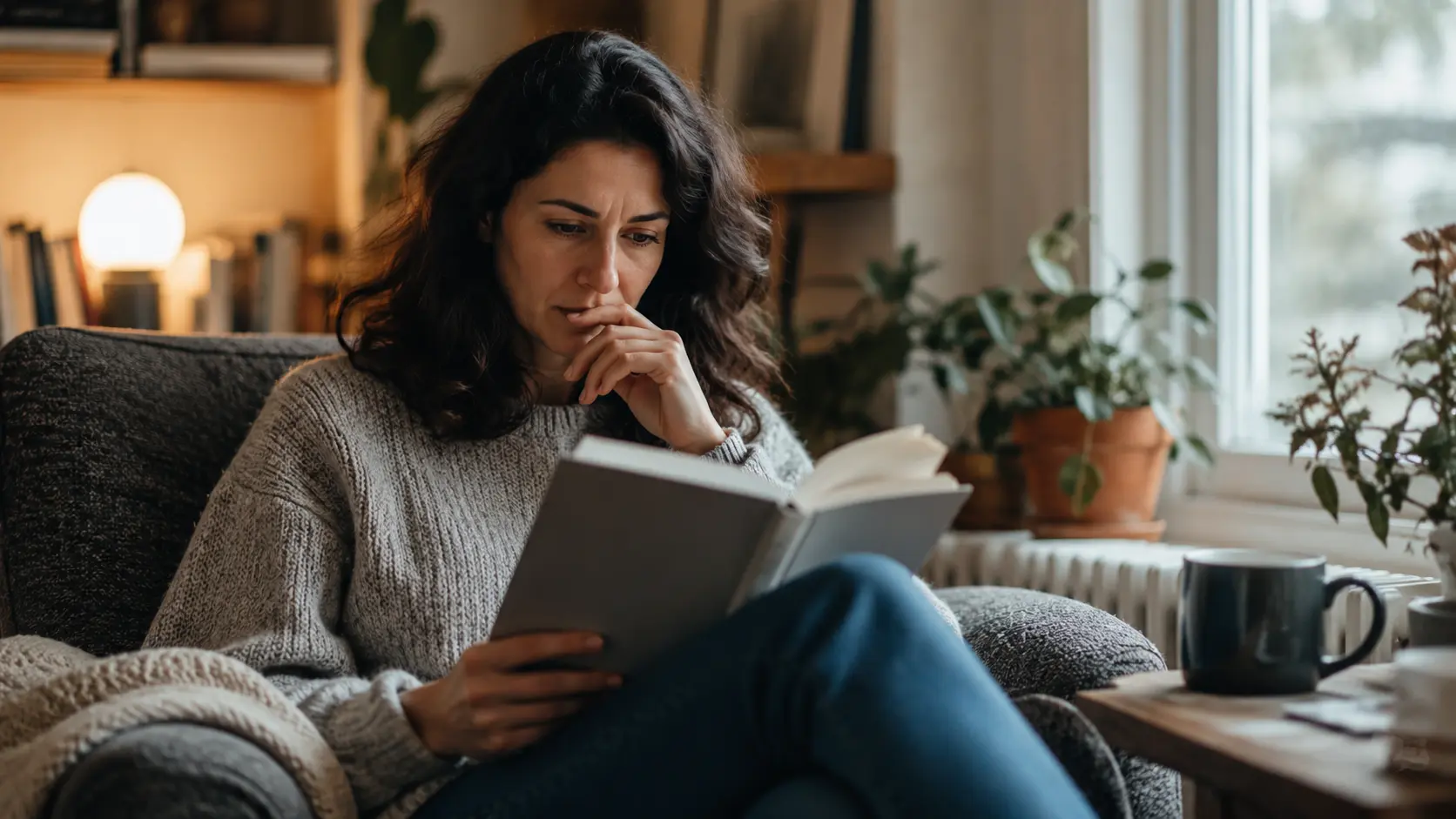
Your mind is racing at 3am, your to-do list is endless, and you cannot remember the last time you felt calm, and reading books might be the simplest solution you have overlooked.
Mental health boost
When you open a book, something shifts in your nervous system. Your heart rate slows, your shoulders drop, and the constant mental chatter begins to fade. Reading activates different neural pathways than scrolling or watching screens, creating a genuine state of focused relaxation that your brain craves. Consider Sarah, a marketing manager who struggled with insomnia and racing thoughts. After committing to just 20 minutes of reading before bed, she noticed her sleep improved within two weeks. The key is that reading demands enough attention to interrupt anxiety loops, but not so much that it creates stress. When you follow a character through their journey, your prefrontal cortex engages in a way that quiets the amygdala, the part of your brain responsible for fear and worry. This is why reading feels so different from doomscrolling through news feeds. Your vocabulary naturally expands as you encounter new words in context, which strengthens neural connections and improves cognitive reserve as you age.
- Enhances focus and concentration
- Promotes better sleep patterns
- Expands your vocabulary and cognitive abilities
Empowerment through knowledge
Books are repositories of human experience, wisdom, and practical knowledge accumulated across centuries. When you read, you are not just consuming information; you are gaining access to the thinking of experts, philosophers, scientists, and storytellers who have spent years mastering their craft. A woman learning about financial independence through a well-researched book gains confidence to make better money decisions. Another reading about nutrition science understands her body better and makes informed choices about her health. The transformation happens gradually but powerfully. You start seeing patterns in your own life that you never noticed before. You recognize situations in your relationships that mirror what you read about in psychology books. You understand historical context that helps you make sense of current events. This knowledge compounds over time, creating a foundation of understanding that makes you feel more capable and less at the mercy of circumstances. Reading non-fiction builds your mental toolkit for navigating challenges, while fiction teaches you about human nature and emotional complexity in ways that lectures or articles cannot.
📘 Fix your day in under 2 minuteschoose where to begin:
Cultivating emotional intelligence
When you read fiction, you are essentially practicing empathy in a safe space. You inhabit the mind of a character completely different from yourself, experiencing their fears, hopes, and moral dilemmas. This mental simulation strengthens your ability to understand others in real life. Research shows that readers of literary fiction score higher on tests measuring empathy and theory of mind, the ability to understand that others have different beliefs and desires than you do. Imagine reading a novel where a character makes a decision you initially judge as selfish, but as the story unfolds, you understand the pain and desperation driving that choice. This shifts how you respond to people in your own life. You become slower to judge, quicker to ask questions, and more capable of holding complexity. Women often carry the emotional labor of their relationships and communities, and reading deepens the emotional intelligence that helps you navigate these dynamics with more wisdom. You learn to recognize subtle emotional cues in others, to articulate your own feelings more precisely, and to see situations from multiple perspectives. This is not abstract benefit; it directly improves your relationships, your communication at work, and your ability to parent or mentor others with greater understanding.
Escapism and relaxation
Escapism has a bad reputation, but it is actually a necessary form of mental restoration. Your brain needs breaks from the constant demands of modern life, and reading provides a sanctioned, healthy escape that actually strengthens you rather than depleting you. Unlike passive scrolling, reading is an active form of escapism that engages your imagination and creativity. When you step into a different world through a book, you are giving your prefrontal cortex a rest from decision-making while simultaneously exercising your creative visualization. A woman dealing with a difficult work situation might spend an evening in a mystery novel, and return to the problem the next day with fresh perspective and renewed energy. This is not avoidance; it is strategic restoration. Reading before a stressful event, like a medical appointment or difficult conversation, can calm your nervous system and improve your ability to handle the situation. The key is choosing books intentionally. Sometimes you need a cozy, predictable story that feels like a warm blanket. Other times you need an adventure that makes your heart race in a thrilling way. Understanding what your nervous system needs in any given moment and choosing accordingly is part of the healing power of reading.
Community and connection
Reading does not have to be solitary. Book clubs, online reading communities, and literary discussions create spaces where women connect over shared stories and ideas. These communities offer more than just social interaction; they provide belonging and intellectual stimulation that many women crave but struggle to find in their daily lives. When you discuss a book with others, you discover interpretations you missed, you feel validated in your emotional responses, and you gain new perspectives that deepen your understanding. A woman might join a book club hesitantly, thinking she does not have time, and discover it becomes her sanctuary, the one place where she is fully seen and heard. The conversations extend beyond the book itself, often touching on life experiences, values, and dreams. Online communities make this accessible regardless of geography or schedule. You can participate in discussions at midnight if that is when you have time, connect with women across the world who share your interests, and find mentorship and friendship through shared love of reading. For women navigating isolation, whether from caregiving responsibilities, relocation, or life circumstances, reading communities can be a lifeline that reminds you that you are not alone in your experiences and struggles.
Reading books provides a mental health boost by calming your nervous system and improving sleep, empowers you with knowledge that builds confidence and capability, cultivates emotional intelligence that strengthens your relationships, offers healthy escapism that restores your mental energy, and fosters genuine community and connection with other women through shared literary experiences.
Can reading books improve my mental well-being?
Yes, reading books has been shown to reduce stress, enhance cognitive function, and promote better mental health overall. The focused attention required for reading activates relaxation responses in your nervous system, while the emotional engagement with characters builds emotional intelligence and empathy that improve your relationships and self-understanding.
How can I incorporate reading into my daily routine?
Try setting aside a few minutes each day to read a book, whether it is in the morning, during your lunch break, or before bed. Find a cozy spot where you can fully immerse yourself in the reading experience. Even 15 minutes daily compounds over time. Keep a book in your bag, use audiobooks during commutes or household tasks, and consider joining a book club to create accountability and community around your reading habit.
Others also read:
Disclaimer: This article is for informational purposes only and is not a substitute for professional medical advice. Always consult a healthcare professional for personal guidance.
This guide has been prepared and reviewed by the GlobalHealthBeacon editorial team and reflects current medical research as of 2026. It provides structured, evidence-based information to support informed health decisions.
