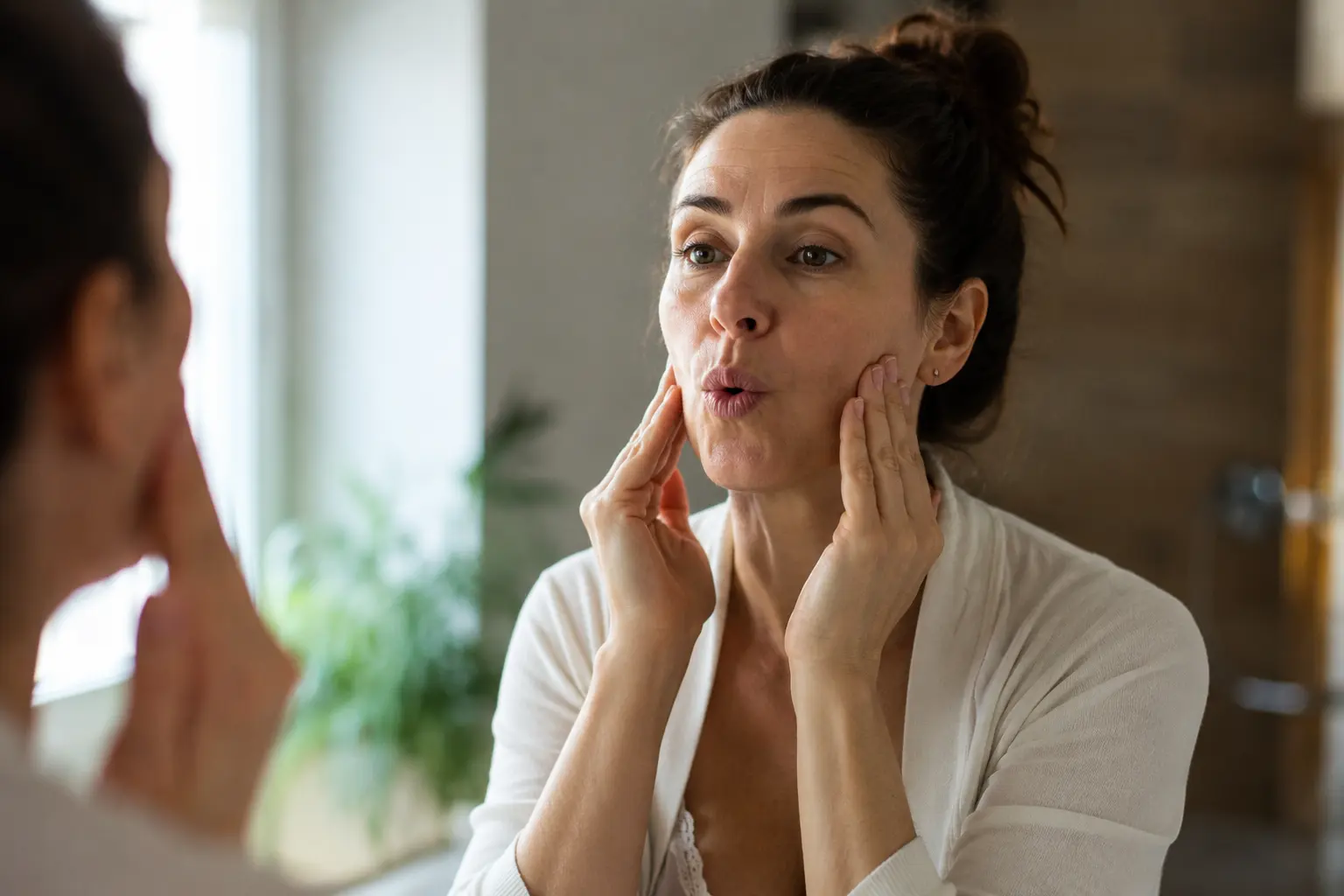
You catch your reflection and notice those lines deepening around your eyes and mouth, wondering if there’s anything natural you can actually do about it, and that’s exactly where face yoga wrinkle prevention comes in as a surprisingly grounded approach backed by real biological mechanisms.
Understanding face yoga and wrinkles
Face yoga involves targeted facial exercises designed to engage and strengthen the intricate network of muscles beneath your skin. Think of it like this: your face has over 40 muscles, many of which weaken and lose tone as you age, similar to what happens to your body without exercise. As we move through our 30s, 40s, and beyond, collagen and elastin production naturally decreases, leading to sagging skin, loss of definition, and the formation of wrinkles. Face yoga aims to counteract these effects by improving blood circulation to facial tissues, potentially stimulating collagen production, and promoting muscle firmness and tone. For example, a woman practicing regular facial exercises might notice her cheekbones appear more defined or her jawline more sculpted, not because of dramatic changes but because strengthened muscles provide better support to overlying skin. The concept isn’t new; it draws from ancient practices but is now being examined through modern scientific lenses to understand exactly how these movements influence skin structure and appearance.
Mechanisms of wrinkle prevention through face yoga
When you engage in regular face yoga routines, several biological processes may occur simultaneously. First, the repetitive muscle contractions increase blood flow to your facial area, delivering more oxygen and nutrients to skin cells. This enhanced circulation helps nourish the dermal layer where collagen lives. Second, these exercises can help release chronic tension held in facial muscles, which often contributes to expression lines and wrinkles. Consider someone who spends hours frowning at a computer screen; over time, those repeated contractions create permanent grooves. Face yoga teaches you to consciously relax these muscles while strengthening others, creating better balance. Third, the practice may reduce stress-related signs of aging by promoting relaxation of facial muscles and lowering overall tension patterns. A woman practicing facial exercises might find that her habitual frown lines soften as she becomes more aware of and releases that tension. Additionally, improved muscle tone provides better structural support for skin, potentially reducing the appearance of sagging and fine lines. The mechanism is straightforward: stronger, more flexible muscles create a firmer foundation for skin, while improved circulation delivers the nutrients skin needs to maintain elasticity and resilience.
Research insights on face yoga benefits
Preliminary research has documented measurable improvements in facial muscle strength, skin elasticity, and wrinkle appearance among regular practitioners. Studies examining before-and-after measurements have shown changes in skin texture and firmness that correlate with consistent practice. Beyond the physical changes, participants frequently report enhanced self-esteem and confidence, which itself influences how we perceive our appearance and age. Imagine a woman who begins a face yoga practice and, after eight weeks of consistent effort, notices her skin looks more radiant and her facial contours appear sharper. That combination of physical improvement and psychological boost creates a powerful effect. The research also suggests that benefits accumulate over time, with most noticeable changes appearing after 8 to 12 weeks of regular practice. However, it’s important to note that results vary based on individual factors like genetics, skin type, age, and consistency of practice. Some women see dramatic improvements while others notice subtle shifts. The key finding across studies is that regular, intentional facial exercise does produce measurable changes in muscle tone and skin appearance, making it a legitimate component of a comprehensive approach to skin health and aging.
- Start by learning basic face yoga exercises from reputable sources or instructors to ensure you are performing movements correctly and safely.
- Incorporate face yoga into your daily skincare routine, ideally spending 5 to 10 minutes each morning or evening to maximize benefits and create lasting habits.
- Stay consistent with your practice over at least 8 to 12 weeks to see long-term results, as facial muscles respond to training similarly to body muscles.
🔬 Science-backed benefits in 2 minuteschoose where to begin:
Biological impact of face yoga on skin health
The biological mechanisms behind face yoga’s potential skin benefits are rooted in basic physiology. When facial muscles contract during exercises, they require increased blood flow, which brings oxygen and nutrient-rich blood to the skin’s surface. This improved oxygenation supports cellular metabolism and collagen synthesis, the process by which your body produces the protein that keeps skin firm and plump. Additionally, enhanced circulation helps remove metabolic waste and toxins from skin cells more efficiently, supporting overall skin health. A woman practicing face yoga might notice her complexion appears more luminous not just from improved muscle tone but from this enhanced cellular nourishment. The exercises also stimulate mechanoreceptors in the skin, which may trigger natural healing and regeneration responses. Over time, this combination of improved circulation, nutrient delivery, and cellular stimulation can result in a more radiant complexion, improved skin texture, and a reduction in the visible signs of aging like fine lines and dullness. The effect is gradual and cumulative, which is why consistency matters more than intensity. Think of it as giving your skin’s cells the conditions they need to function optimally, rather than forcing dramatic changes.
Scientific perspectives on face yoga efficacy
The scientific community remains cautiously optimistic about face yoga while acknowledging that more rigorous, large-scale research is needed to establish definitive evidence of its anti-aging effects. Current studies are often limited by small sample sizes and lack of standardized protocols, making it difficult to draw universal conclusions. However, the anecdotal reports and preliminary findings that do exist suggest that regular practice may offer measurable benefits including improved skin firmness, reduced appearance of wrinkles, and enhanced facial muscle tone. What makes face yoga scientifically interesting is that the mechanisms proposed are biologically plausible: muscle strengthening, improved circulation, and stress reduction are all well-established physiological processes. The challenge for researchers is isolating face yoga’s specific contribution to skin health when so many factors influence aging, including genetics, sun exposure, sleep, nutrition, and overall stress levels. A woman considering face yoga should understand that while the science is promising, it’s not yet conclusive in the way that, say, sunscreen efficacy is proven. This means face yoga works best as part of a holistic approach to skin health rather than as a standalone solution. The emerging research does support that it can contribute meaningfully to skin appearance and muscle tone when practiced consistently.
Exploring the future of face yoga research
As interest in natural, non-invasive anti-aging techniques grows, researchers are increasingly dedicating resources to studying the physiological and psychological effects of face yoga. Future studies are likely to employ more sophisticated measurement tools, including high-resolution imaging and biomarker analysis, to track changes in collagen production, skin elasticity, and muscle structure. Scientists are also interested in understanding which specific exercises produce the most benefit, optimal practice frequency and duration, and how face yoga compares to other natural approaches to skin health. There’s also growing recognition of the psychological component: the confidence and self-awareness that comes from intentional facial exercise may itself influence aging perception and overall wellness. As this research evolves, we may discover that face yoga’s true power lies not in dramatic transformation but in its role as a consistent, accessible practice that supports skin health while also promoting body awareness and stress reduction. For women interested in natural approaches to aging, the future of face yoga research promises clearer guidelines on what to expect, how to practice effectively, and how to integrate it into a comprehensive skin care strategy. The field is moving toward evidence-based recommendations that acknowledge both what face yoga can realistically achieve and where it fits within the broader landscape of skin health and anti-aging approaches.
Face yoga offers a natural, accessible approach to wrinkle prevention and skin health through targeted muscle toning, improved circulation, and enhanced cellular nourishment. While rigorous scientific evidence is still developing, preliminary research and consistent anecdotal reports suggest that regular practice may lead to improved muscle tone, reduced tension, enhanced skin firmness, and a more youthful appearance. The biological mechanisms are sound: strengthened facial muscles provide better support for skin, improved blood flow delivers nutrients and oxygen, and reduced muscle tension softens expression lines. Results typically emerge after 8 to 12 weeks of consistent practice and vary based on individual factors like genetics and age. Face yoga works best as part of a holistic approach to skin health that includes sun protection, hydration, sleep, and stress management. For women seeking natural ways to address aging skin, face yoga represents a legitimate, evidence-informed option that combines physical benefit with psychological empowerment.
Can face yoga really prevent wrinkles?
While definitive scientific evidence is still emerging, research and anecdotal reports suggest that regular face yoga practice may reduce the appearance of wrinkles and prevent new ones from forming by strengthening facial muscles, improving circulation, and reducing tension. Results vary based on genetics, age, and consistency of practice, with most noticeable changes appearing after 8 to 12 weeks. Face yoga works best as part of a comprehensive approach to skin health that includes sun protection and proper skincare.
How often should I practice face yoga for optimal results?
Consistency matters more than duration. Starting with 5 to 10 minutes daily or five times per week can help you see potential benefits. Many practitioners find that morning or evening practice fits easily into existing skincare routines. Gradually increasing intensity or duration over time, similar to body exercise, allows your facial muscles to adapt and strengthen. Most people notice measurable changes after 8 to 12 weeks of regular practice, though individual results vary.
Others also read:
Disclaimer: This article is for informational purposes only and is not a substitute for professional medical advice. Always consult a healthcare professional for personal guidance.
This article has been prepared and reviewed by the GlobalHealthBeacon editorial team and is based on current medical research and published scientific literature available in 2026. It provides structured, evidence-based information to support informed health decisions.
