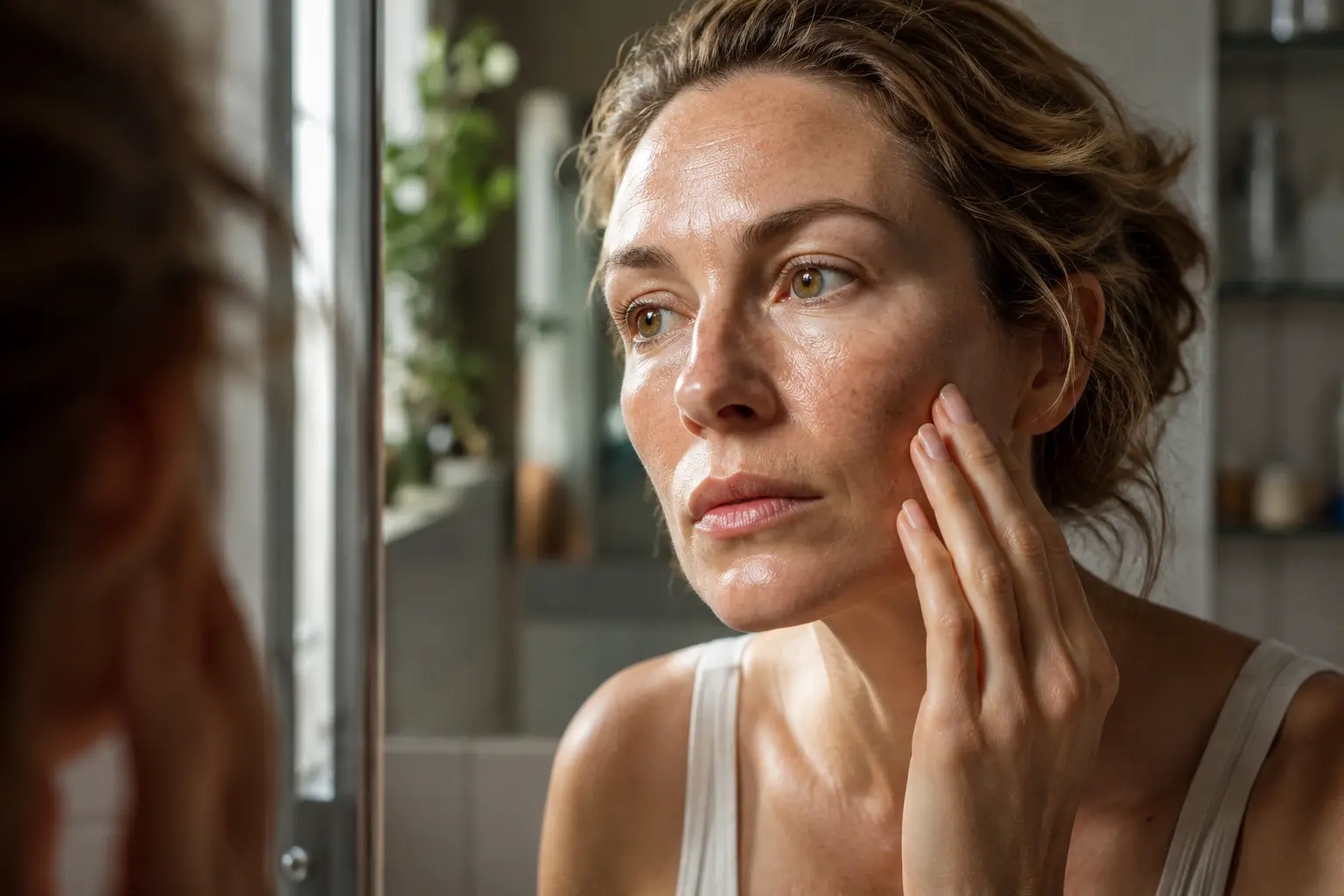
Your skin feels rough, those sun spots won’t fade, and you’re realizing those beach days without sunscreen might have actually done some damage – but here’s what science says you can actually do about it with a solid sun damage repair routine.
Understanding sun damage
Sun damage happens when ultraviolet rays penetrate deep into your skin’s layers, breaking down the DNA in your cells and triggering a cascade of biological responses. When UV radiation hits your skin, it generates reactive oxygen species that attack collagen fibers, the structural proteins responsible for keeping your skin firm and elastic. Over time, this collagen breakdown becomes visible as fine lines, wrinkles, and loss of skin texture. Beyond aesthetics, UV exposure also disrupts melanin production, leading to uneven pigmentation, age spots, and freckles scattered across sun-exposed areas. Think of it like this: imagine your skin as a brick wall where collagen is the mortar holding everything together. Each sun exposure without protection weakens that mortar, and eventually the wall starts showing cracks. Young adults often underestimate this damage because it accumulates silently over years. The risk extends beyond aging too, as repeated UV exposure increases the likelihood of skin cancer development, making understanding this process crucial for long-term skin health.
The science of sun damage repair
Your body actually has built-in repair mechanisms that activate when skin is damaged. When UV rays cause cellular injury, your skin responds by increasing collagen production to rebuild damaged tissue and ramping up melanin synthesis as a protective response. The epidermis, your skin’s outer layer, naturally sheds damaged cells through a process called desquamation, essentially sloughing away the most compromised cells. However, this natural repair process has limits and works best when supported by external interventions. Antioxidants like vitamin C work by neutralizing free radicals, the unstable molecules created by UV exposure that cause additional cellular damage. Retinoids, derived from vitamin A, stimulate fibroblasts (the cells that produce collagen) and accelerate cell turnover, helping your skin replace damaged cells faster. Sunscreen acts as a preventive shield, blocking UV rays before they can initiate damage in the first place. When these elements work together, they create an environment where your skin’s natural repair systems can function optimally. Think of it as giving your body the tools it needs to fix what’s already broken while preventing new damage simultaneously.
Effective strategies for repairing sun damage
A comprehensive approach to sun damage repair combines prevention with active treatment. Start with daily sunscreen use, SPF 30 minimum, applied generously to all exposed skin and reapplied every two hours if you’re outdoors. Many young adults make the mistake of applying too little sunscreen or skipping reapplication, which dramatically reduces effectiveness. Topical antioxidants like vitamin C serums work best when applied to clean skin in the morning before sunscreen, creating a protective layer that neutralizes free radicals throughout the day. Retinoids should be introduced gradually into your routine, starting with lower concentrations two to three times weekly, as they can cause irritation and sensitivity initially. A practical example: imagine Sarah, a 26-year-old who spent summers at the beach without protection. She started using a vitamin C serum each morning, applied SPF 50 daily, and introduced a gentle retinol cream three nights weekly. Within three months, her sun spots appeared lighter and her skin texture improved noticeably. Common mistakes include using retinoids and vitamin C together initially (which can cause irritation), applying sunscreen over makeup without reapplication, or expecting results within weeks when skin repair typically takes months. Consistency matters far more than perfection here.
- Apply broad-spectrum sunscreen with SPF 30 or higher every single day, even on cloudy days when UV rays still penetrate.
- Use a vitamin C serum each morning on clean skin to neutralize free radicals and support collagen synthesis.
- Introduce retinoids gradually, starting with lower strengths two to three times per week, increasing frequency as your skin adapts.
🔬 Science-backed benefits in 2 minuteschoose where to begin:
Nutritional support for sun-damaged skin
What you eat directly influences your skin’s ability to repair itself from within. Antioxidant-rich foods like berries, dark leafy greens, and colorful vegetables contain polyphenols and flavonoids that combat oxidative stress at the cellular level. Vitamin C from citrus fruits, kiwis, and bell peppers supports collagen synthesis, while vitamin E from nuts and seeds protects cell membranes from oxidative damage. Omega-3 fatty acids found in fatty fish, flaxseeds, and walnuts reduce inflammation and support skin barrier function, helping your skin retain moisture and heal more effectively. Hydration deserves special attention: drinking adequate water helps maintain skin elasticity and supports the transport of nutrients to skin cells. A practical scenario involves Marcus, a 24-year-old who combined topical treatments with dietary changes. He increased his intake of blueberries, salmon, and green tea while drinking eight glasses of water daily. Combined with his skincare routine, these nutritional changes enhanced his skin’s repair capacity noticeably. The connection between nutrition and skin health isn’t mystical; it’s biochemical. Your skin cells require specific nutrients to function optimally, and providing them through diet amplifies the effects of topical treatments.
Professional treatments for sun damage repair
When at-home routines reach their limits, dermatological procedures offer more aggressive repair options. Chemical peels use concentrated acids to remove damaged outer skin layers, revealing fresher skin beneath and stimulating collagen remodeling. Microdermabrasion physically exfoliates the skin using tiny crystals or a diamond-tipped wand, removing sun-damaged cells and promoting cellular turnover. Laser therapy targets pigmentation and stimulates collagen production deep within the dermis, making it effective for both discoloration and texture issues. Photodynamic therapy combines a photosensitizing agent with light activation to target damaged cells and precancerous lesions. These procedures range from mild to intense, with recovery times varying accordingly. A typical scenario: Jennifer, 28, had significant sun damage from years of outdoor sports. After six months of topical treatments showed modest improvement, her dermatologist recommended a series of laser treatments. Three sessions spaced six weeks apart dramatically improved her skin texture and faded her sun spots by 70 percent. Professional treatments work best when combined with consistent home care and sun protection afterward. Your dermatologist can assess your specific damage pattern and recommend the most appropriate procedure or combination of procedures for your situation.
Prevention is key
While repair strategies matter, preventing future damage is genuinely more effective than treating existing damage. A consistent skincare routine that includes daily sunscreen, antioxidants, and retinoids creates a protective foundation that prevents new damage from accumulating. Wearing protective clothing like lightweight long sleeves, wide-brimmed hats, and UV-blocking sunglasses shields your skin from direct exposure. Seeking shade during peak sun hours, typically between 10 AM and 4 PM, significantly reduces your UV exposure without requiring you to stay indoors entirely. Young adults often feel invincible and skip these precautions, but the damage accumulates silently. Consider this: someone who diligently protects their skin from age 25 onward will have dramatically better skin at 40 than someone who starts protection at 35. The difference compounds over years. Think of prevention as an investment in your future self. Every day you protect your skin is a day you’re preventing wrinkles, age spots, and skin cancer risk. The most effective sun damage repair routine is actually one that stops new damage from happening in the first place.
Understanding how UV radiation damages skin at the cellular level empowers you to take meaningful action. Sun damage occurs through collagen breakdown, melanin disruption, and oxidative stress, but your body has natural repair mechanisms that work better when supported by evidence-based strategies. Daily sunscreen use, topical antioxidants like vitamin C, and retinoids form the foundation of an effective repair routine, while nutritional support and professional treatments can enhance results. Prevention through consistent protection, appropriate clothing, and shade-seeking remains the most powerful tool available. Young adults who start protecting and repairing their skin now will see measurable improvements in texture, tone, and overall skin health while significantly reducing future aging and disease risk.
Can sun damage be completely reversed?
Complete reversal of all sun damage isn’t typically achievable, particularly for deep collagen loss or significant pigmentation changes. However, significant improvement is possible through consistent treatment. Early intervention yields better results than waiting years to address damage. Some damage like mild sun spots can fade substantially with proper treatment, while deeper structural damage may only improve partially. This is why prevention starting in your twenties matters so much.
Are all skin types equally susceptible to sun damage?
No, skin type significantly influences sun damage susceptibility. Fair-skinned individuals with lower melanin levels burn more easily and experience more visible damage faster. However, this doesn’t mean darker skin types are immune. All skin types experience collagen breakdown, oxidative stress, and skin cancer risk from UV exposure. Darker skin tones may show sun damage differently, with less obvious redness but still experiencing aging and pigmentation changes. Everyone needs sun protection regardless of skin tone.
Others also read:
Disclaimer: This article is for informational purposes only and is not a substitute for professional medical advice. Always consult a healthcare professional for personal guidance.
This article has been prepared and reviewed by the GlobalHealthBeacon editorial team and is based on current medical research and published scientific literature available in 2026. It provides structured, evidence-based information to support informed health decisions.
