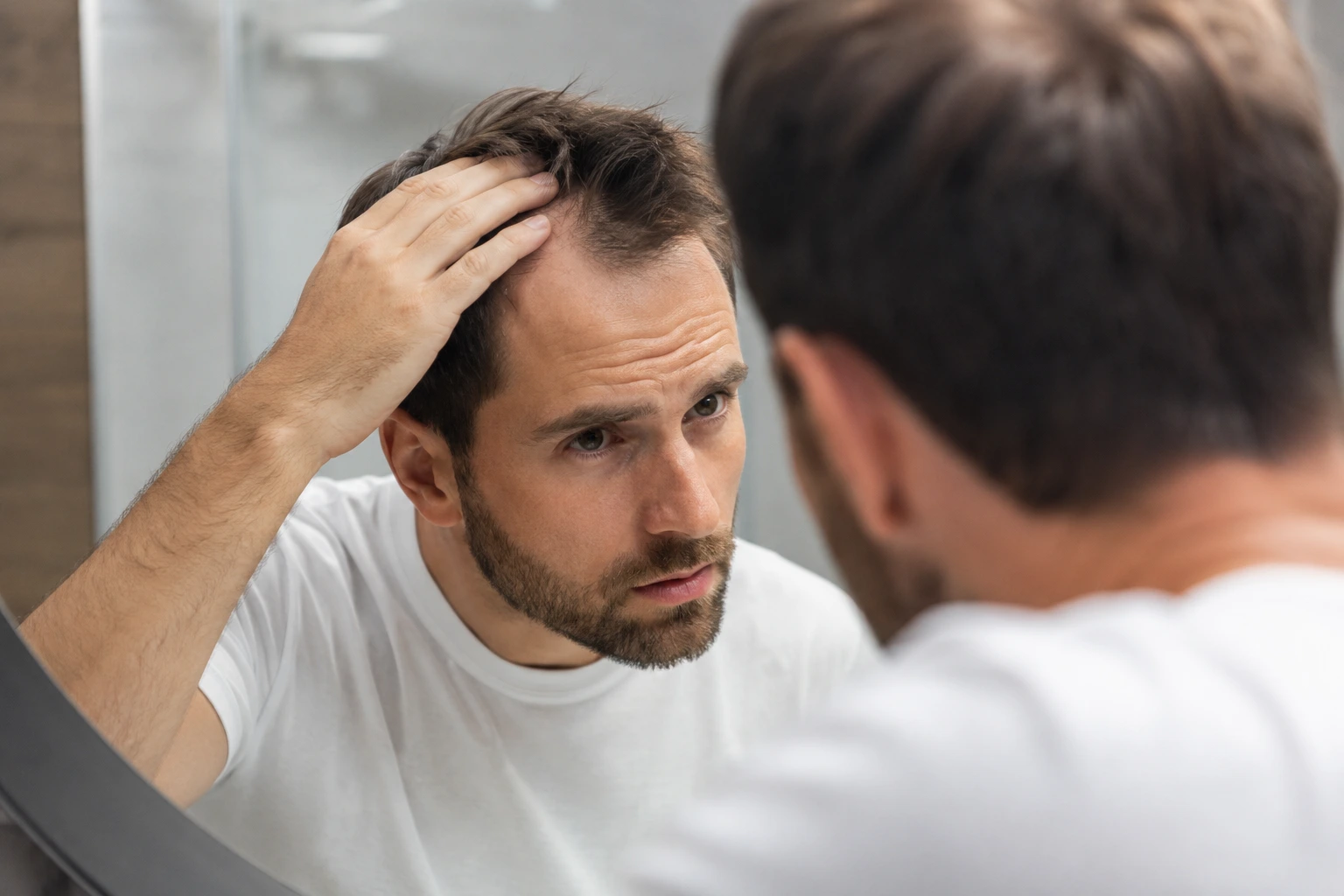
You’re noticing more strands in your brush, your ponytail feels thinner, and you can’t shake the worry that something’s changing with your hair thinning early signs, but here’s the thing: understanding what’s actually happening inside your scalp transforms panic into clarity.
Understanding hair growth cycles
Your hair doesn’t grow continuously like a plant. Instead, each strand follows a precise biological rhythm with three distinct phases. The anagen phase is the active growth period, lasting anywhere from two to seven years, where hair cells divide rapidly at the root and push the strand upward. Then comes the catagen phase, a brief two to three week transition where growth stops and the hair follicle shrinks. Finally, the telogen phase is the resting period lasting three to four months, after which the hair naturally sheds and the cycle begins again. When hair thinning appears, it often signals that this delicate rhythm has been disrupted. Perhaps more hairs are entering the telogen phase prematurely, or the anagen phase is shortening, meaning individual strands don’t grow as long or thick before shedding. Think of it like a factory with perfectly timed shifts: when the schedule gets thrown off, production suffers. Understanding these cycles helps explain why sudden stress or hormonal changes can trigger noticeable thinning within weeks.
Hormonal influences on hair thickness
Hormones act like messengers controlling whether your hair thrives or thins. Estrogen, the primary female hormone, naturally extends the anagen growth phase, keeping hair in active growth longer. This is why many women notice their hair looks fuller during pregnancy when estrogen levels surge. However, when estrogen drops, such as during perimenopause or menopause, hair can shift into the shedding phase more quickly. Androgens, male hormones present in all women in smaller amounts, can also affect hair. In genetically predisposed individuals, hair follicles on the scalp become sensitive to androgens, causing them to shrink in a process called miniaturization. The follicle produces thinner, shorter hairs until eventually some stop producing visible hair altogether. Thyroid hormones play a role too: both overactive and underactive thyroids can disrupt the hair cycle. Birth control pills, which alter hormone levels, sometimes trigger temporary shedding when started or stopped. Understanding these hormonal connections helps explain why your hair might respond differently than your friend’s, even if you’re the same age.
Nutritional deficiencies impacting hair health
Hair is made primarily of a protein called keratin, which means your body needs adequate protein, vitamins, and minerals to build strong strands. Iron deficiency is particularly common in women and directly impacts hair growth. Iron carries oxygen to hair follicles, and without enough, the follicles can’t function optimally, pushing more hairs into the shedding phase. Zinc regulates the oil glands around hair follicles and supports protein synthesis. Biotin, a B vitamin, strengthens the hair structure itself. Vitamin D deficiency has been linked to hair loss patterns. B12 and folate support cell division in the hair follicle. Many women discover their thinning correlates with restrictive dieting, heavy menstrual bleeding, or vegetarian diets lacking sufficient iron-rich foods. A woman who suddenly cuts calories or eliminates entire food groups might notice thinning within two to three months as her body prioritizes essential functions over hair growth. The good news: addressing nutritional gaps can help restore the hair cycle to normal function.
- Request a blood test from your healthcare provider to measure iron, ferritin, vitamin D, B12, and zinc levels.
- Add iron-rich foods like red meat, poultry, beans, lentils, and fortified cereals to meals several times weekly.
- Include zinc sources such as oysters, beef, pumpkin seeds, and chickpeas in your regular diet.
- Discuss biotin supplementation with your doctor, as individual needs vary based on your specific deficiencies.
🔬 Science-backed benefits in 2 minuteschoose where to begin:
Genetic predisposition to hair thinning
If your mother or grandmother experienced hair thinning, your genes likely influence your hair’s vulnerability too. Genetic predisposition doesn’t mean you’ll definitely experience thinning, but it does mean your hair follicles may be more sensitive to hormonal changes or environmental stressors. This is why two women experiencing identical stress levels might have completely different hair outcomes. One woman’s follicles shrug off the disruption while another’s enter a prolonged shedding phase. Genetics determine your hair density at birth, the thickness of individual strands, and how your follicles respond to androgens and other hormones. If thinning runs in your family, you’re not fighting an inevitable battle, but rather understanding that your hair needs more attentive care. Early detection becomes especially valuable for genetically predisposed women because addressing contributing factors like stress, nutrition, or hormonal imbalances earlier can slow or minimize the visible effects. Your genes load the gun, but lifestyle and health factors pull the trigger.
Impact of stress on hair condition
Chronic stress triggers a cascade of hormonal changes that directly affect your hair. When you’re under sustained pressure, your body floods with cortisol, the stress hormone. Elevated cortisol can prematurely push hair follicles from the growth phase into the shedding phase in a condition called telogen effluvium. Unlike genetic hair thinning that develops gradually, stress-induced shedding can appear suddenly, sometimes two to three months after a major stressful event. A woman might experience significant stress during a job transition, relationship change, or health crisis, then notice alarming hair loss weeks later. The connection feels mysterious until you understand the biological timeline. Chronic stress also impairs nutrient absorption and diverts resources away from non-essential functions like hair growth. Additionally, stress can trigger or worsen inflammatory conditions that affect the scalp. The encouraging part: stress-related hair shedding is often reversible once stress levels decrease and the body restabilizes. Managing stress through consistent sleep, movement, meditation, or therapy doesn’t just help your mental health; it directly supports your hair’s ability to stay in the growth phase.
Professional treatment options for hair thinning
Dermatologists approach hair thinning with several evidence-based treatments tailored to underlying causes. Topical minoxidil, available over-the-counter, works by extending the growth phase and increasing blood flow to follicles; results typically appear after four to six months of consistent use. Oral medications like finasteride work differently, reducing the conversion of testosterone to the hormone that causes follicle miniaturization in genetically predisposed individuals. Low-level laser therapy uses specific wavelengths to stimulate cellular activity in dormant follicles. Platelet-rich plasma treatments involve concentrating growth factors from your own blood and injecting them into the scalp. Newer approaches include regenerative treatments and targeted supplements prescribed based on your specific nutritional deficiencies. The right treatment depends on your underlying cause: hormonal imbalance requires different intervention than nutritional deficiency or stress-induced shedding. A dermatologist can assess your individual situation, run appropriate tests, and recommend a personalized plan. Some women benefit from combining approaches, such as addressing nutritional gaps while using topical treatments. Professional guidance ensures you’re investing time and resources in strategies actually suited to your specific situation rather than trying random solutions.
Hair thinning results from complex interactions between your biology, genetics, lifestyle, and environment. The hair growth cycle operates on a precise schedule that hormonal changes, nutritional gaps, genetic sensitivity, and chronic stress can all disrupt. Women noticing hair thinning early signs have multiple avenues for understanding and addressing the issue. Identifying whether your thinning stems from hormonal fluctuations, nutritional deficiencies, genetic predisposition, or stress allows you to target interventions effectively. Some causes respond quickly to lifestyle changes, while others benefit from professional treatment. The key is moving from worry to informed action by understanding the science behind what’s happening.
Can hair thinning be reversed?
Hair thinning caused by temporary factors like stress, nutritional deficiency, or hormonal fluctuation often improves once the underlying cause is addressed. Follicles that have simply paused production can resume normal function. However, hair loss from advanced genetic miniaturization may not fully reverse, though treatments can slow progression and improve appearance. Early intervention offers the best outcomes, which is why identifying the cause matters.
Is hair thinning a common concern among women?
Absolutely. Millions of women experience some degree of hair thinning during their lifetime, triggered by menopause, pregnancy, hormonal changes, nutritional gaps, stress, or genetic factors. You’re not alone in noticing this change. The prevalence increases with age but can occur at any stage. Seeking professional evaluation helps distinguish between temporary shedding and patterns requiring ongoing management.
Others also read:
Disclaimer: This article is for informational purposes only and is not a substitute for professional medical advice. Always consult a healthcare professional for personal guidance.
This article has been prepared and reviewed by the GlobalHealthBeacon editorial team and is based on current medical research and published scientific literature available in 2026. It provides structured, evidence-based information to support informed health decisions.
