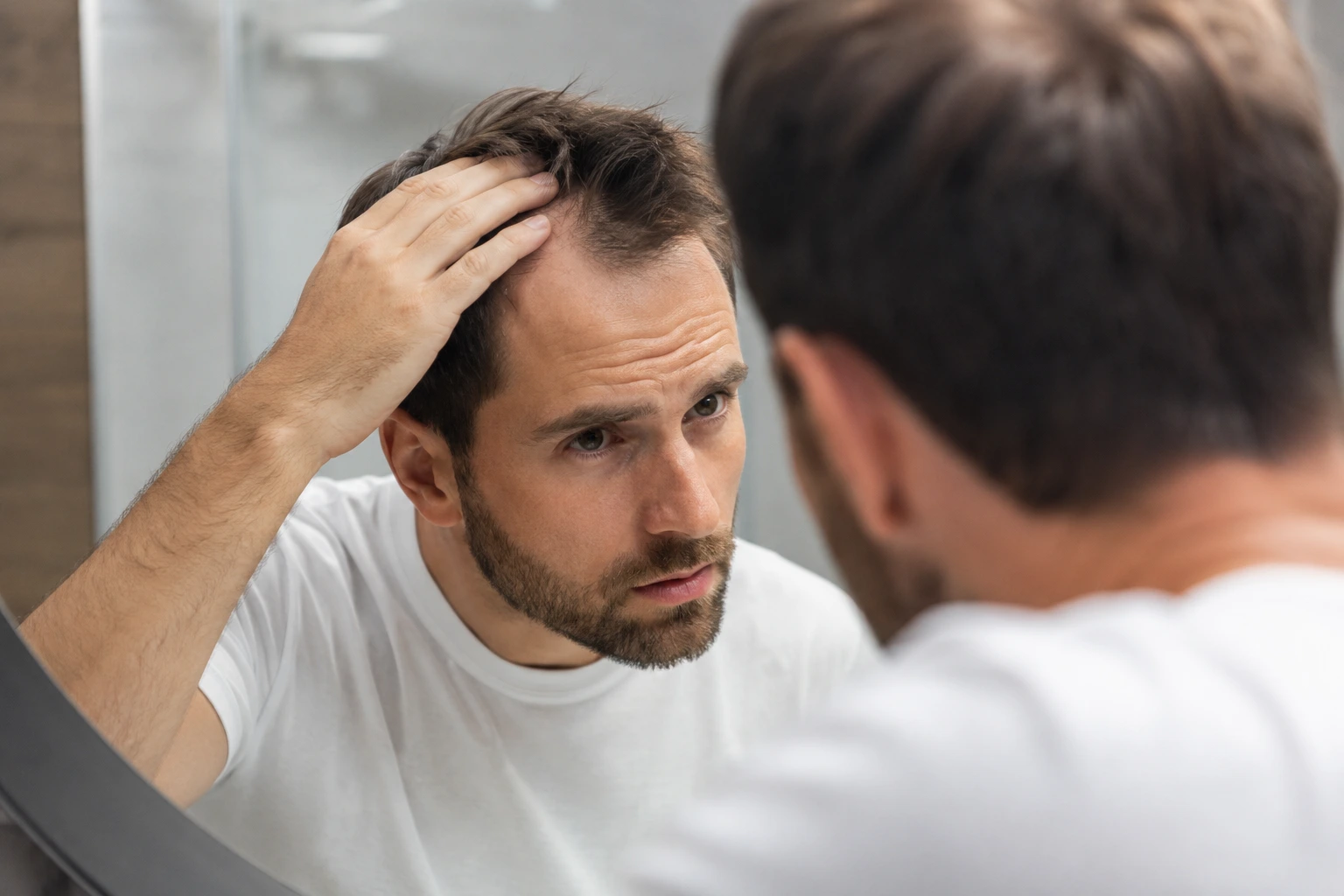
You notice more scalp showing through when you brush your hair, and it’s unsettling, but here’s what’s actually happening: understanding the hair thinning early signs and the biology behind them transforms worry into informed action.
Understanding hair thinning
Hair thinning in older adults happens through a well-documented biological process. As we age, individual hair follicles gradually shrink in a process called miniaturization. Think of it like this: a follicle that once produced thick, pigmented hair begins producing thinner, shorter strands. This occurs because hair follicles become increasingly sensitive to hormonal changes, particularly androgens, which are present in both men and women. The follicle’s growth phase shortens while its resting phase lengthens. Genetics play a major role here, which is why some people experience noticeable thinning in their 50s while others maintain fuller hair into their 80s. Environmental stressors, nutritional status, and overall scalp health also influence how quickly this process advances. Understanding this mechanism helps seniors recognize that hair thinning is not a sudden failure of their body but rather a gradual shift in how hair follicles function over decades.
Signs of hair thinning
Recognizing the early indicators of hair thinning empowers you to seek appropriate care before significant density loss occurs. The most common sign is a widening of your hair part, which becomes visible when you look at your scalp from above or in a mirror. You might notice increased scalp visibility, particularly at the crown or temples, where the skin shows through more easily than it once did. Some seniors report finding more hair in their brush or shower drain, though a certain amount of daily shedding is completely normal. Another telltale sign is a change in hair texture, where strands feel finer or more fragile than before. Your hairstyle may not hold volume the way it used to, even with the same styling techniques. Some people describe their hair as looking flatter or less full, even when the total number of hairs hasn’t changed dramatically. These gradual changes often go unnoticed until someone compares recent photos to pictures from five or ten years ago, making the shift suddenly apparent.
Factors contributing to hair thinning
Multiple interconnected factors accelerate or slow the hair thinning process. Chronic stress elevates cortisol levels, which can push hair follicles prematurely into their resting phase, leading to temporary but noticeable shedding. Nutritional deficiencies, particularly in iron, zinc, vitamin D, and B vitamins, directly impact hair follicle health and growth cycles. Certain medical conditions like thyroid disorders, autoimmune diseases, and hormonal imbalances can trigger or worsen thinning. Medications for blood pressure, depression, or other chronic conditions sometimes list hair changes as a side effect. Lifestyle factors matter too: smoking restricts blood flow to the scalp, poor sleep disrupts hormone regulation, and excessive heat styling damages hair shafts. Sun exposure without protection can weaken hair and damage the scalp. Even tight hairstyles worn repeatedly over years can cause traction alopecia, a form of hair loss from constant pulling. Understanding these contributing factors is crucial because many are modifiable, meaning seniors have more control over their hair health than they might initially realize.
- Consult a healthcare professional for a comprehensive evaluation to rule out underlying medical conditions or medication side effects.
- Maintain a well-balanced diet rich in essential nutrients for hair health, including iron-rich foods, omega-3 fatty acids, and adequate protein.
- Practice stress-reducing activities like yoga or meditation to help regulate cortisol levels and support overall scalp health.
🔬 Science-backed benefits in 2 minuteschoose where to begin:
Impact of aging on hair growth cycle
The hair growth cycle consists of three main phases: anagen (growth), catagen (transition), and telogen (resting). In younger adults, the anagen phase lasts several years, allowing hair to grow long and thick. As we age, this growth phase shortens significantly, sometimes by months or even years. Simultaneously, the telogen phase lengthens, meaning more hair follicles are in a resting state at any given time. This shift in cycle timing means fewer hairs are actively growing while more are shedding, creating a net loss in hair density. Additionally, hair follicles produce thinner strands during their shortened growth phase, so even the hairs that do grow lack the diameter they once had. The pigment-producing cells in hair follicles also become less active with age, which is why gray or white hairs often replace darker ones. This combination of shorter growth phases, longer resting periods, and reduced pigment production creates the cumulative effect of thinner, grayer hair that many seniors experience. The process is gradual enough that most people don’t notice dramatic changes year to year, but the long-term effect becomes unmistakable over decades.
Managing hair thinning
Several evidence-based approaches exist for managing hair thinning, each with different mechanisms and effectiveness levels. Topical minoxidil, available over-the-counter, works by extending the anagen phase and increasing blood flow to hair follicles, though results vary and require consistent application. Oral medications like finasteride work by reducing the conversion of testosterone to DHT, a hormone that miniaturizes follicles in genetically susceptible individuals. Low-level laser therapy stimulates cellular activity in follicles, though research on its effectiveness is still evolving. Hair transplantation involves moving hair follicles from areas of density to thinning areas, providing permanent results but requiring surgical intervention. Newer treatments like platelet-rich plasma injections and stem cell therapies show promise in clinical settings but remain expensive and not yet standard care. Scalp micropigmentation creates the appearance of fuller hair through tattooing, offering a non-invasive cosmetic solution. The right approach depends on the underlying cause of thinning, the severity of hair loss, personal preferences, and budget. A dermatologist can assess your specific situation and recommend the most appropriate option or combination of treatments.
Maintaining hair health
Daily habits significantly influence how well your hair ages and how noticeable thinning becomes. Gentle handling is crucial: use a wide-tooth comb on wet hair rather than brushing aggressively, as wet hair is more fragile and prone to breakage. Choose sulfate-free shampoos and conditioners that clean without stripping natural oils that protect both hair and scalp. Limit heat styling to occasional use, and always apply heat protectant products when you do use blow dryers or straighteners. Protect your scalp from sun damage by wearing hats during extended outdoor time, just as you would for skin protection. Regular scalp massage improves blood circulation to hair follicles, and many people find it relaxing as well. Avoid tight hairstyles that create constant tension on follicles. Consider silk or satin pillowcases instead of cotton, which create less friction and reduce breakage during sleep. Stay hydrated and maintain consistent sleep patterns, as both support overall hair health. These maintenance strategies won’t reverse existing thinning, but they prevent additional damage and create optimal conditions for whatever hair growth your follicles can still produce.
Hair thinning is a natural process influenced by genetics, hormones, and environmental factors. Understanding the signs, underlying causes, and management strategies can empower seniors to navigate this aspect of aging with confidence.
Can hair thinning be reversed?
While complete reversal of hair thinning may not be possible, early intervention and targeted treatments can help improve the appearance and health of thinning hair.
Is hair thinning always a sign of a serious medical condition?
Hair thinning can be a natural part of aging and may not always indicate an underlying medical issue. However, if you experience sudden or severe hair loss, it is advisable to consult a healthcare provider for evaluation.
Others also read:
Disclaimer: This article is for informational purposes only and is not a substitute for professional medical advice. Always consult a healthcare professional for personal guidance.
This article has been prepared and reviewed by the GlobalHealthBeacon editorial team and is based on current medical research and published scientific literature available in 2026. It provides structured, evidence-based information to support informed health decisions.
