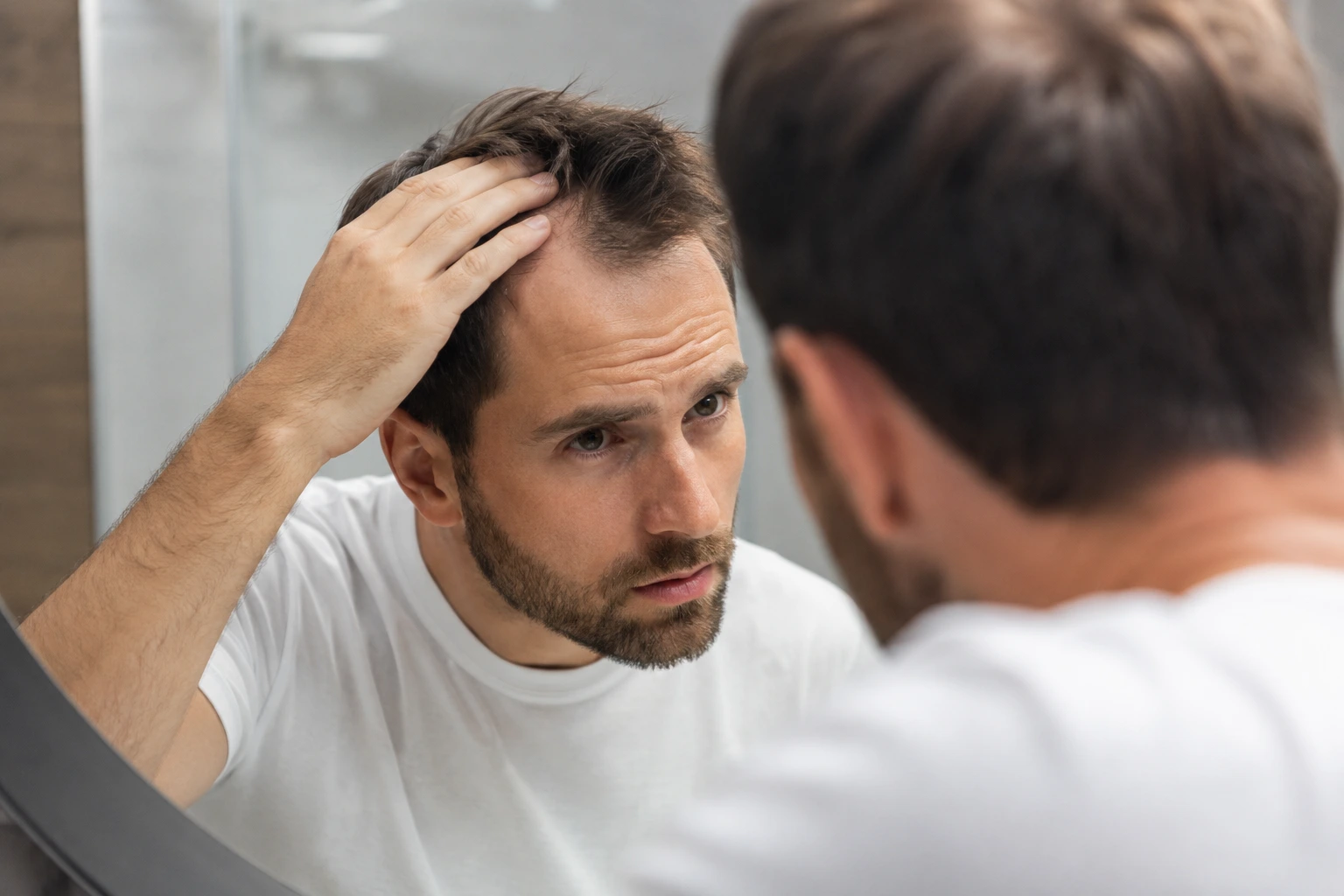
You’re noticing more hair in the shower drain, your part looks wider than it used to, and honestly it’s starting to mess with your head—understanding hair thinning early signs before things progress is the move that actually matters.
Understanding the hair growth cycle
Your hair isn’t just sitting there doing nothing. Each strand goes through a precise biological journey that determines whether your hair stays thick and healthy or starts thinning out. This cycle has three main phases: anagen (the growth phase where hair actively lengthens, typically lasting 2 to 7 years), catagen (a short transition phase lasting about 2 weeks where growth stops), and telogen (the resting phase lasting 2 to 3 months before the hair sheds). Think of it like a relay race where each phase hands off to the next. When you’re young and everything’s working properly, most of your hair is in the anagen phase, which is why you have that full, dense look. But when something disrupts this cycle, the balance shifts. Maybe more hairs enter the telogen phase too early, or the anagen phase shortens, meaning hairs don’t grow as long before falling out. This is where hair thinning begins. Understanding this cycle helps explain why certain stressors or nutritional gaps can trigger visible changes in your hair density relatively quickly.
Possible causes of early hair thinning
Hair thinning in young adults rarely happens for just one reason. Genetics plays a huge role, and if your parents or grandparents experienced hair loss, your risk is higher. But genetics isn’t destiny. Hormonal changes matter too, especially if you’ve recently started or stopped hormonal birth control, or if you’re dealing with thyroid issues. Nutritional deficiencies are sneakier culprits. Iron, zinc, biotin, and vitamin D are essential for hair growth, and if you’re not getting enough through diet or absorption issues, your hair pays the price. Stress is another major player. Prolonged stress can push hair prematurely into the telogen phase, causing what’s called telogen effluvium, where you shed noticeably more hair for weeks or months after a stressful event. Other factors include harsh hair care practices, certain medications, autoimmune conditions, and even rapid weight loss. The key is that multiple factors often work together, which is why two people with similar genetics might have completely different hair outcomes.
Detecting early signs of hair thinning
Catching hair thinning early means knowing what to look for. The first sign most people notice is increased shedding. If you’re finding significantly more hair in your shower drain or on your brush than you used to, that’s worth paying attention to. Normal shedding is around 50 to 100 hairs per day, but if you’re consistently seeing more, it could signal something’s off. Your part line is another telltale indicator. If you’ve had the same part for years and suddenly it looks wider or you can see more scalp through your hair, that’s a visible change in density. Some people notice thinning in specific areas first, like around the temples or crown, while others see overall thinning across the scalp. You might also feel that your hair doesn’t have the same volume or thickness when you style it. What used to take a certain amount of hair to create a full look now feels thinner. These signs aren’t always dramatic, which is why many young adults miss them until they’re more pronounced. The goal is to notice the shift early, before significant hair loss has occurred.
- Keep a simple log of your daily shedding for two weeks by counting hairs in your brush or shower drain to establish your baseline and identify if shedding is truly increasing.
- Take monthly photos of your part line and crown area from the same angle and lighting to track visible changes in density over time.
- Schedule a consultation with a dermatologist or trichologist who can examine your scalp, assess your hair density, and potentially run tests to identify underlying causes like nutritional deficiencies or hormonal imbalances.
- Review your recent life changes including stress levels, diet shifts, new medications, or hormonal changes that might correlate with when you first noticed thinning.
- Document your hair care routine and products to identify whether harsh treatments or frequent heat styling might be contributing to breakage or damage.
🔬 Science-backed benefits in 2 minuteschoose where to begin:
Managing early hair thinning
Once you’ve identified that something’s changing, management starts with the basics. Nutrition is foundational. Make sure you’re eating enough protein, iron-rich foods, and foods containing biotin and zinc. If you suspect deficiencies, blood work can confirm what you’re missing. Stress management isn’t just feel-good advice, it’s biology. Chronic stress elevates cortisol, which can disrupt your hair cycle. Whether that’s exercise, meditation, sleep optimization, or therapy, finding what actually reduces your stress matters for your hair. Gentle hair care practices help too. That means minimizing heat styling, avoiding tight hairstyles that pull on the scalp, using sulfate-free shampoos, and being gentle when your hair is wet and most vulnerable. Some people find that scalp massage increases blood flow to hair follicles, though the research is still emerging. Sleep quality and overall health habits matter as well. Your body repairs and regenerates during sleep, and that includes hair growth. If you’re consistently sleep-deprived, your hair suffers. The point is that managing early thinning is about addressing the whole picture, not just topical fixes.
Seeking professional advice
If you’ve noticed persistent signs of hair thinning for more than a few months, professional guidance becomes important. A dermatologist can examine your scalp, assess the pattern and severity of thinning, and run diagnostic tests if needed. They might check your thyroid function, iron levels, vitamin D, and other markers that influence hair health. Some dermatologists specialize in hair and scalp conditions and can offer more targeted insights. They can also discuss treatment options that are backed by research, whether that’s topical treatments, supplements, or other interventions. The earlier you seek help, the more options are typically available. Many young adults delay seeing a professional because they’re embarrassed or think it’s not serious enough, but early intervention often leads to better outcomes. Your dermatologist can also rule out conditions like alopecia areata or scalp infections that might look like thinning but require different approaches. They can also help you understand whether your thinning is temporary and reversible, or whether it’s a pattern you’ll need to manage long-term. Having professional clarity removes a lot of the anxiety and guesswork.
Research-driven insights on hair thinning
The science behind hair thinning has advanced significantly, and understanding the mechanisms helps you make informed choices. Research shows that hair follicles are incredibly responsive to hormonal changes, nutritional status, and stress levels. Studies on telogen effluvium demonstrate that significant life stressors can trigger noticeable hair shedding weeks or months later. Nutritional research confirms that deficiencies in specific micronutrients directly impact hair growth rate and follicle health. Genetic studies show that androgenetic alopecia involves specific genes and hormonal sensitivity, but expression of those genes isn’t inevitable. The emerging field of hair microbiome research suggests that scalp health and bacterial balance might play a role in hair loss. What’s encouraging is that many causes of early hair thinning are modifiable. Unlike some health conditions, you have real agency here. You can address nutritional gaps, manage stress, improve sleep, and adjust your hair care practices. The research also shows that early intervention, before significant follicle miniaturization occurs, tends to be more effective. This is why noticing changes early and acting on them matters. You’re not just hoping things improve, you’re working with your body’s biology to support healthy hair growth.
Early hair thinning in young adults stems from disruptions in the hair growth cycle, often triggered by a combination of genetic predisposition, hormonal fluctuations, nutritional gaps, stress, and lifestyle factors. Recognizing the early signs, including increased shedding, widening part lines, and visible density loss, empowers you to take action before significant changes occur. Professional evaluation can identify underlying causes and guide targeted management strategies. Whether through nutritional support, stress reduction, gentle hair care, or medical intervention, addressing early thinning is most effective when caught and managed proactively.
Can stress contribute to early hair thinning?
Yes, prolonged stress elevates cortisol levels and can disrupt the hair growth cycle, pushing hairs prematurely into the telogen or shedding phase. This condition, called telogen effluvium, typically causes noticeable increased shedding weeks or months after a significant stressor. Managing stress through exercise, sleep, and relaxation techniques can help stabilize your hair cycle.
Is nutritional deficiency a common cause of hair thinning?
Nutritional deficiencies, particularly in iron, zinc, biotin, and vitamin D, are common contributors to hair thinning in young adults. These micronutrients are essential for hair follicle function and growth. Blood tests can identify specific deficiencies, and addressing them through diet or supplementation often improves hair health over time.
Others also read:
Disclaimer: This article is for informational purposes only and is not a substitute for professional medical advice. Always consult a healthcare professional for personal guidance.
This article has been prepared and reviewed by the GlobalHealthBeacon editorial team and is based on current medical research and published scientific literature available in 2026. It provides structured, evidence-based information to support informed health decisions.
