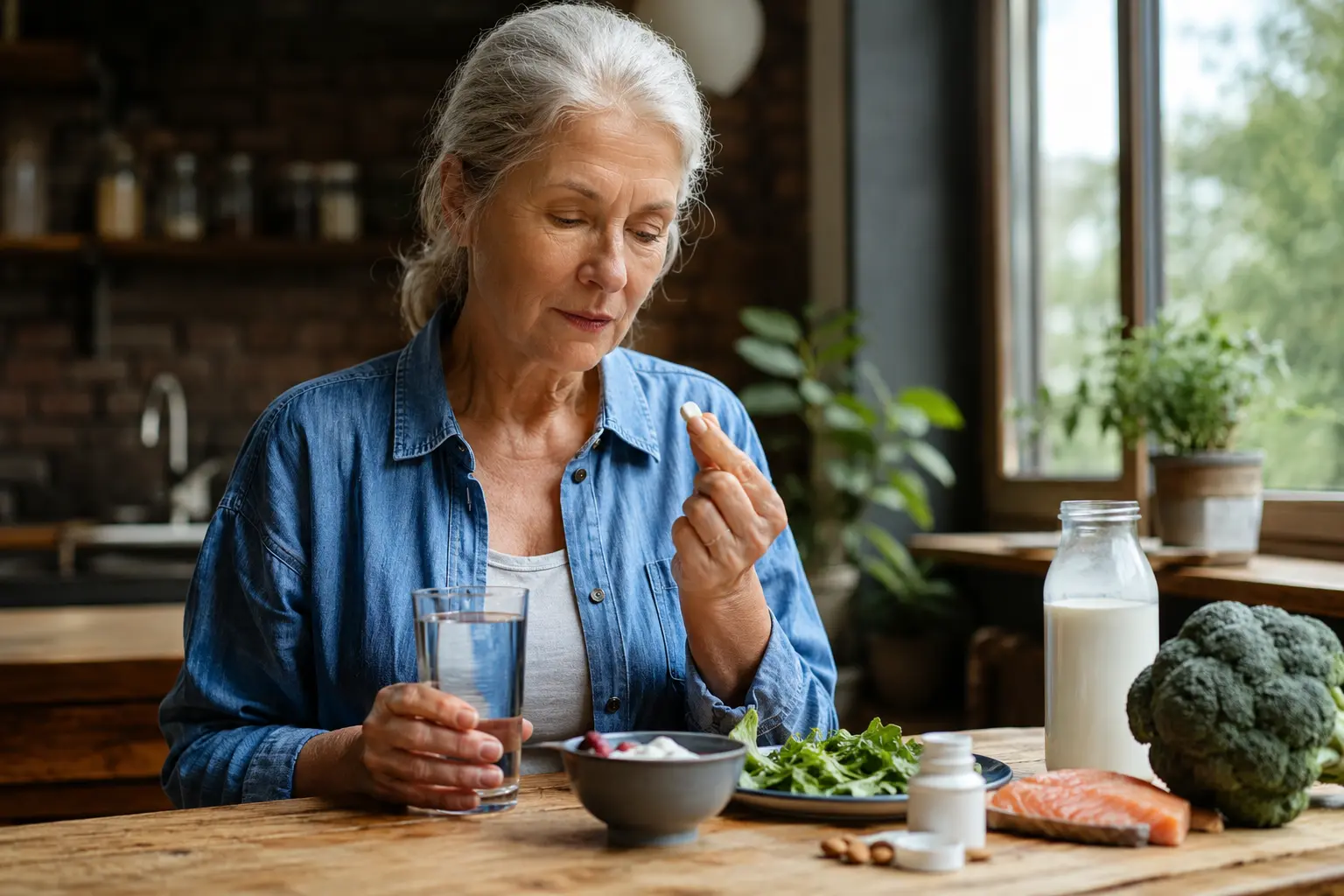
Your bones are quietly losing density every single year, and nobody’s really talking about why calcium vitamin d bone health matters so much until it’s too late and you’re facing a fracture from something as simple as a fall.
Mechanisms of calcium in bone health
Calcium is far more than just a mineral your body stores and forgets about. It’s the structural foundation of your skeleton, making up roughly 99 percent of your body’s total calcium supply. When you consume calcium through food or supplements, your body doesn’t simply deposit it into your bones and call it a day. Instead, calcium participates in a dynamic process called bone remodeling, where old bone tissue is continuously broken down and replaced with new tissue. This process happens throughout your entire life, but the rate of bone loss accelerates significantly as women age. Think of your bones like a building under constant renovation. Calcium acts as the primary building material, while specialized cells called osteoblasts construct new bone and osteoclasts remove old bone. Without adequate calcium intake, your body pulls calcium from your bones to maintain critical functions like muscle contraction and nerve signaling, leaving your skeletal structure weaker over time.
The crucial role of vitamin D
Vitamin D is the gatekeeper that determines whether calcium can actually do its job. Without sufficient vitamin D, your intestines simply cannot absorb calcium efficiently, no matter how much you consume. This fat-soluble vitamin works by binding to calcium in your digestive tract and facilitating its absorption into the bloodstream. Once absorbed, vitamin D helps regulate calcium levels throughout your body and activates osteoblasts, the cells responsible for building new bone tissue. The relationship is so interdependent that researchers often study them together because one without the other creates a bottleneck. A woman could consume 1200 milligrams of calcium daily but still develop weak bones if her vitamin D levels are insufficient. Your skin produces vitamin D when exposed to sunlight, but factors like geographic location, season, skin tone, and sunscreen use all affect production rates. This is why many women, particularly those in northern climates or with limited sun exposure, struggle to maintain optimal vitamin D levels naturally.
How to optimize calcium and vitamin D intake
Building a sustainable approach to calcium and vitamin D intake requires understanding your current baseline and then making deliberate choices. Start by evaluating your typical diet. Dairy products like yogurt, cheese, and milk remain among the most bioavailable calcium sources, meaning your body absorbs them efficiently. But if you’re lactose intolerant or prefer plant-based options, leafy greens like collard greens and bok choy, fortified plant milks, almonds, and tahini all contribute meaningful amounts. The key is consistency rather than perfection. For vitamin D, sun exposure remains valuable, but it’s unreliable as a sole source. Aim for moderate exposure, roughly 10 to 30 minutes several times weekly depending on your skin tone and location. Fatty fish like salmon and mackerel, egg yolks, and fortified foods provide dietary vitamin D. Many women find that combining dietary sources with supplementation creates the most reliable approach, especially during winter months or if sun exposure is limited. Working with a healthcare provider helps identify whether you need supplementation and at what dosage.
- Track your current calcium intake for one week to identify gaps in your diet.
- Incorporate two to three calcium-rich foods into your daily meals, rotating between dairy and plant-based sources.
- Aim for 10 to 30 minutes of moderate sun exposure several times per week, adjusting based on season and location.
- Include fatty fish or fortified foods containing vitamin D at least twice weekly.
- Request vitamin D blood testing from your healthcare provider to determine if supplementation is necessary.
- If supplements are recommended, take them with a meal containing fat for optimal absorption.
🔬 Science-backed benefits in 2 minuteschoose where to begin:
Underlying risks for women’s bone health
Women face unique bone health challenges that men don’t encounter at the same rates or ages. Menopause represents a critical turning point because estrogen, which helps regulate bone remodeling, drops dramatically. During the five to ten years surrounding menopause, women can lose up to 20 percent of their bone density. This accelerated loss period is why bone health becomes increasingly important in midlife. Beyond menopause, additional risk factors compound the picture. Family history matters significantly, as genetic factors influence bone density potential. Sedentary lifestyles, smoking, excessive alcohol consumption, and certain medications like corticosteroids all accelerate bone loss. Thyroid conditions, rheumatoid arthritis, and digestive disorders that affect nutrient absorption create additional complications. Women with eating disorders or those who restrict calories severely face heightened risk due to inadequate nutrient intake and hormonal disruption. Age itself is a factor, with bone loss accelerating after age 65. Understanding your personal risk profile helps you prioritize preventive strategies before problems develop.
Exercise and bone health
Exercise functions as a direct stimulus for bone-building cells. When muscles contract and pull on bones, they create mechanical stress that signals osteoblasts to strengthen bone tissue. This is why sedentary individuals lose bone density faster than active ones. Weight-bearing exercises, where your body works against gravity, prove particularly effective. Walking, jogging, dancing, and hiking all qualify as weight-bearing activities accessible to most women. Resistance training, where you work against weights or resistance bands, creates even more powerful bone-building signals because muscles pull directly on bones with greater force. A woman who incorporates resistance training twice weekly alongside regular walking builds bone density more effectively than someone relying on walking alone. Balance and flexibility exercises matter too, not for direct bone building but for fall prevention. A strong, flexible body with good balance reduces fracture risk when accidents happen. The beautiful part is that exercise benefits bone health while simultaneously improving cardiovascular fitness, muscle strength, and mental health. Starting slowly and progressing gradually prevents injury while allowing your body to adapt.
Maintaining a balanced diet for optimal bone health
Bone health extends far beyond calcium and vitamin D alone. Your skeleton requires a constellation of nutrients working in concert. Magnesium, present in nuts, seeds, and leafy greens, regulates calcium absorption and bone mineralization. Vitamin K, found in broccoli, kale, and Brussels sprouts, activates proteins that bind calcium into bone matrix. Phosphorus, abundant in most protein sources, works with calcium to form the mineral structure of bone. Zinc, copper, and manganese all play supporting roles in bone formation and strength. Protein itself matters because bone contains significant protein content alongside minerals. A woman eating inadequate protein struggles to build and maintain bone tissue regardless of mineral intake. The practical approach involves eating a colorful variety of whole foods rather than focusing obsessively on single nutrients. A typical day might include Greek yogurt with almonds and berries for breakfast, a salad with leafy greens and salmon for lunch, and roasted vegetables with chicken for dinner. This pattern naturally delivers calcium, vitamin D, magnesium, vitamin K, and protein without requiring complicated calculations.
Understanding the essential role of calcium and vitamin D in women’s bone health is crucial for maintaining optimal bone density and strength. By ensuring adequate intake of these nutrients through diet and supplements, women can support their bone health as they age.
How much calcium do women need daily?
The recommended daily intake of calcium for most adult women is around 1000 to 1200 milligrams. This can vary based on age, activity level, and specific health conditions. Women over 50 typically need 1200 milligrams daily. It’s important to spread calcium intake throughout the day rather than consuming it all at once, as your body absorbs calcium more efficiently in smaller amounts.
Can vitamin D supplements replace sunlight exposure?
While vitamin D supplements can help meet daily requirements, sunlight exposure remains an important source of this essential vitamin. It’s recommended to strike a balance between sun exposure and supplementation. Supplements provide reliable, consistent vitamin D intake regardless of season or location, but natural sunlight exposure offers additional health benefits beyond vitamin D production. Most experts suggest combining both approaches for optimal results.
Others also read:
Disclaimer: This article is for informational purposes only and is not a substitute for professional medical advice. Always consult a healthcare professional for personal guidance.
This article has been prepared and reviewed by the GlobalHealthBeacon editorial team and is based on current medical research and published scientific literature available in 2026. It provides structured, evidence-based information to support informed health decisions.
