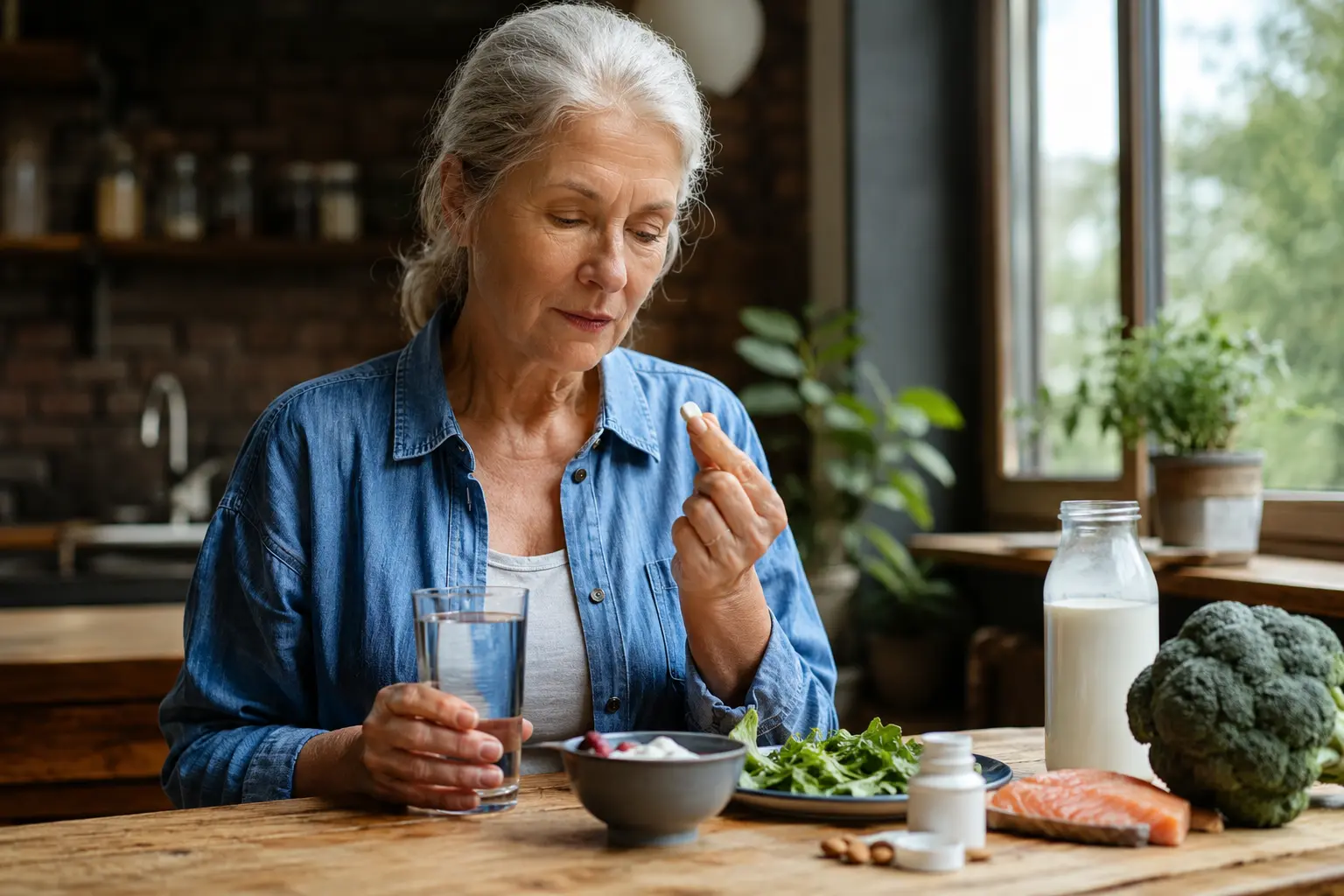
Your bones feel brittle, stairs feel riskier, and you are worried about one fall changing everything – but understanding calcium vitamin d bone health might be the missing piece that changes how you approach your skeletal strength.
The role of calcium in bone health
Calcium is far more than just a mineral you hear about in milk commercials. It is the structural foundation of your bones and teeth, making up roughly 99 percent of your body’s calcium supply. Think of your skeleton as a living building where calcium acts as the primary building material. When you consume calcium-rich foods like dairy products, leafy greens such as kale and broccoli, or fortified plant-based alternatives, your digestive system breaks these down and absorbs the mineral. This calcium then travels through your bloodstream to your bones, where it integrates into the bone matrix alongside other minerals like phosphorus and magnesium. Without adequate calcium intake, your body actually pulls calcium from your bones to maintain critical functions like nerve signaling and muscle contraction. For seniors, this becomes especially important because the body’s ability to absorb and retain calcium naturally declines with age. Studies show that seniors who consistently fall short on calcium intake face significantly higher risks of osteoporosis, a condition where bones become porous and fragile, making fractures more likely even from minor falls or bumps.
Vitamin D: crucial for proper calcium absorption
Here is where many people miss a crucial piece of the puzzle. You could be eating plenty of calcium-rich foods, but without sufficient vitamin D, your body simply cannot absorb and utilize that calcium effectively. Vitamin D acts as a gatekeeper in your intestines, actively transporting calcium from your digestive tract into your bloodstream. Without it, calcium passes through your system largely unused. Your skin produces vitamin D naturally when exposed to sunlight, specifically UVB rays, but this process becomes less efficient as you age. A 70-year-old’s skin produces roughly 25 percent of the vitamin D that a 20-year-old’s skin produces from the same sun exposure. Additionally, many seniors spend more time indoors, wear protective clothing, or live in climates with limited sunlight, further reducing natural vitamin D production. This is why vitamin D deficiency is remarkably common in older adults, affecting an estimated 40 to 60 percent of seniors depending on geographic location and lifestyle. When vitamin D levels drop too low, calcium absorption plummets, and your bones begin losing density even if you are consuming adequate calcium.
Optimizing bone health naturally
Building and maintaining strong bones requires a coordinated approach that touches multiple areas of your life. Start by examining your current diet and identifying calcium sources you actually enjoy eating, whether that is Greek yogurt, canned salmon with bones, almonds, or fortified orange juice. The key is consistency, not perfection. Next, consider your vitamin D status. If you live in a northern climate or spend limited time outdoors, vitamin D supplementation becomes increasingly important. Many seniors benefit from 1,000 to 2,000 IU of vitamin D daily, though your specific needs depend on your current blood levels and individual factors. Weight-bearing exercise is equally critical because bones respond to physical stress by becoming denser and stronger. Walking, dancing, light resistance training, or even gardening places healthy stress on your bones that signals them to maintain and build density. Finally, avoid common pitfalls like excessive caffeine or sodium intake, which can increase calcium loss through urine. If dietary sources alone cannot meet your needs, supplements under medical supervision provide a reliable backup plan.
- Increase consumption of dairy products, leafy greens, and fortified foods by incorporating them into meals you already enjoy rather than forcing unfamiliar options.
- Expose yourself to sunlight for natural vitamin D synthesis by spending 15 to 30 minutes outdoors several times per week, adjusting for your skin tone and geographic location.
- Consult with a healthcare provider for personalized recommendations including blood tests to measure your vitamin D and calcium status before starting any supplementation regimen.
🔬 Science-backed benefits in 2 minuteschoose where to begin:
Understanding bone density measurements
If your doctor mentions a bone density scan, you are likely hearing about a DXA scan, which stands for dual-energy X-ray absorptiometry. This painless, non-invasive test takes just 10 to 30 minutes and uses very low doses of radiation to measure how much mineral is packed into a specific area of bone. The scan typically focuses on your hip and spine, the areas most vulnerable to fracture-related complications in seniors. Your results come back as a T-score, which compares your bone density to that of a healthy 30-year-old. A T-score of minus 1 or higher is considered normal, between minus 1 and minus 2.5 indicates osteopenia or low bone mass, and below minus 2.5 indicates osteoporosis. Understanding these numbers helps you and your doctor assess your fracture risk and determine whether lifestyle changes alone are sufficient or whether additional interventions might be beneficial. Many health organizations recommend that women over 65 and men over 70 have at least one baseline DXA scan to establish their bone health status.
The impact of aging on bone health
Your bones are living tissue that constantly undergoes remodeling, with old bone being removed and new bone being added. In younger years, new bone is added faster than old bone is removed, so bone mass increases. Most people reach their peak bone mass around age 30. After that, bone remodeling continues, but more bone is lost than gained. This natural process accelerates significantly after age 50, particularly in women following menopause when estrogen levels drop sharply. Estrogen plays a protective role in bone density, and its decline triggers rapid bone loss in the years immediately after menopause. Men experience a similar but more gradual decline in testosterone, which also supports bone health. Additionally, your intestines become less efficient at absorbing calcium with age, your kidneys become less efficient at activating vitamin D, and your body produces less of the hormones that regulate bone turnover. For seniors, these compounding changes mean that maintaining bone health requires more intentional effort than it did in younger years. The good news is that understanding these changes empowers you to take targeted action that genuinely slows bone loss and preserves the strength you have built over a lifetime.
Conclusion: prioritize your bone health
Strong bones in your senior years are not a matter of luck or genetics alone. They result from consistent choices made over time, starting with ensuring adequate calcium and vitamin D intake through food and supplements when needed. Pairing this nutritional foundation with regular weight-bearing exercise creates a powerful combination that your bones respond to by maintaining and even building density. Periodic health assessments, including bone density scans when recommended by your doctor, give you concrete information about your skeletal health and help guide your decisions. The science is clear: seniors who take a multifaceted approach to bone health, addressing nutrition, exercise, and medical monitoring, maintain better bone density and experience fewer fractures than those who neglect these areas. You have more control over your bone health than you might think. By understanding the mechanisms behind calcium vitamin d bone health and taking action based on that knowledge, you are investing in your independence, mobility, and quality of life for years to come.
Calcium and vitamin D are integral components for maintaining strong bones in seniors. Adequate intake and absorption of these nutrients, paired with lifestyle modifications, can help optimize bone health naturally.
How much calcium should seniors consume daily?
Seniors aged 51 and older should aim for 1,200 milligrams of calcium per day through a combination of food sources and supplements if necessary.
Can vitamin D supplements alone improve bone health?
Vitamin D supplements are beneficial in enhancing calcium absorption, but holistic bone health also requires adequate calcium intake, exercise, and overall nutrition.
Others also read:
Disclaimer: This article is for informational purposes only and is not a substitute for professional medical advice. Always consult a healthcare professional for personal guidance.
This article has been prepared and reviewed by the GlobalHealthBeacon editorial team and is based on current medical research and published scientific literature available in 2026. It provides structured, evidence-based information to support informed health decisions.
