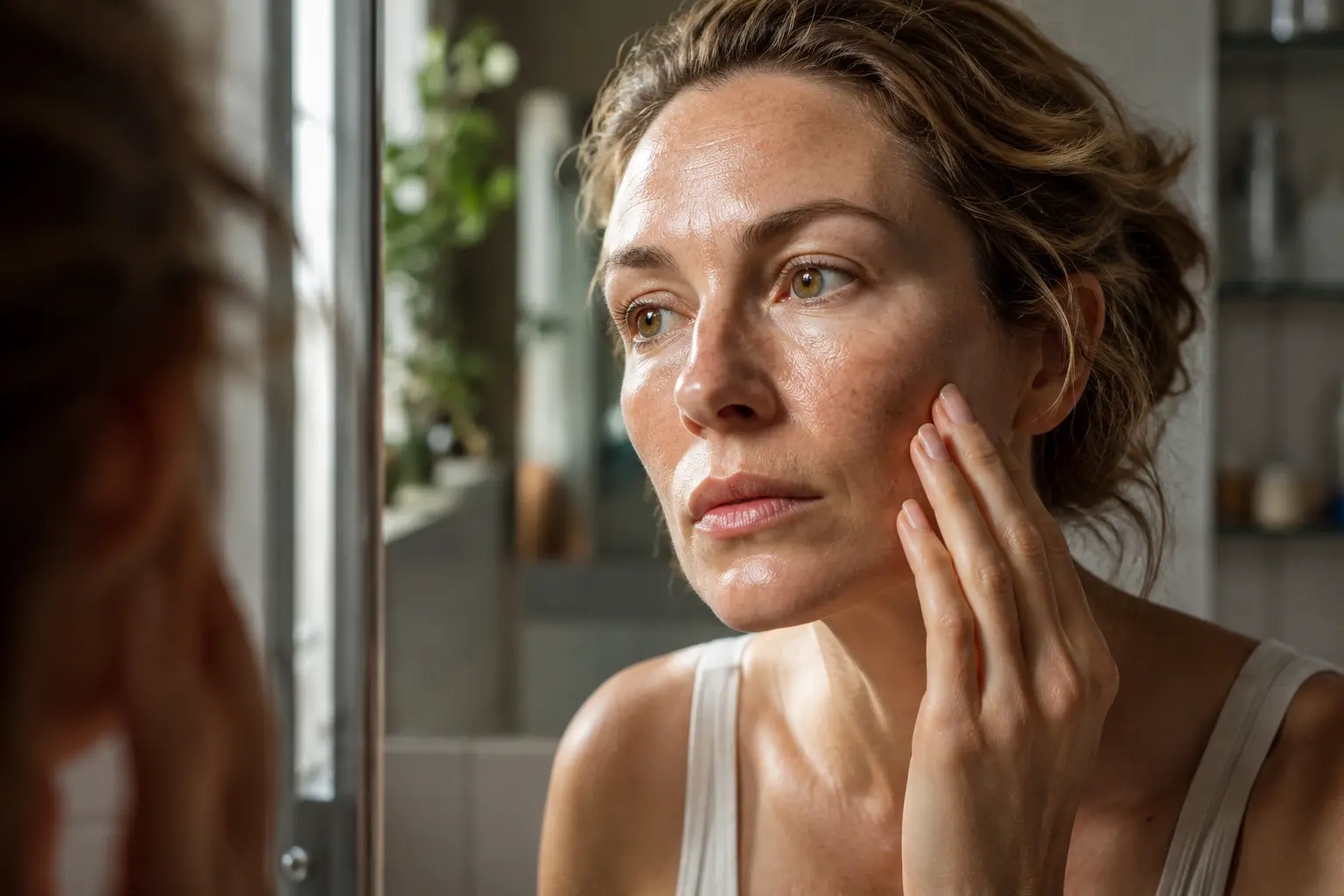
Your face feels like sandpaper, itches relentlessly, turns red at the slightest provocation, and no amount of moisturizer seems to help because your skin barrier is completely shot and barrier friendly skincare is the only thing that finally makes sense.
Understanding the skin barrier
Think of your skin barrier as a brick wall. The bricks are skin cells, and the mortar holding them together is made of lipids and natural oils. When you’re younger, that wall is solid and impenetrable. But somewhere around your 50s or 60s, the mortar starts crumbling. Moisture escapes, irritants slip in, and suddenly you’re dealing with redness, flaking, and sensitivity you never had before. Sarah, a 68-year-old from Portland, remembers the exact moment she realized her barrier was compromised. She’d switched to a trendy cleanser recommended by her daughter, and within two weeks, her cheeks felt raw and tight. The barrier isn’t just about feeling uncomfortable either. When it weakens, your skin becomes vulnerable to environmental damage, infections, and accelerated aging. Understanding this shift is the first step toward genuine healing and restoration.
- Identify skincare products that support the skin barrier
- Avoid harsh ingredients that strip the skin’s natural oils
- Stay hydrated and maintain a healthy diet for overall skin health
Gentle cleansing and moisturizing rituals
Forget everything you learned about skincare in your 30s. That vigorous scrubbing and stripping sensation that felt like it was ‘really cleaning’ your face? That was actively damaging your barrier. Gentle is not a compromise anymore; it’s the foundation. A good barrier-friendly cleanser should feel almost like nothing on your skin, leaving it soft rather than tight. Look for creamy formulas with ceramides, hyaluronic acid, or glycerin. After cleansing, moisturizing within two minutes while your skin is still slightly damp locks in hydration. Margaret, 72, discovered that layering a lightweight hydrating toner under her moisturizer transformed her skin within three weeks. The combination of ceramides and hyaluronic acid worked synergistically to repair her compromised barrier. She went from needing to reapply moisturizer four times daily to just twice. The ritual itself becomes meditative, a moment of self-care that signals to your body that you’re prioritizing healing.
💬 Ready to feel better in 2 minutes?choose where to begin:
Sun protection for aging skin
UV damage doesn’t just cause wrinkles; it actively breaks down the proteins and lipids that hold your skin barrier together. Every unprotected minute in the sun is like removing another brick from that wall. For seniors, this becomes even more critical because your barrier is already compromised. Daily broad-spectrum SPF 30 or higher isn’t optional; it’s essential maintenance. The tricky part? Many older adults skip sunscreen because they think their moisturizer is enough or because they don’t spend much time outside. But UV rays penetrate windows, and even 15 minutes of incidental sun exposure adds up. Robert, 75, noticed his barrier deteriorated faster during summer months until he committed to applying SPF every single morning, even on cloudy days. Within two months of consistent sun protection combined with barrier-friendly moisturizers, his skin stopped flaking and his redness diminished noticeably.
Seeking professional guidance
Sometimes you need expert eyes on your situation. A dermatologist can assess whether your barrier damage is from product misuse, environmental factors, or underlying conditions like rosacea or eczema. They can recommend prescription treatments or professional procedures tailored to your specific needs. Some seniors benefit from gentle facials using hydrating serums, while others might explore options like microneedling or light therapy to stimulate collagen production without further compromising their barrier. Helen, 70, was skeptical about professional treatments until her dermatologist explained that certain procedures could actually strengthen her barrier rather than weaken it. After three sessions of a specialized hydrating facial combined with her new barrier-friendly routine at home, her skin looked plumper and felt more resilient. The professional guidance gave her confidence that she wasn’t just guessing anymore; she had a real plan backed by expertise.
Exploring the journey to healthier skin barriers for seniors involves understanding the skin’s protective functions, adopting gentle skincare rituals, prioritizing sun protection, and seeking expert guidance for personalized care.
Why is the skin barrier important for seniors?
The skin barrier protects against moisture loss and external irritants. As we age, this barrier weakens, leading to dryness, sensitivity, and skin problems.
How can seniors improve their skin barrier health?
Seniors can support their skin barrier by using gentle cleansers, moisturizing with barrier-friendly products, wearing sunscreen daily, and seeking professional advice for tailored care.
Others also read:
Disclaimer: This article is for informational purposes only and is not a substitute for professional medical advice. Always consult a healthcare professional for personal guidance.
This article presents an experience-based perspective and has been reviewed by the GlobalHealthBeacon editorial team in 2026. It provides structured, evidence-based information to support informed health decisions.
