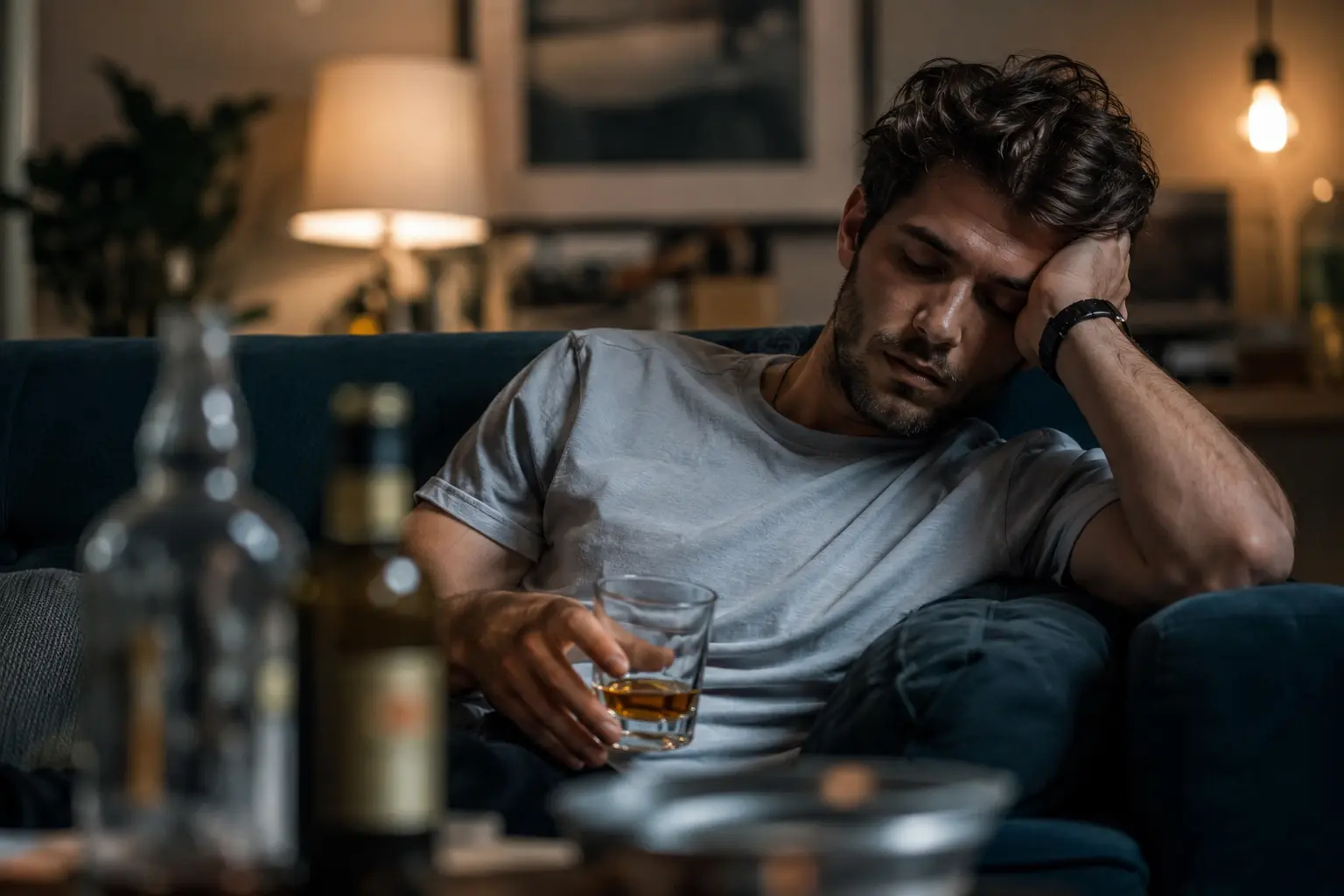
That foggy, dragging exhaustion the morning after drinking is real, and understanding why alcohol makes you sleepy is the first step to reclaiming your energy and taking back control of how you feel.
The link between alcohol and sleepiness
Here’s what actually happens when you drink: alcohol might feel like it’s helping you drift off faster, but it’s basically hijacking your sleep in the worst way possible. When you have a drink, your body metabolizes it as a depressant, which initially makes you feel relaxed and drowsy. Sounds good, right? Wrong. Once you fall asleep, alcohol starts messing with your REM sleep, the restorative stage where your brain processes emotions and consolidates memories. You end up with fragmented, restless sleep where you wake up multiple times without even realizing it. By morning, even though you were technically in bed for eight hours, your body feels completely drained because you never actually got quality rest. Women often report feeling this effect more intensely, partly because our bodies metabolize alcohol differently than men’s do.
- Alcohol interferes with your body’s natural sleep cycle, reducing the amount of deep REM sleep you get.
- The sedative effects of alcohol can initially make you feel drowsy, but as the night progresses, it actually disrupts your sleep.
- Alcohol is a diuretic, causing more frequent trips to the bathroom during the night, further disrupting your rest.
- Drinking alcohol close to bedtime can relax the muscles in your airway, potentially leading to snoring or breathing disturbances.
The aftermath of alcohol-induced sleepiness
Picture this: you wake up and immediately feel like you’re moving through water. Your eyes are heavy, your brain feels like cotton, and that meeting you have in two hours seems impossibly far away. This is the hangover grogginess that goes beyond just feeling tired. Because alcohol disrupted your sleep architecture, your body didn’t get the restorative cycles it needed, so you’re running on fumes. Concentration becomes nearly impossible. You find yourself re-reading emails three times, forgetting what you walked into a room for, and feeling irritable at things that normally wouldn’t bother you. Your productivity tanks, your mood dips, and you might find yourself reaching for extra coffee or sugar just to function. Many women describe this as feeling like they’re operating on autopilot, going through the motions but not really present in their day.
💬 Ready to feel better in 2 minutes?choose where to begin:
Dealing with alcohol-related drowsiness
If you’re going to drink, timing and hydration are your best friends. Try to finish drinking at least three to four hours before bedtime, giving your body time to metabolize the alcohol before sleep. During the evening, alternate alcoholic drinks with water or other non-alcoholic beverages to stay hydrated, since alcohol is a diuretic that pulls water from your system. Keep a water bottle by your bed and sip it if you wake up during the night. The next morning, resist the urge to sleep in excessively, even though you’re exhausted. Getting sunlight exposure and moving your body gently, like a short walk, helps reset your circadian rhythm and signals to your body that it’s time to be awake. Avoid heavy caffeine after 2 PM, as it can interfere with your sleep recovery the following night. If you’re regularly experiencing daytime drowsiness after drinking, it might be worth examining your relationship with alcohol and considering whether adjusting your habits could improve your overall energy and well-being.
Seeking balance in alcohol consumption
The real conversation here isn’t about never drinking again. It’s about understanding your body and making choices that align with how you want to feel. When you know exactly why alcohol makes you sleepy and how it affects your next day, you’re empowered to decide what’s worth it to you. Maybe that means enjoying a drink or two on a Friday night when you don’t have early plans the next day, but skipping it on a work night when you need to be sharp. Maybe it means choosing lower-alcohol options like wine spritzers or light beers that won’t disrupt your sleep as severely. The goal is finding what works for your life, your schedule, and your health priorities. Some women find that setting a personal limit, like no more than one drink per occasion or avoiding alcohol on certain nights, makes a huge difference in how they feel overall. It’s not about deprivation, it’s about intentionality.
Alcohol disrupts your natural sleep cycle, leading to daytime drowsiness by decreasing REM sleep, disrupting sleep quality, and causing frequent awakenings. To combat this, limit alcohol intake before bedtime, stay hydrated, and maintain a regular sleep routine. Understanding the effects of alcohol on your sleep can help you make healthier choices and achieve a better balance in your social life.
Does alcohol make you more tired the next day?
Yes, alcohol can make you feel more tired the next day due to its disruptive effects on sleep patterns, leading to poor-quality rest and daytime drowsiness.
How can I reduce the sleepiness caused by alcohol?
To reduce the daytime sleepiness caused by alcohol, limit your intake before bedtime, stay hydrated, and maintain a regular sleep schedule to ensure quality rest.
Others also read:
Disclaimer: This article is for informational purposes only and is not a substitute for professional medical advice. Always consult a healthcare professional for personal guidance.
This article presents an experience-based perspective and has been reviewed by the GlobalHealthBeacon editorial team in 2026. It provides structured, evidence-based information to support informed health decisions.
