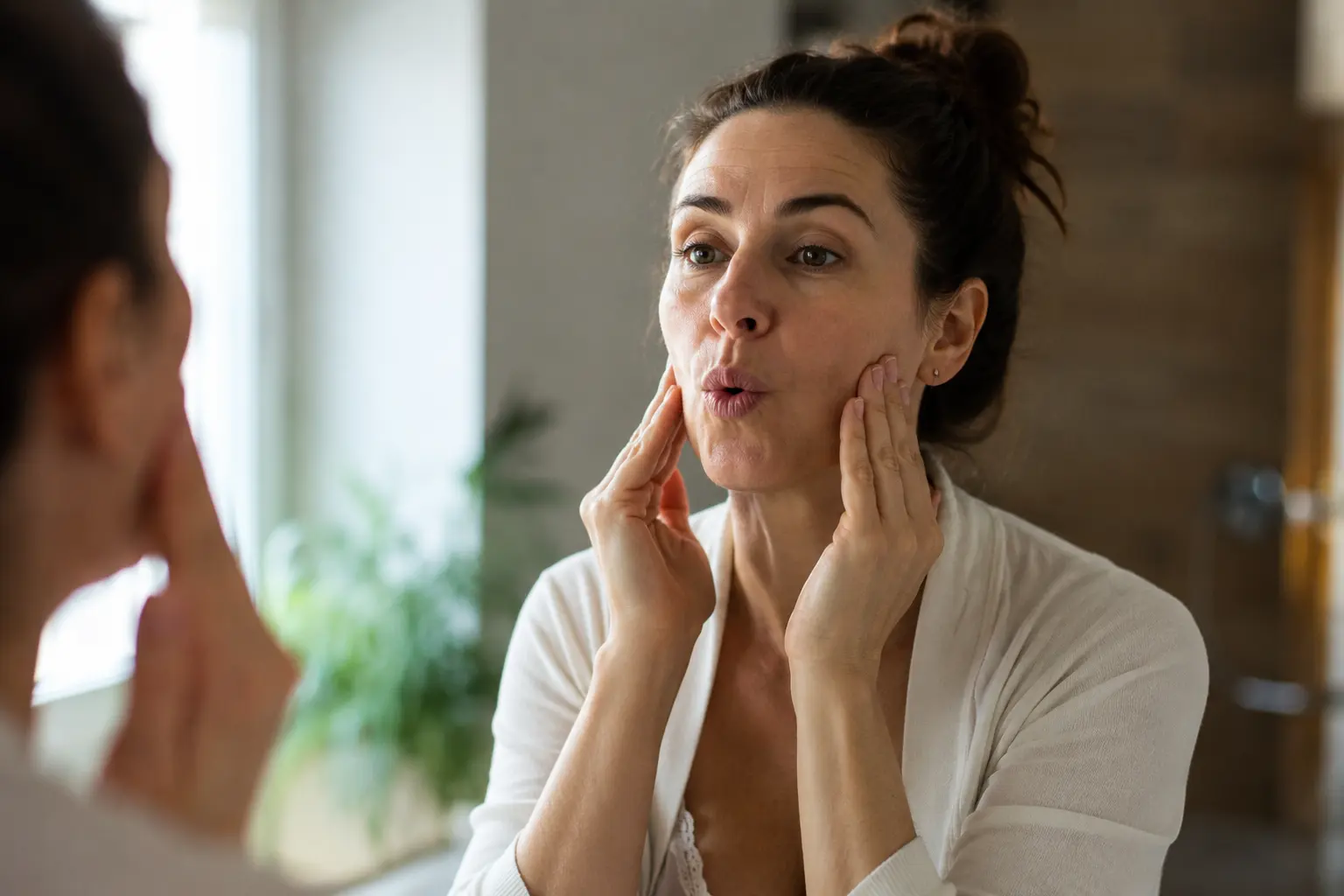
You look in the mirror and suddenly notice lines you swear weren’t there last month, your skin feels thinner, and nothing seems to bounce back the way it used to – skin health aging is real, it’s happening to you right now, and understanding what’s going on is the first step to actually doing something about it.
Signs of aging skin
Your skin tells a story of your life, and as you move through your 40s, 50s, and beyond, that story becomes more visible. The changes happen gradually at first, then seem to accelerate overnight. Fine lines appear around your eyes from decades of smiling and squinting. Your jawline softens as collagen production slows, and your skin loses that plump, firm quality you once took for granted. Age spots emerge on your hands and face, a result of cumulative sun exposure over the years. The skin itself becomes thinner and more delicate, making it feel drier and more sensitive to products you may have used without issue before. These aren’t signs of failure or neglect – they’re natural markers of time. Recognizing them early lets you adjust your approach and take meaningful action before changes become more pronounced.
- The appearance of crow’s feet and laugh lines
- Loss of firmness and sagging skin
- Uneven skin tone and pigmentation changes
Protecting your skin
Sun protection is the single most important thing you can do for your skin, and it’s never too late to start. UV rays penetrate deep into your skin’s layers, breaking down collagen and elastin that keep skin firm and smooth. If you’ve spent years without consistent sunscreen, don’t feel guilty – just start now. Daily sunscreen with at least SPF 30 should be non-negotiable, applied every morning and reapplied every two hours if you’re outdoors. Beyond sunscreen, consider your daily habits: seek shade during peak sun hours between 10 AM and 4 PM, wear lightweight long sleeves or UPF-rated clothing when possible, and don’t forget often-missed spots like your ears, the back of your neck, and the tops of your hands. If you enjoy outdoor activities, plan them for early morning or late afternoon. These practical adjustments protect against premature aging and significantly reduce skin cancer risk without requiring dramatic lifestyle changes.
📘 Fix your day in under 2 minuteschoose where to begin:
Nourishing your skin
What you put into your body directly affects what shows on your face. A diet rich in antioxidants from berries, leafy greens, and colorful vegetables helps fight free radical damage that accelerates aging. Omega-3 fatty acids from fish, flaxseed, and walnuts support your skin’s natural barrier function, keeping it hydrated and resilient. Drink adequate water throughout the day – aim for eight glasses minimum, more if you’re active or live in a dry climate. Your skincare routine should include a gentle cleanser, a hydrating moisturizer suited to your skin type, and targeted treatments like retinol or hyaluronic acid serums. Retinol boosts cell turnover and collagen production, while hyaluronic acid holds moisture in your skin’s outer layers. Start slowly with active ingredients to avoid irritation, introducing one new product every two weeks. Consistency matters more than complexity – a simple routine you actually follow beats an elaborate one you abandon.
Lifestyle habits
Your skin reflects your overall health, so lifestyle choices ripple across your complexion. Sleep deprivation increases cortisol, your body’s stress hormone, which breaks down collagen and triggers inflammation. Aim for seven to nine hours nightly – this is when your skin repairs itself most actively. Chronic stress accelerates aging visibly, so stress management through meditation, yoga, or simple breathing exercises directly benefits your skin. Smoking accelerates wrinkle formation and causes yellowing, so quitting yields noticeable improvements within weeks. Regular exercise increases blood flow, delivering oxygen and nutrients to your skin while flushing out toxins. You don’t need intense workouts – a 30-minute walk most days provides real benefits. Limit alcohol, which dehydrates skin and impairs your body’s repair processes. These habits work together synergistically, so improving even one or two creates a cascade of positive changes you’ll see reflected in your mirror.
Consulting a dermatologist
A dermatologist offers expertise that over-the-counter products simply can’t match. If you notice sudden changes, persistent redness, unusual growths, or if your skin isn’t responding to your current routine after eight weeks, schedule an appointment. Dermatologists can identify early signs of skin cancer, recommend prescription-strength treatments like tretinoin, and suggest professional procedures like laser therapy or chemical peels tailored to your specific needs and skin type. Regular skin checks every year catch problems early when they’re most treatable. Don’t wait until something feels wrong – preventive visits establish a baseline and catch subtle changes before they become serious. Your dermatologist can also review your current products and routines, offering personalized adjustments based on your skin’s unique characteristics and concerns.
Understanding the signs of aging skin, protecting and nourishing your skin, incorporating healthy lifestyle habits, and seeking professional advice when needed are essential steps in maintaining women’s skin health as they age.
What are the common signs of aging skin?
Common signs of aging skin include wrinkles, fine lines, age spots, sagging skin, and a loss of elasticity. These changes are a natural part of the aging process.
How can I protect my skin from premature aging?
You can protect your skin from premature aging by using sunscreen daily, avoiding excessive sun exposure, maintaining a healthy diet, hydrating adequately, and following a skincare routine with anti-aging products.
Others also read:
Disclaimer: This article is for informational purposes only and is not a substitute for professional medical advice. Always consult a healthcare professional for personal guidance.
This guide has been prepared and reviewed by the GlobalHealthBeacon editorial team and reflects current medical research as of 2026. It provides structured, evidence-based information to support informed health decisions.
