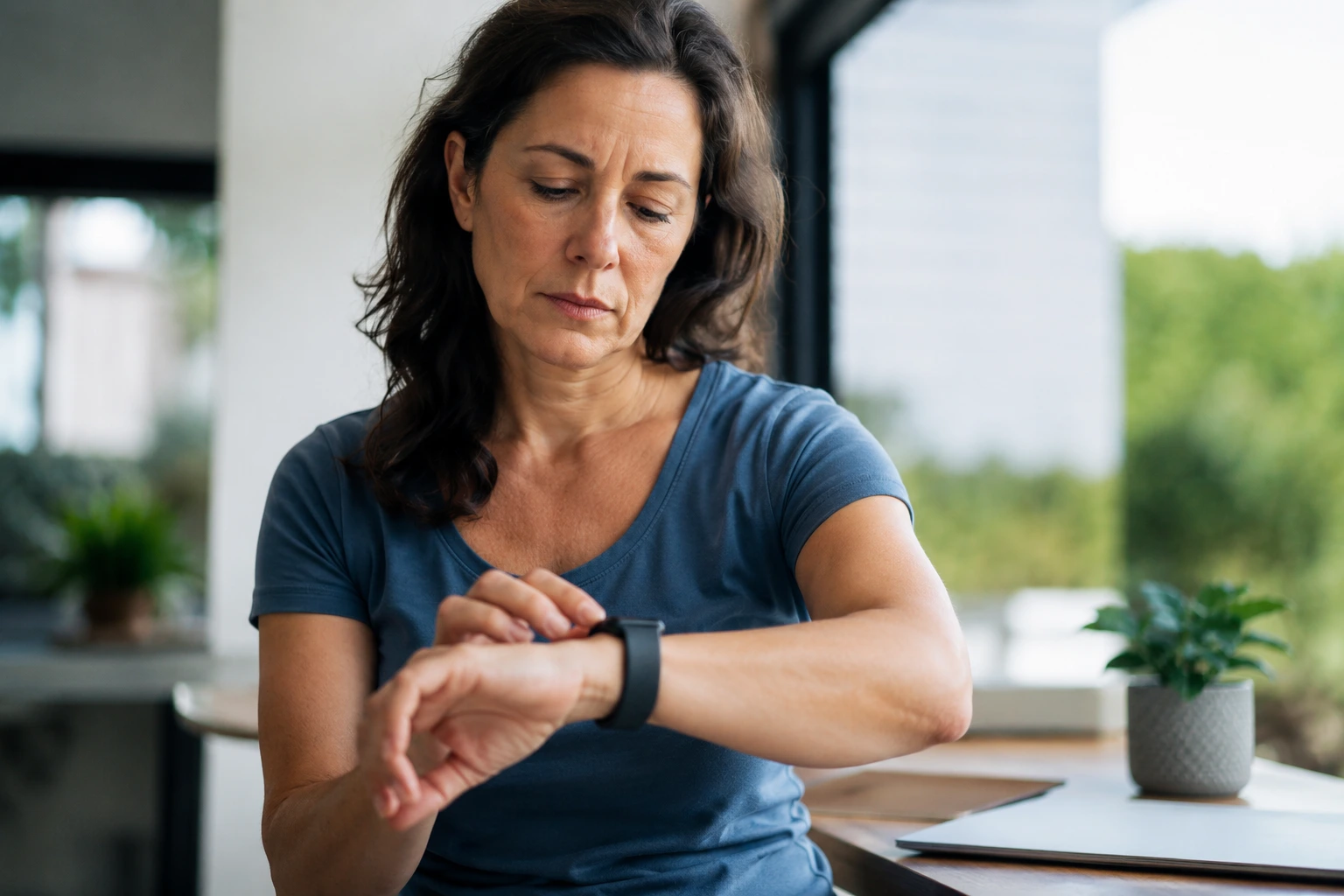
Your wrist keeps buzzing with notifications you barely understand, leaving you stressed instead of informed, but smartwatch health alerts don’t have to feel like a cryptic language when you know what they actually mean.
Decoding smartwatch health alerts
Smartwatch health alerts are designed to monitor your vital signs and alert you to any deviations from your baseline, but understanding what each notification actually means is where real empowerment begins. When your device sends an alert, it’s capturing data about your heart rate, blood oxygen, stress levels, or activity patterns and comparing it to your personal baseline. For example, if you normally have a resting heart rate of 60 beats per minute and suddenly receive an alert at 95 bpm while sitting at your desk, that’s a signal worth investigating. The key is learning to differentiate between routine notifications and genuinely concerning alerts. A spike during your afternoon coffee is normal; a spike accompanied by dizziness or chest discomfort is not. By understanding these alerts, you can better track your health status and take timely actions when needed. Start by reviewing your smartwatch settings to adjust alert thresholds based on your personal health profile, and keep a simple log of when alerts occur and what you were doing. This pattern recognition becomes invaluable over time.
- Learn to differentiate between normal notifications and critical alerts
- Understand the importance of continuous monitoring for personalized health insights
- Utilize the data provided by your smartwatch to make informed decisions about your health
Interpreting heart rate notifications
Regular heart rate alerts can help you gauge your fitness level and stress responses, but the real value comes from understanding what your numbers actually mean in context. Your smartwatch tracks both resting heart rate and active heart rate, and significant changes in either deserve attention. Imagine you’re a woman in your 40s with a typical resting heart rate of 65 bpm. One morning you wake to an alert showing 88 bpm while still in bed. Before panicking, consider: Did you sleep poorly? Are you stressed about a work deadline? Did you have extra coffee? These factors legitimately raise your baseline. However, if this elevated resting rate persists for several days without explanation, or if it’s accompanied by shortness of breath, fatigue, or palpitations, that’s when you contact your healthcare provider. Pay attention to sudden spikes or drops in your heart rate, as they could indicate potential health issues that need investigation. Use your smartwatch data to create a personal heart rate baseline by noting your typical ranges during rest, light activity, and exercise. When alerts deviate significantly from this pattern, you’ll know whether to simply breathe and relax or seek professional guidance.
📘 Fix your day in under 2 minuteschoose where to begin:
Monitoring sleep patterns
Your smartwatch can track your sleep patterns and provide insights into your rest quality, offering a window into one of the most neglected aspects of women’s health. Most smartwatches measure sleep duration, but the real insight comes from understanding your sleep stages: light sleep, deep sleep, and REM sleep. Deep sleep is when your body repairs itself, while REM sleep supports cognitive function and emotional processing. If your smartwatch shows you’re getting seven hours of sleep but only 45 minutes of deep sleep, that’s a red flag worth addressing. Consider a real scenario: a woman notices her smartwatch consistently shows fragmented sleep with multiple awakenings around 3 am. She adjusts her evening routine by eliminating screens an hour before bed, keeping her bedroom cooler, and reducing evening caffeine. Within two weeks, her deep sleep increases by 30 minutes, and she reports feeling noticeably more alert during the day. Use this information to adjust your bedtime routine and improve your overall sleep hygiene for better health. Track patterns over weeks, not days, since one poor night doesn’t indicate a problem. If your smartwatch shows persistent poor sleep quality despite lifestyle adjustments, discuss it with your doctor, as it could signal stress, hormonal changes, or underlying sleep disorders.
Tracking activity levels
Stay motivated and on track with your fitness goals by monitoring your daily activity levels through smartwatch alerts, which transform abstract health advice into concrete, measurable targets. Most smartwatches use step counts, active minutes, and calorie burn as primary metrics, but what matters is how you interpret and respond to this data. Let’s say your smartwatch recommends 150 minutes of moderate activity per week. If you typically hit 80 minutes and receive alerts reminding you of the gap, you have two choices: feel guilty or adjust your week strategically. A practical approach: break the remaining 70 minutes into three 20-minute walks plus one 10-minute activity. Suddenly, the goal feels achievable rather than overwhelming. Set achievable targets and use the feedback from your device to make positive lifestyle changes. Avoid the common mistake of obsessing over daily step counts and ignoring intensity. A 30-minute brisk walk at a higher heart rate zone offers more health benefit than 10,000 leisurely steps. Use your smartwatch alerts as a coaching tool, not a judgment. If you miss your activity goal one day, the next day is a fresh opportunity. Celebrate consistency over perfection, and remember that rest days are part of healthy movement patterns.
Seeking professional advice
While smartwatch health alerts are valuable tools, they are not substitutes for professional medical advice, and knowing when to involve your doctor is just as important as understanding your device. Smartwatches excel at detecting patterns and trends, but they lack the clinical expertise to diagnose conditions. For instance, a woman receives repeated alerts about irregular heart rhythm from her smartwatch. She brings this data to her cardiologist, who performs an EKG and discovers she has atrial fibrillation, a condition requiring specific treatment. Without that smartwatch alert prompting her to seek care, the condition might have gone undetected until a more serious event occurred. If you receive concerning notifications or experience persistent symptoms, consult a healthcare provider for a thorough assessment and personalized recommendations. Create a simple document showing your smartwatch alerts over the past month to share with your doctor. Include dates, times, and any symptoms you experienced. This transforms raw data into clinically useful information. Remember that your smartwatch is a conversation starter with your healthcare provider, not a replacement for professional diagnosis. Women especially should discuss smartwatch data during routine appointments, as hormonal fluctuations can affect heart rate and sleep patterns, and your doctor needs this context to provide appropriate guidance.
Smartwatch health alerts offer valuable insights into your well-being by monitoring vital signs like heart rate, sleep patterns, and activity levels. Understanding and responding to these notifications can empower you to make proactive choices for your health. The key is learning to interpret your data in context, recognizing patterns over time, and knowing when to seek professional guidance. Your smartwatch is a personal health coach that works 24/7, but you are the decision-maker.
How accurate are smartwatch health alerts?
Smartwatch health alerts have improved significantly in accuracy over the years, but they may still have limitations. It is advisable to use these notifications as tools for general monitoring rather than definitive medical diagnoses. Accuracy varies by brand and sensor quality. Most smartwatches are reasonably accurate for tracking heart rate during steady-state activity but less reliable during intense exercise or movement. For sleep tracking, smartwatches are good at detecting when you’re asleep versus awake but may misclassify sleep stages. Always cross-reference smartwatch data with how you actually feel.
Can smartwatch alerts detect serious health conditions?
While smartwatch alerts can signal potential health issues, they are not foolproof in detecting serious conditions. Always consult a healthcare professional for a comprehensive evaluation and targeted medical advice. Some smartwatches can detect irregular heart rhythms or alert you to abnormally high or low heart rates, which may warrant medical attention. However, they cannot diagnose conditions like heart disease, diabetes, or thyroid disorders. Think of your smartwatch as an early warning system, not a diagnostic tool. If you experience symptoms alongside smartwatch alerts, seek medical evaluation promptly.
Others also read:
Disclaimer: This article is for informational purposes only and is not a substitute for professional medical advice. Always consult a healthcare professional for personal guidance.
This guide has been prepared and reviewed by the GlobalHealthBeacon editorial team and reflects current medical research as of 2026. It provides structured, evidence-based information to support informed health decisions.
