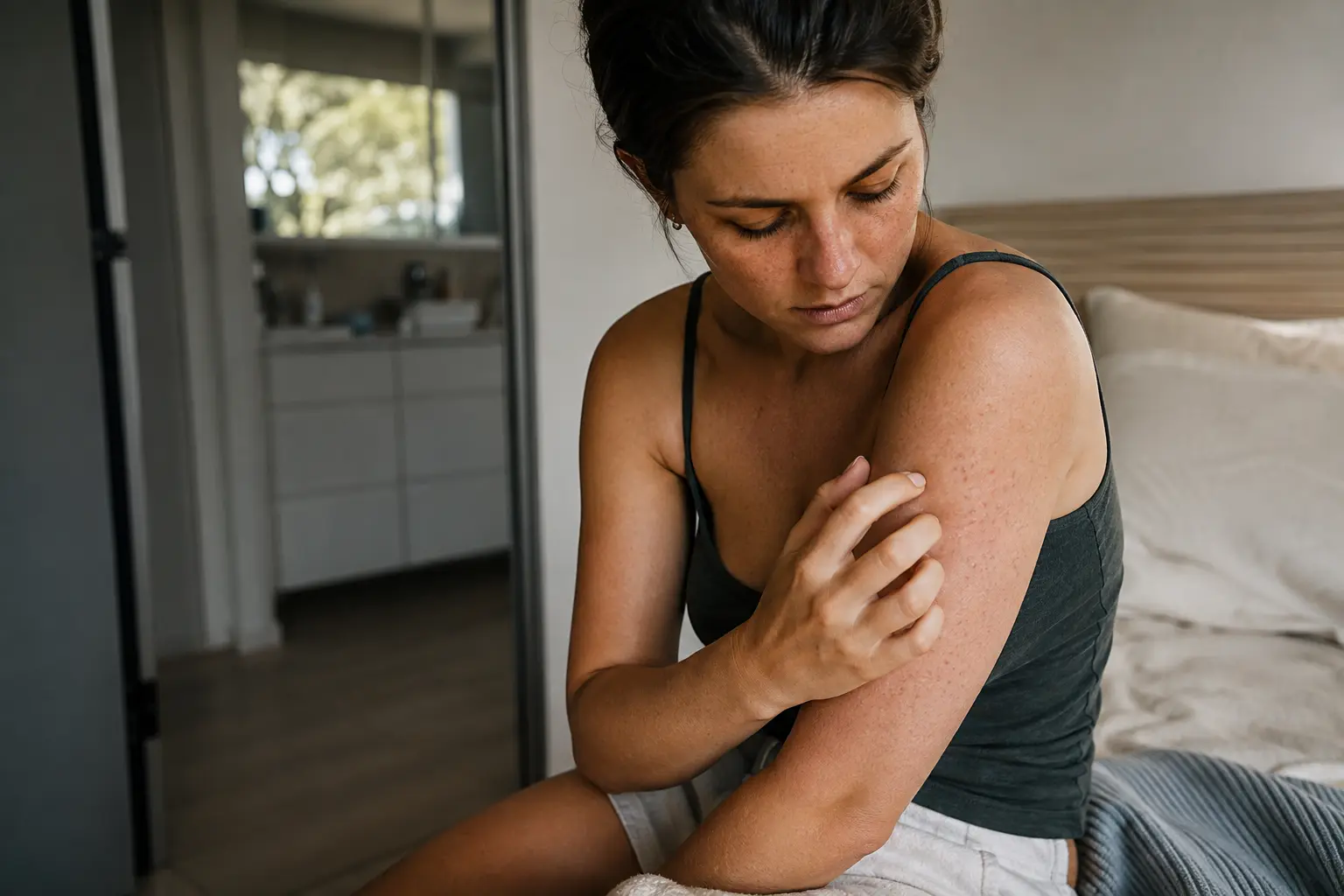
Those rough, bumpy patches spreading across your arms and legs aren’t going away on their own, and you’re tired of hiding them under long sleeves, so it’s time to build a keratosis pilaris routine that actually works.
Understanding keratosis pilaris
Keratosis pilaris is a common, harmless skin condition characterized by small, rough bumps on the skin, often appearing on the upper arms, thighs, cheeks, or buttocks. These bumps result from a buildup of keratin, a protein that protects the skin. Although not a serious condition, keratosis pilaris can be persistent and affect your self-confidence. Picture this: you’re getting ready for summer, excited to wear sleeveless tops, but those tiny red or skin-colored bumps on your arms make you hesitate. That’s the reality for many young adults dealing with this condition. The bumps feel like sandpaper to the touch and tend to cluster in patches. Understanding what’s happening beneath the surface helps you approach treatment with realistic expectations. Your hair follicles are essentially getting clogged with dead skin cells and keratin, creating that characteristic texture. It’s not dangerous, it’s not contagious, and you’re definitely not alone in experiencing it.
- Caused by the accumulation of keratin in hair follicles
- Often appears during childhood and may improve with age
- Not contagious and usually worsens in dry weather
Gentle exfoliation
Regular exfoliation with a gentle scrub or a loofah can help remove dead skin cells and unclog the hair follicles. This can smoothen the skin’s texture and reduce the appearance of bumps caused by keratosis pilaris. The key word here is gentle. Many young adults make the mistake of attacking their skin with harsh scrubs, thinking aggressive exfoliation will solve the problem faster. It won’t, and it’ll actually make things worse. Instead, use a soft-bristled brush or a fine-grained exfoliating product two to three times per week. Imagine your skin as a delicate ecosystem: you’re trying to remove the buildup without damaging the protective barrier underneath. Chemical exfoliants containing alpha hydroxy acids or beta hydroxy acids can be particularly effective because they work at the cellular level without physical abrasion. Apply them in circular motions for about one to two minutes, then rinse with lukewarm water. Avoid exfoliating if your skin is already irritated or inflamed.
📘 Fix your day in under 2 minuteschoose where to begin:
Moisturize daily
Keeping your skin well-moisturized is crucial for managing keratosis pilaris. Use a rich, emollient cream or lotion containing ingredients like urea or lactic acid to hydrate your skin and improve its texture. Think of moisture as the foundation of your entire routine. Without it, even the best exfoliation efforts fall flat. Young adults often skip this step because they assume moisturizer will make their skin greasy, but the right formula makes all the difference. Look for creams with urea, which actively helps dissolve the keratin buildup, or lactic acid, which gently exfoliates while hydrating. Apply moisturizer immediately after showering when your skin is still slightly damp, as this helps lock in hydration. A typical routine might look like this: shower, gentle pat dry, apply moisturizer within two minutes. Do this every single day, morning and night if possible. Over time, consistent moisturizing reduces the roughness and helps your skin maintain a smoother appearance. Some people see noticeable improvement within two to four weeks of daily moisturizing alone.
Avoid harsh products
Steer clear of harsh soaps, scrubs, or skincare products that can further irritate your skin. Opt for gentle, fragrance-free formulations to prevent exacerbating the symptoms of keratosis pilaris. This might sound simple, but it’s where many young adults stumble. That antibacterial soap you’ve been using? It’s stripping your skin. That exfoliating body wash with microbeads? It’s causing inflammation. Your skin barrier is already compromised when dealing with keratosis pilaris, so introducing harsh chemicals only makes the bumps more pronounced and irritated. Read ingredient labels carefully and avoid sulfates, alcohol, and strong fragrances. Choose cleansers labeled as gentle or creamy. During winter months, when keratosis pilaris typically worsens, be even more cautious. Avoid hot showers, which dry out your skin further, and stick to lukewarm water. If you’re using any acne treatments or vitamin A products elsewhere on your body, be mindful of how they interact with your keratosis pilaris areas. Sometimes scaling back other treatments temporarily while you focus on managing keratosis pilaris is the smartest move.
Consult a dermatologist
If over-the-counter treatments and home remedies don’t provide relief after six to eight weeks of consistent effort, consider seeking advice from a dermatologist. They can recommend prescription-strength creams or procedures to manage your keratosis pilaris effectively. A dermatologist can assess your specific situation and rule out other conditions that might look similar. They have access to stronger formulations containing retinoids, salicylic acid, or other active ingredients at higher concentrations than over-the-counter products. Some dermatologists recommend laser therapy or microdermabrasion for stubborn cases, though these are typically reserved for when conservative approaches haven’t worked. During your appointment, be honest about what you’ve already tried and how your skin has responded. Bring photos showing your bumps from different angles and in different lighting. A good dermatologist will create a personalized plan tailored to your skin type and the severity of your condition. They might also explore whether hormonal factors, diet, or other underlying issues are contributing to your keratosis pilaris.
Keratosis pilaris is a common skin condition characterized by rough bumps caused by keratin buildup. Managing it involves gentle exfoliation two to three times weekly, daily moisturizing with urea or lactic acid products, avoiding harsh soaps and fragrances, and seeking professional dermatological advice if home treatments don’t deliver results after six to eight weeks of consistent use.
Can keratosis pilaris be cured?
Keratosis pilaris is a chronic skin condition that cannot be permanently cured, but it can be effectively managed and significantly improved with proper skincare, consistent moisturizing, and professional treatments when needed.
Are there specific triggers for keratosis pilaris flare-ups?
Yes, factors like cold and dry weather, hormonal changes during menstrual cycles, certain skincare products, hot showers, and dehydration can trigger or worsen keratosis pilaris flare-ups, making symptoms more noticeable.
Disclaimer: This article is for informational purposes only and is not a substitute for professional medical advice. Always consult a healthcare professional for personal guidance.
This guide has been prepared and reviewed by the GlobalHealthBeacon editorial team and reflects current medical research as of 2026. It provides structured, evidence-based information to support informed health decisions.
