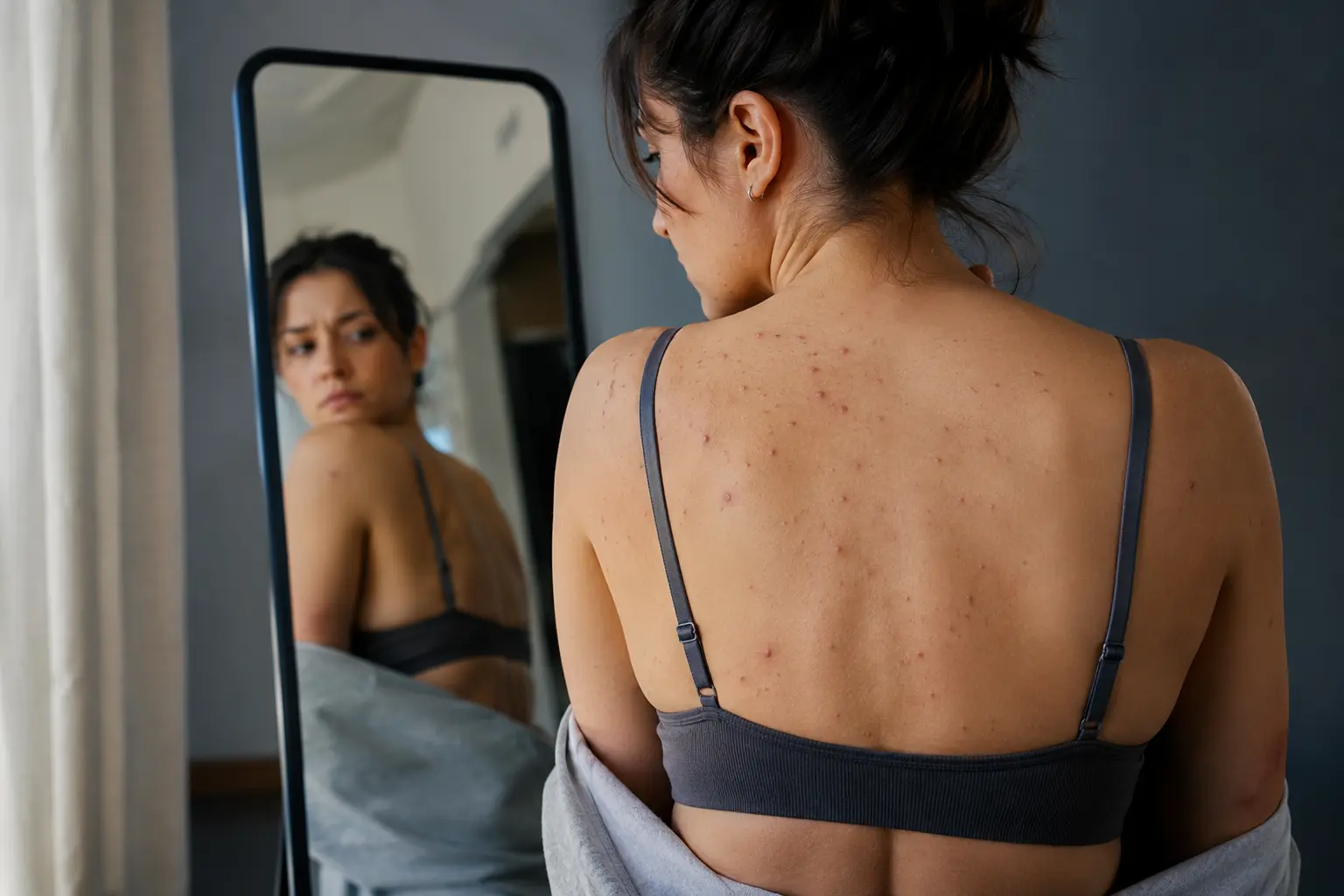
Your chest breaks out right before an important event, your back is covered in bumps you can’t stop picking at, and nothing seems to work because nobody’s actually explained what’s triggering your body acne causes in the first place.
Hormonal imbalance: a common culprit
Your hormones are like an internal control system that directly influences how much oil your skin produces. During puberty, your body floods itself with androgens, hormones that signal your skin glands to ramp up sebum production. This excess oil mixes with dead skin cells and bacteria, creating the perfect environment for acne to thrive. For people menstruating, the situation repeats cyclically. In the week before your period, progesterone levels spike while estrogen drops, triggering another surge in oil production. You might notice breakouts appearing like clockwork on your chest, shoulders, or back at the same time each month. This isn’t random or your fault. It’s biology. Some young adults experience more severe hormonal acne than others because of genetic predisposition or underlying conditions like polycystic ovary syndrome (PCOS). The key is recognizing the pattern. Track when your breakouts appear relative to your cycle or major life changes. Understanding this connection helps you anticipate flare-ups and take preventive action before they happen.
- Hormonal changes during adolescence or certain times in the menstrual cycle may exacerbate body acne.
- Excess oil production on the skin due to hormonal imbalance can contribute to the formation of acne.
- Maintaining a healthy lifestyle with proper diet and exercise can help regulate hormones and reduce acne flare-ups.
Dietary factors and body acne
What you eat directly affects your skin. High-glycemic foods like white bread, sugary drinks, and processed snacks cause rapid spikes in blood sugar, triggering an insulin response that amplifies hormone production and oil secretion. Dairy products, particularly skim milk, contain hormones that can stimulate sebaceous glands. Imagine eating pizza for lunch and noticing new breakouts within days. That’s not coincidence. Saturated fats and omega-6 heavy oils promote inflammation throughout your body, including your skin. Conversely, foods rich in antioxidants, omega-3 fatty acids, and zinc actively reduce inflammation. Fatty fish like salmon, leafy greens, berries, nuts, and seeds support clearer skin from the inside out. The challenge for young adults is consistency. You don’t need perfection, but replacing sugary snacks with fruit, choosing whole grain bread, and adding more vegetables creates measurable improvement over weeks. Keep a simple food and breakout journal for two weeks. You’ll likely spot patterns that reveal your personal acne triggers. Everyone’s body responds differently, so what worsens acne for your friend might not affect you.
📘 Fix your day in under 2 minuteschoose where to begin:
Sweat and friction: skin enemies
Sweat itself doesn’t cause acne, but what happens after you sweat does. When you exercise or spend time in humid conditions, sweat mixes with bacteria, dead skin cells, and oils on your skin surface. If that mixture sits on your skin for hours, it clogs pores and triggers inflammation. Tight gym clothes, sports bras, or backpack straps create friction that irritates already sensitive skin, making breakouts worse. Picture finishing a workout, staying in sweaty clothes for three hours, then wondering why your chest and shoulders erupt in acne. That’s a preventable scenario. The solution is straightforward: shower within an hour of sweating, use lukewarm water and a gentle cleanser, and change into clean, breathable clothing immediately. Synthetic fabrics trap moisture and heat, so prioritize cotton or moisture-wicking materials designed for athletic wear. If you can’t shower right away, at least rinse off with water and change clothes. For backpack-related acne on your shoulders and upper back, ensure straps aren’t too tight and consider padding them. These small adjustments prevent the buildup that leads to breakouts.
Stress and body acne: unraveling the connection
Stress triggers a cascade of hormonal changes in your body. When you’re anxious or overwhelmed, your adrenal glands release cortisol, a stress hormone that increases inflammation and stimulates oil production. This is why acne often flares during exam season, relationship stress, or major life transitions. Your immune system also weakens under chronic stress, making it harder to fight the bacteria that cause acne. Beyond hormones, stress often leads to poor habits that worsen breakouts: skipping skincare routines, eating more processed foods, sleeping less, and touching your face more frequently. A young adult juggling school, work, and social pressure might not realize their stress is literally showing up on their skin. The connection feels invisible until you address it. Stress-reduction practices like yoga, meditation, deep breathing, or even 20 minutes of daily walking meaningfully lower cortisol levels and reduce acne severity. You don’t need an elaborate routine. Five minutes of intentional breathing before bed or a short walk between classes creates real physiological change. The bonus: managing stress improves sleep quality, which directly supports skin healing and hormone regulation.
Skincare routine: the game changer
Your skincare routine is one of the few things you control completely. Using the wrong products can sabotage everything else you’re doing. Harsh cleansers strip your skin’s natural oils, triggering your glands to overproduce sebum as compensation. Comedogenic products contain ingredients that clog pores, worsening acne. Many popular body washes and moisturizers fall into this category. Start with a gentle, non-comedogenic cleanser specifically formulated for acne-prone skin. Wash twice daily, but don’t scrub aggressively. Follow with a lightweight, non-comedogenic moisturizer because hydrated skin is healthier skin. Exfoliate two to three times weekly with a chemical exfoliant like salicylic acid or glycolic acid, which dissolves dead skin cells and unclogs pores more effectively than physical scrubbing. Avoid picking, squeezing, or popping acne because this spreads bacteria, deepens inflammation, and increases scarring risk. It’s tempting, but every time you resist, you’re preventing future damage. Consider targeted treatments like benzoyl peroxide or salicylic acid spot treatments for active breakouts. Give any new routine at least six to eight weeks before evaluating results because skin cell turnover takes time. Consistency matters more than complexity.
Body acne in young adults stems from interconnected factors: hormonal fluctuations that increase oil production, dietary choices that trigger inflammation, sweat and friction that clog pores, stress that disrupts hormonal balance, and skincare routines that either support or sabotage your skin. Understanding each factor empowers you to take targeted action. Track your hormonal patterns, adjust your diet, manage sweat exposure, reduce stress, and refine your skincare approach. Most young adults see meaningful improvement within six to twelve weeks of addressing multiple factors simultaneously. This isn’t about perfection. It’s about making informed choices that work with your body, not against it.
Can body acne be a result of genetics?
Genetics significantly influence your acne risk. If your parents struggled with acne, you’re more likely to experience it because genetics determine your skin’s oil production capacity, pore size, and how your immune system responds to acne-causing bacteria. However, genetics load the gun but environment pulls the trigger. Two siblings with identical genes can have very different acne severity based on diet, stress, skincare habits, and lifestyle choices. You cannot change your genes, but you can control the factors that activate or suppress acne expression.
Are there any specific foods that can help improve body acne?
Foods rich in antioxidants and anti-inflammatory compounds actively support clearer skin. Berries, leafy greens like spinach and kale, fatty fish rich in omega-3s, nuts, seeds, and dark chocolate with high cocoa content reduce inflammation and support skin healing. Zinc-rich foods like oysters, beef, pumpkin seeds, and chickpeas strengthen your immune response against acne bacteria. However, individual responses vary significantly. Some people see dramatic improvement by eliminating dairy, while others notice no change. The most effective approach is eliminating suspected triggers for two to four weeks, then reintroducing them one at a time to identify your personal culprits. A healthcare provider or registered dietitian can offer personalized guidance based on your specific situation.
Disclaimer: This article is for informational purposes only and is not a substitute for professional medical advice. Always consult a healthcare professional for personal guidance.
This guide has been prepared and reviewed by the GlobalHealthBeacon editorial team and reflects current medical research as of 2026. It provides structured, evidence-based information to support informed health decisions.
