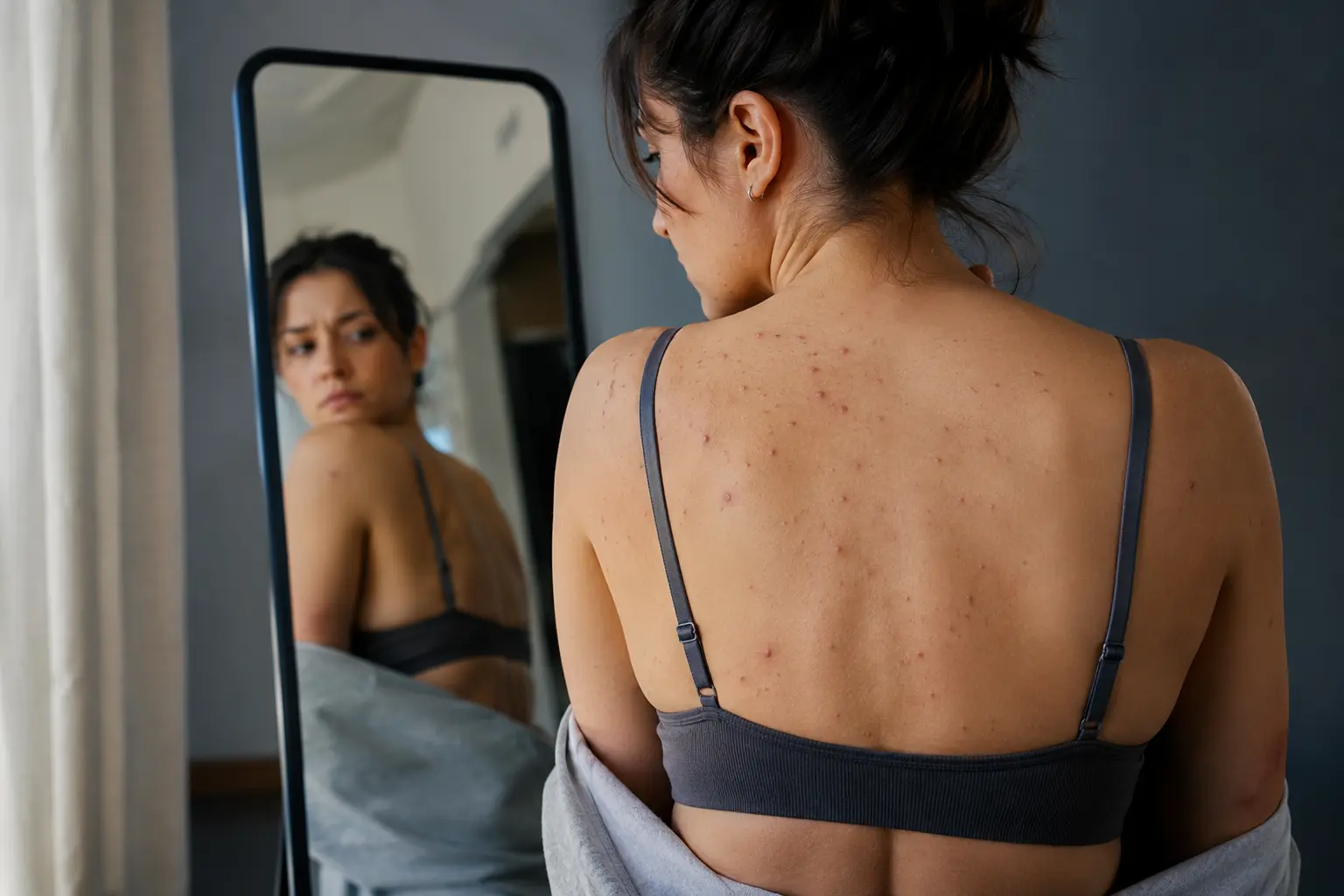
You wake up, look in the mirror, and there it is again – another breakout spreading across your chest, back, or shoulders, and you have no idea why your body acne causes keep multiplying no matter what you do.
Hormonal imbalance and body acne causes
Your hormones are powerful chemical messengers that control far more than you might realize. During your menstrual cycle, hormonal fluctuations trigger your sebaceous glands to produce excess oil, creating the perfect environment for acne to flourish. This same pattern intensifies during puberty when hormones surge, during pregnancy when progesterone levels shift dramatically, and during perimenopause when estrogen becomes unpredictable. Consider Sarah, a 28-year-old woman who noticed body acne breakouts consistently appearing one week before her period. After tracking her cycle and speaking with her dermatologist, she discovered her hormonal fluctuations were directly linked to increased sebum production. The key insight here is that your body acne causes often trace back to these hormonal tides. To address this, monitor when breakouts occur relative to your cycle, discuss hormonal testing with your doctor if patterns are severe, and explore whether hormonal birth control or other treatments might help stabilize your skin. Understanding this connection empowers you to anticipate breakouts rather than feel blindsided by them.
- Track your breakout patterns alongside your menstrual cycle to identify hormonal triggers
- Consult a dermatologist about hormonal testing or potential hormonal treatments
- Consider lifestyle adjustments like regular exercise and adequate sleep to support hormone balance
Diet and body acne causes
What you eat directly influences your skin more than most people realize. High-glycemic foods like white bread, sugary snacks, and processed carbohydrates cause rapid blood sugar spikes that trigger insulin surges, which in turn stimulate oil production in your skin. Dairy products, particularly skim milk, contain hormones that can amplify sebum production. Many women report that cutting back on these foods leads to noticeable improvements within two to four weeks. Imagine swapping your afternoon candy bar for a handful of almonds and berries, or replacing your morning cereal with eggs and oatmeal. These shifts matter because foods rich in omega-3 fatty acids, antioxidants, and vitamins support skin healing and reduce inflammation. Keep a simple food diary for two weeks, noting what you eat and when breakouts appear. You might discover that your body acne causes include specific trigger foods unique to your body. Start eliminating one suspected culprit at a time rather than overhauling your entire diet overnight, which helps you identify exactly which foods affect your skin.
📘 Fix your day in under 2 minuteschoose where to begin:
Stress and body acne causes
Stress doesn’t just feel bad – it literally changes your body’s chemistry in ways that damage your skin. When you’re stressed, your body releases cortisol, a hormone that increases inflammation and oil production while simultaneously weakening your skin’s natural barrier. You might notice that during high-pressure work weeks or personal challenges, your body acne flares up noticeably. This isn’t coincidence; it’s biology. A woman preparing for a major presentation might experience a breakout right before the event, then watch it improve once the stress passes. The connection between your nervous system and your skin is profound. To interrupt this cycle, identify stress-reduction practices that actually work for you personally – not generic suggestions. Some women find 15 minutes of yoga or meditation transformative, while others need a 30-minute walk or journaling session. The practice matters less than consistency. Even five minutes of deep breathing before bed can lower cortisol levels and reduce inflammation. Experiment with different techniques for at least two weeks each to discover what genuinely calms your nervous system and, consequently, your skin.
Clothing and body acne causes
Your clothing choices directly impact your skin health more than you might expect. Tight synthetic fabrics trap heat and moisture against your skin, creating a humid environment where bacteria thrive and pores become clogged. Wearing the same sweaty gym clothes for hours after exercise, or staying in damp swimwear after swimming, accelerates this process. Picture yourself in tight polyester leggings during a hot day – your skin can’t breathe, sweat accumulates, and body acne causes multiply. The solution is straightforward but requires intentional habits. Choose loose-fitting, breathable fabrics like cotton, linen, or moisture-wicking athletic wear designed to pull sweat away from your skin. Make it non-negotiable to shower within an hour of sweating, using lukewarm water and a gentle cleanser. Keep a change of clothes at your gym or office so you’re not tempted to stay in sweaty attire. Pay special attention to areas prone to breakouts – your back, chest, and shoulders – and ensure these areas get maximum air circulation. Small changes like wearing a cotton tank top instead of a synthetic sports bra, or choosing loose pajamas over tight sleepwear, create cumulative improvements in your skin’s health.
Skincare products and body acne causes
The products you apply to your skin either support healing or sabotage it. Many mainstream body washes, lotions, and sunscreens contain comedogenic ingredients that clog pores, silicones that trap bacteria, and fragrances that irritate sensitive skin. You might be unknowingly worsening your body acne causes by using products marketed as beneficial. Reading ingredient labels becomes essential – look for non-comedogenic, oil-free formulations specifically designed for acne-prone skin. Your cleansing routine matters enormously. Use a gentle, fragrance-free cleanser twice daily, avoiding harsh scrubs that damage your skin barrier and trigger inflammation. When selecting moisturizers and sunscreens, choose lightweight, water-based options rather than heavy creams. Many women discover that their body acne improves dramatically after switching to a simplified routine with fewer products. You don’t need ten steps; you need the right ones. Introduce new products one at a time, waiting two weeks between additions so you can identify any that trigger breakouts. Avoid products containing benzoyl peroxide or salicylic acid on large body areas unless directed by a dermatologist, as these can over-dry your skin and cause irritation. Sometimes less is genuinely more when it comes to clear skin.
Body acne causes in women stem from interconnected factors including hormonal fluctuations during your cycle and life stages, dietary choices that spike inflammation, stress levels that elevate cortisol, clothing materials that trap moisture and bacteria, and skincare products that clog pores. Addressing even one or two of these areas often produces visible improvements. Start by identifying which triggers resonate most with your experience, then implement targeted changes systematically. Track your progress over four to six weeks, adjusting as needed. Remember that clear skin is achievable through understanding your body’s unique signals and responding with intentional choices.
Can body acne be related to hormonal changes?
Yes, hormonal fluctuations significantly impact body acne in women. Hormonal changes during menstruation, pregnancy, and menopause increase sebum production and create conditions for breakouts. Tracking your breakout patterns relative to your cycle helps identify hormonal connections, and discussing hormonal treatments with a dermatologist may provide relief.
How can I prevent body acne flare-ups?
Prevent body acne by maintaining a low-glycemic diet rich in whole foods, managing stress through consistent practices like meditation or exercise, wearing breathable cotton clothing and changing out of sweaty garments promptly, using non-comedogenic skincare products, and tracking which triggers affect your skin personally. Consistency matters more than perfection.
Others also read:
Disclaimer: This article is for informational purposes only and is not a substitute for professional medical advice. Always consult a healthcare professional for personal guidance.
This guide has been prepared and reviewed by the GlobalHealthBeacon editorial team and reflects current medical research as of 2026. It provides structured, evidence-based information to support informed health decisions.
