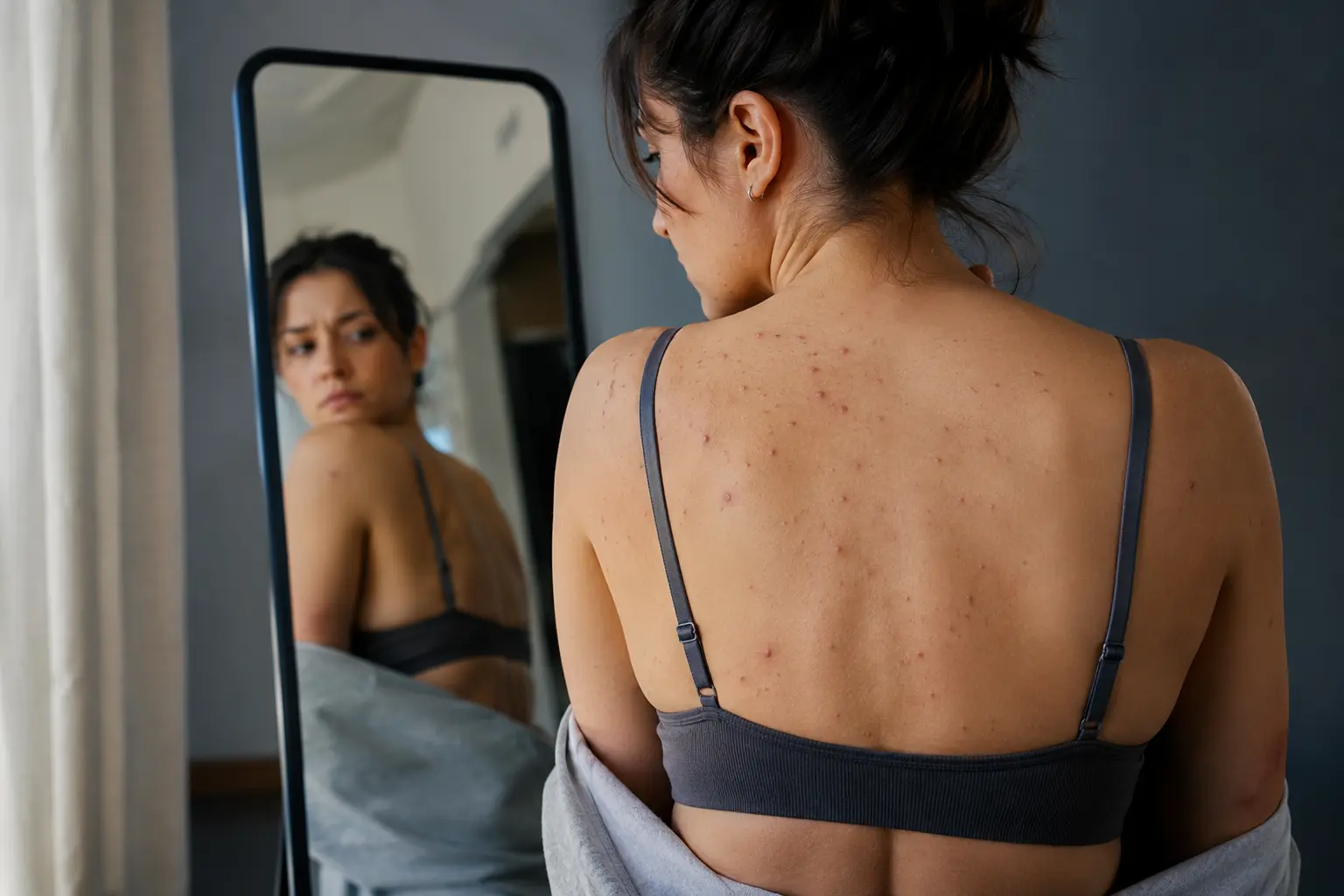
One day your skin feels fine, the next you’re staring at angry red bumps across your chest and back, and suddenly body acne causes become your obsession because nothing feels worse than that sinking feeling when you realize breakouts have invaded the one place you thought was safe.
Hormonal havoc: unraveling the root cause
Picture this: you’re 19, and your skin was relatively clear through most of high school. Then something shifts. Your body enters a new phase where hormones fluctuate like crazy, triggering your sebaceous glands to overproduce oil. This excess sebum gets trapped in your pores, creating the perfect breeding ground for bacteria. But hormones aren’t just about puberty. If you menstruate, you’ve probably noticed acne flares around your cycle. Stress adds another layer to this chaos. When you’re anxious about exams or relationships, your cortisol levels spike, which signals your skin to produce even more oil. It’s like your body decides that right when you need confidence most, it’s time to rebel. Many young adults describe this as feeling helpless because they’re doing everything right, yet their hormones have other plans.
- Hormonal changes during puberty contribute to body acne
- Stress can exacerbate acne flare-ups
- Menstrual cycles may cause recurring breakouts
Skincare sabotage: common mistakes to avoid
You want to fix it, so you scrub harder and use the strongest products you can find. This is where most people go wrong. Harsh cleansers strip away your skin’s natural protective barrier, leaving it dry and irritated. Your skin then overcompensates by producing even more oil, worsening breakouts. Then there’s the moisturizer dilemma. Many young adults skip it entirely, thinking it’ll make acne worse. Wrong move. Dehydrated skin becomes inflamed skin, and inflamed skin breaks out more. The real solution lies in gentle, non-comedogenic products that respect your skin’s delicate balance. Think of your skin like a friend you’re trying to help. Aggressive tactics push them away, but consistent, kind treatment builds trust. Look for cleansers with salicylic acid or benzoyl peroxide at lower concentrations, and always follow up with a lightweight, oil-free moisturizer. Your body acne causes often trace back to these skincare mistakes.
💬 Ready to feel better in 2 minutes?choose where to begin:
Diet dilemmas: the impact of food choices
You’ve heard it a thousand times: greasy pizza causes acne. That’s not entirely accurate, but diet absolutely matters. When you consume high amounts of sugar and ultra-processed foods, your blood sugar spikes, triggering inflammation throughout your body, including your skin. Dairy can also be problematic for some people because it contains hormones that may stimulate oil production. A 22-year-old college student might grab convenience foods between classes, not realizing that consistent poor nutrition is feeding their breakouts. Switching to a diet rich in omega-3 fatty acids, antioxidant-packed fruits and vegetables, and whole grains creates an anti-inflammatory environment. This doesn’t mean perfection. It means being intentional. Drinking more water, eating salmon or walnuts, adding berries to your breakfast, and choosing whole wheat over white bread are small shifts that compound over time. Your skin reflects what you feed it, and understanding this connection helps you see body acne causes not as random bad luck but as messages from your body asking for better fuel.
Lifestyle factors: stress and sleep struggles
Late nights scrolling through your phone, stress from work or relationships, and irregular sleep schedules create a perfect storm for skin problems. When you’re sleep-deprived, your immune system weakens, making it harder to fight bacteria and inflammation. Stress hormones like cortisol remain elevated, keeping your skin in a constant state of reactivity. You might notice acne flares during exam weeks or after stressful events, and that’s no coincidence. Your body is literally showing stress on the outside. Young adults often underestimate how much their lifestyle impacts their skin. Adding just 30 minutes of yoga, meditation, or a walk outside can significantly reduce stress and improve sleep quality. Establishing a consistent bedtime routine, even on weekends, helps regulate your circadian rhythm. Some people find that journaling before bed or practicing deep breathing calms their nervous system enough to sleep better. These aren’t just wellness trends; they’re practical tools that directly influence whether your skin stays clear or breaks out. Managing lifestyle factors is often the missing piece in addressing body acne causes.
Understanding the hormonal changes, skincare mistakes, diet influences, and lifestyle factors that contribute to body acne is key to managing sudden breakouts effectively. By addressing these underlying causes, you can take proactive steps to achieve clearer, healthier skin.
Can body acne be prevented?
While it’s not always possible to prevent body acne entirely, adopting a consistent skincare routine, managing stress levels, maintaining a balanced diet, and getting adequate sleep can help reduce the likelihood of breakouts.
Do certain fabrics worsen body acne?
Wearing tight clothing or fabrics that trap sweat against the skin can exacerbate body acne. Opt for breathable fabrics like cotton and make sure to shower after sweating to prevent pore-clogging.
Others also read:
Disclaimer: This article is for informational purposes only and is not a substitute for professional medical advice. Always consult a healthcare professional for personal guidance.
This article presents an experience-based perspective and has been reviewed by the GlobalHealthBeacon editorial team in 2026. It provides structured, evidence-based information to support informed health decisions.
