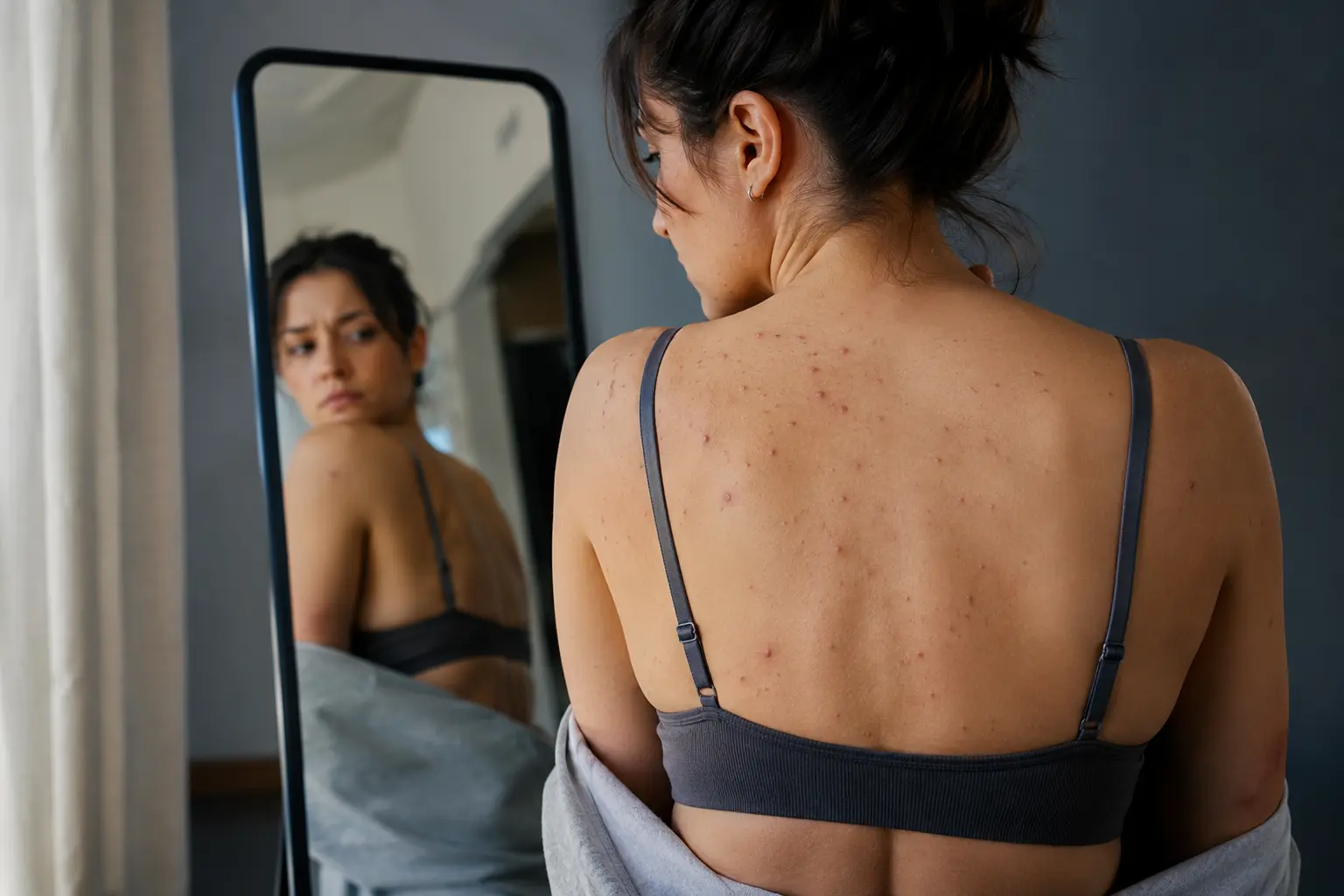
You thought acne was behind you decades ago, but suddenly those frustrating bumps are back on your chest, shoulders, or back, and body acne causes are leaving you confused and self-conscious about what’s happening to your skin now.
The root causes of body acne
When Martha turned 68, she noticed small red bumps appearing along her shoulders and upper back. She hadn’t dealt with acne since her twenties and felt blindsided. Understanding what triggers body acne in your senior years is genuinely important because the causes shift over time. Hormonal fluctuations continue well into our later years, especially for women navigating post-menopausal changes. Genetics play a stubborn role too – if your parents struggled with acne, your skin might follow suit. Then there’s the practical stuff: increased sweating from less efficient temperature regulation, certain medications like corticosteroids or lithium that can spark breakouts, and stress that quietly amplifies sebum production. Many seniors don’t realize that their skin barrier weakens with age, making it more vulnerable to irritation and bacterial colonization. Even seemingly innocent factors like sleeping in the same shirt multiple nights or using laundry detergent with heavy fragrances can trigger unexpected flare-ups.
- High levels of stress trigger increased sebum production, clogging pores and creating the perfect environment for acne bacteria to thrive.
- Poor diet choices like excessive sugar, processed foods, or dairy intake may worsen acne patterns in seniors more noticeably than in younger years.
- Irritation from tight clothing, synthetic fabrics, or even your bed sheets rubbing against skin can contribute to body acne development over time.
Lifestyle factors affecting body acne
Think about your daily routine for a moment. After showering, do you dry off completely before getting dressed? That moisture lingering on your skin creates a breeding ground for acne-causing bacteria. Maintaining good hygiene practices means showering after sweating, changing out of damp clothes quickly, and using gentle, fragrance-free cleansers instead of harsh soaps that strip your skin. Choosing breathable fabrics like cotton or moisture-wicking materials helps tremendously. Your diet matters more than you might think – staying hydrated by drinking enough water throughout the day supports your skin’s natural healing. Incorporating stress-relieving activities like walking, gentle yoga, or meditation isn’t just feel-good advice; it directly reduces cortisol levels that fuel acne flare-ups. One senior named Robert found that his breakouts improved significantly when he switched to silk pillowcases and started taking evening walks. Small changes compound into real results when you stay consistent.
💬 Ready to feel better in 2 minutes?choose where to begin:
Embracing changes over time
Your skin at 70 isn’t the same as your skin at 50, and that’s completely normal. As you age, your skin undergoes significant transformations – collagen production slows, oil distribution changes, and your skin becomes thinner and more sensitive. This means the acne you’re experiencing now might look different or respond differently to treatments that worked years ago. Your skincare routine needs to evolve with your skin. What worked in your fifties might be too harsh now. It’s essential to adapt your approach, perhaps using gentler exfoliants or switching to products specifically formulated for mature, acne-prone skin. Consulting with a dermatologist becomes increasingly valuable because they can identify whether what you’re dealing with is true acne or another skin condition that mimics it. By embracing these changes with patience and understanding rather than frustration, you give yourself permission to navigate this chapter with confidence instead of shame.
Holistic approaches to combat body acne
Beyond typical acne treatments, there’s real value in exploring a more complete picture of your health. Gentle exfoliation using soft washcloths or chemical exfoliants with lower concentrations can help without damaging your delicate senior skin. Natural skincare products containing ingredients like niacinamide, salicylic acid in mild formulations, or zinc can be gentler alternatives to harsh prescriptions. Incorporating mindfulness practices into your daily life reduces stress hormones that feed acne. Some seniors find that adding anti-inflammatory foods to their diet, getting adequate sleep, and managing underlying health conditions like diabetes or thyroid issues makes a surprising difference. Creating a comprehensive acne management plan with professional guidance means working with your doctor or dermatologist to understand your specific triggers and needs. This personalized approach acknowledges that your body acne isn’t a one-size-fits-all problem requiring a one-size-fits-all solution.
Learning about the root causes of body acne, understanding lifestyle factors that affect it, embracing skin changes over time, and adopting holistic approaches can empower seniors to effectively manage their acne journey with confidence and composure.
Can body acne develop later in life?
Yes, body acne can manifest at any age, including during the senior years. Hormonal changes, stress, and lifestyle factors can contribute to the development of acne in older adults.
Are there any natural remedies for body acne?
Natural remedies like tea tree oil, aloe vera, and apple cider vinegar have been known to have beneficial effects on body acne. However, it’s essential to consult with a healthcare professional before trying any new treatments.
Others also read:
Disclaimer: This article is for informational purposes only and is not a substitute for professional medical advice. Always consult a healthcare professional for personal guidance.
This article presents an experience-based perspective and has been reviewed by the GlobalHealthBeacon editorial team in 2026. It provides structured, evidence-based information to support informed health decisions.
