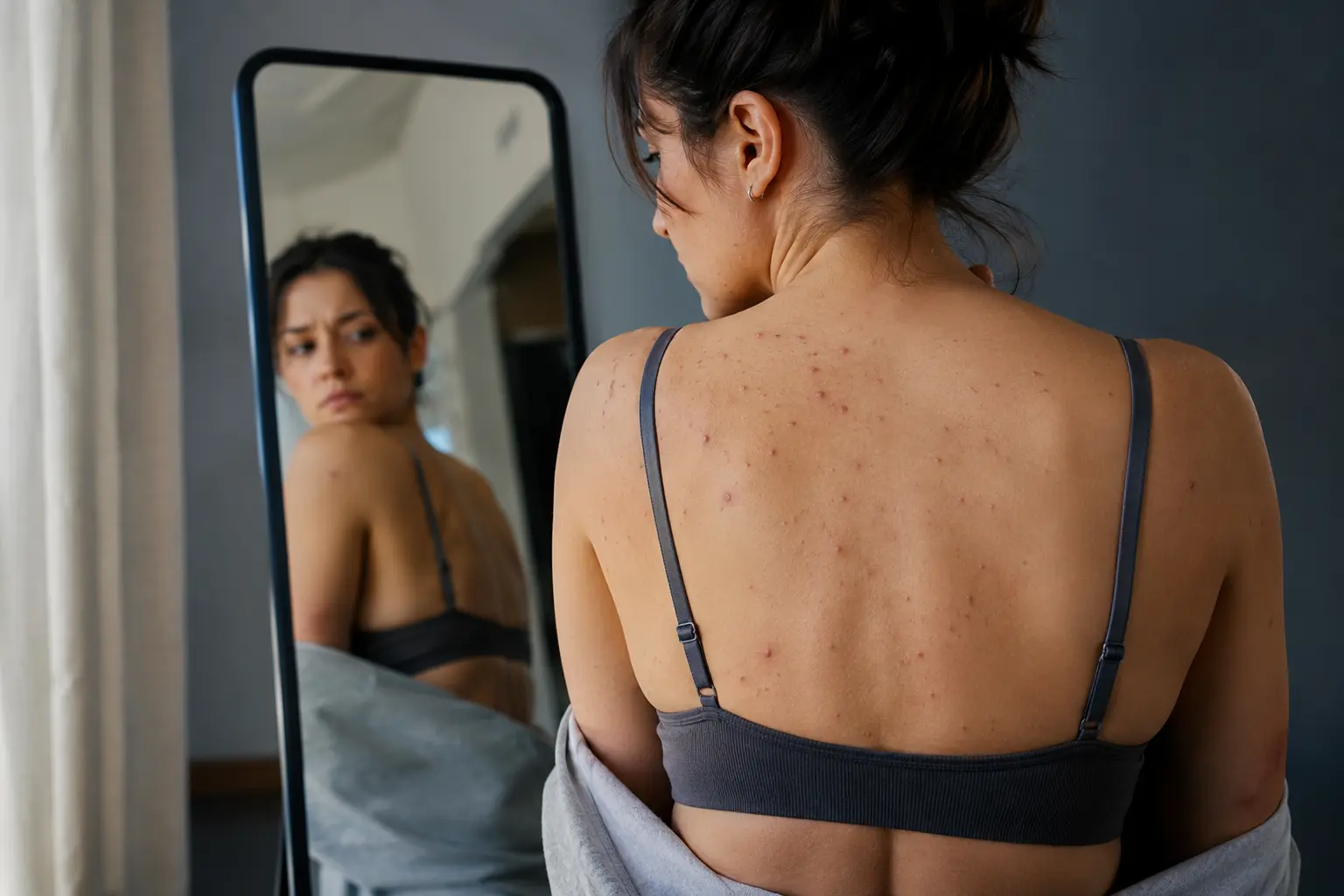
Red, angry bumps covering your chest, back, and shoulders that won’t quit no matter what you try – body acne causes frustration that goes way deeper than skin level, and it’s time to actually understand what’s happening and take real control.
Understanding body acne causes
Body acne works the same way facial acne does, but the stakes feel different when breakouts spread across your back or chest. The core culprits are excess oil production, bacteria thriving in clogged pores, and dead skin cells that don’t shed properly. Think of your pores like tiny drainage systems that get blocked when oil, sweat, and dead skin accumulate. Hormonal fluctuations during your early twenties amplify oil production, which is why many young adults experience sudden breakouts they never had in their teens. Genetics play a huge role too – if your parents struggled with acne, your skin likely inherited that tendency. Sweat from workouts, tight gym clothes, and certain medications like corticosteroids can trigger or worsen breakouts. Even your laundry detergent or fabric softener can irritate skin and contribute to body acne if you’re sensitive to certain chemicals.
- Wear loose clothing to prevent friction and sweat buildup on the skin.
- Avoid using harsh scrubs that can irritate the skin and worsen acne.
- Opt for non-comedogenic and oil-free skincare products to minimize pore blockage.
Creating a healthy skincare routine
A consistent routine is non-negotiable if you want results, and consistency means doing it even when you’re tired or traveling. Start by cleansing twice daily with a gentle cleanser containing salicylic acid or benzoyl peroxide, which actively unclog pores without stripping your skin dry. Apply cleanser with your fingertips or a soft washcloth, never scrubbing aggressively. After cleansing, apply a lightweight, oil-free moisturizer within three minutes while your skin is still slightly damp – this locks in hydration without adding excess oil. The biggest mistake young adults make is skipping moisturizer because they think acne-prone skin doesn’t need it, but dehydrated skin actually produces more oil to compensate. At night, consider using a targeted treatment like a spot treatment with benzoyl peroxide on active breakouts, but don’t overuse it or you’ll damage your skin barrier. Most importantly, resist the urge to pick or squeeze lesions, which spreads bacteria and guarantees scarring.
📘 Fix your day in under 2 minuteschoose where to begin:
Diet and lifestyle modifications
What you eat directly affects inflammation levels in your body, and inflammation fuels acne breakouts. Focus on whole foods: leafy greens, berries, fatty fish rich in omega-3s, and lean proteins like chicken and legumes. These foods reduce inflammation and support your skin’s natural repair processes. Dairy and high-glycemic foods like white bread and sugary drinks spike insulin levels, which triggers oil production and worsens acne – try cutting back for two weeks and notice the difference. Hydration matters more than most people realize; aim for at least eight glasses of water daily to flush toxins and keep skin plump and healthy. Stress management is equally critical because cortisol spikes during stressful periods and directly increase sebum production. Find what works for you: exercise, meditation, journaling, or time with friends. Sleep deprivation also worsens acne, so prioritize seven to nine hours nightly when your skin repairs itself and hormone levels stabilize.
Tips for preventing body acne
Prevention is easier than treating established acne, so build these habits into your daily life. Shower immediately after sweaty activities like gym sessions or sports, because sweat mixed with bacteria and dead skin cells creates the perfect environment for breakouts. Change into fresh, clean clothes right after showering – leaving damp workout gear on your skin invites bacterial growth. Avoid tight-fitting fabrics like compression shirts or fitted athletic wear that trap moisture and heat against your skin; opt for breathable cotton or moisture-wicking synthetic blends instead. Exfoliate gently once or twice weekly using a soft body scrub or chemical exfoliant with AHAs or BHAs to remove dead skin cells that clog pores. Don’t over-exfoliate though, as this damages your skin barrier and causes irritation. Wash your bedding, towels, and gym clothes regularly in hot water to eliminate bacteria buildup. If you use sunscreen on your body, choose a non-comedogenic formula specifically designed not to clog pores.
Consulting a dermatologist
If you’ve committed to a solid routine for six to eight weeks and still see no improvement, it’s time to see a dermatologist rather than continuing to guess. Over-the-counter treatments work for mild acne, but moderate to severe body acne often requires prescription-strength intervention. A dermatologist can prescribe oral antibiotics like doxycycline to reduce bacteria and inflammation, or topical retinoids that accelerate cell turnover and prevent pore clogging. For hormonal acne, especially in women, hormonal birth control can be surprisingly effective at regulating the hormonal fluctuations that trigger breakouts. Professional treatments like chemical peels or light therapy can also help clear existing acne and prevent scarring. Don’t wait until acne leaves permanent marks to seek help – early intervention prevents long-term skin damage and the emotional toll of living with severe breakouts.
Body acne causes stem from excess oil, bacteria, and dead skin cells clogging your pores, often triggered by hormones, genetics, sweat, and lifestyle factors. Your action plan involves establishing a consistent skincare routine with proven acne-fighting ingredients, making strategic diet and lifestyle changes to reduce inflammation, and implementing prevention habits like showering after sweat and wearing breathable clothes. If these steps don’t deliver results within two months, consulting a dermatologist opens access to prescription treatments tailored to your specific situation.
Can body acne be caused by certain foods?
While diet can play a role in skin health, the link between specific foods and body acne is not always straightforward. Maintaining a balanced diet and staying hydrated is key for overall skin health.
Is body acne more common in young adults?
Yes, body acne is prevalent among young adults due to hormonal fluctuations during puberty. However, it can affect individuals of all ages, and proper skincare habits can help manage breakouts.
Others also read:
Disclaimer: This article is for informational purposes only and is not a substitute for professional medical advice. Always consult a healthcare professional for personal guidance.
This guide has been prepared and reviewed by the GlobalHealthBeacon editorial team and reflects current medical research as of 2026. It provides structured, evidence-based information to support informed health decisions.

