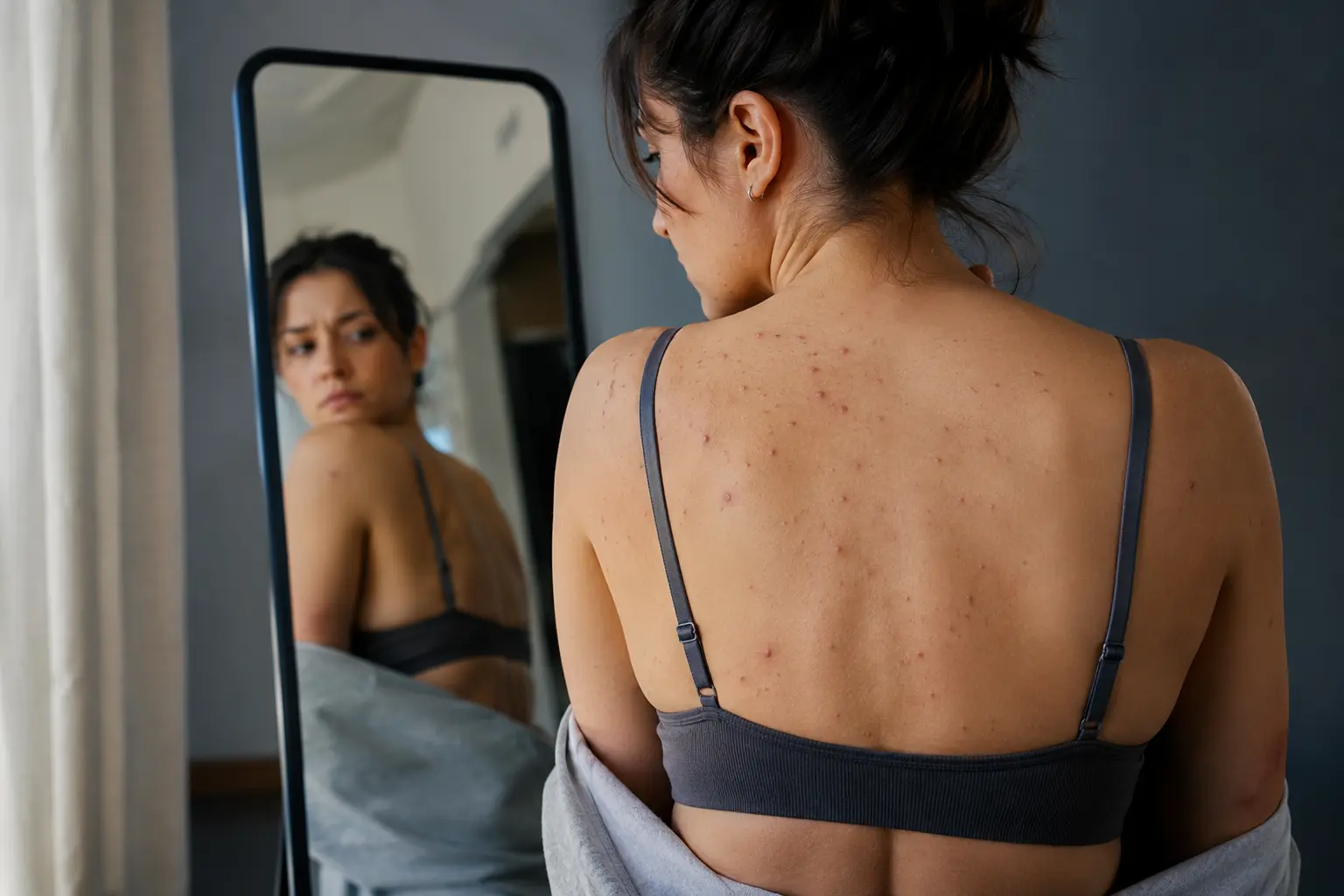
You’re getting ready for that beach trip or wearing your favorite sleeveless dress, and suddenly you notice angry red bumps spreading across your chest and back, making you want to cover up instead of feel confident, because body acne causes so much frustration when you thought you had your skincare figured out.
Signs and symptoms
Body acne shows up differently than facial acne and can catch you off guard. You might notice red, inflamed bumps scattered across your chest, back, shoulders, or even your buttocks. Some appear as blackheads or whiteheads where pores are clogged, while others develop into painful cysts beneath the skin. The itching can be intense, especially after sweating or wearing tight clothing. Many women describe the emotional toll as equally challenging as the physical symptoms. If left untreated, body acne can leave behind dark marks or pitted scars that persist for months or years. Pay attention to where breakouts cluster most, as this pattern often reveals what triggers your individual skin.
- Red, inflamed bumps on the skin
- Clogged pores and whiteheads
- Possibly scarring if left untreated
Potential causes
Body acne rarely has a single cause, which is why it can feel so frustrating to pinpoint what is actually triggering your breakouts. Hormonal fluctuations throughout your menstrual cycle often worsen body acne in the week before your period. Genetics play a role too, so if your mother struggled with body acne, you may inherit that tendency. Sweat trapped against your skin creates an ideal environment for bacteria to multiply, especially during workouts or hot weather. Non-breathable fabrics, tight bras, or backpacks that rub against your skin can irritate and clog pores. Many skincare and body products contain oils or silicones that feel moisturizing but actually block pores. Stress elevates cortisol levels, which can trigger oil production and inflammation. Understanding your personal triggers takes observation and patience, but it is worth the effort.
📘 Fix your day in under 2 minuteschoose where to begin:
Skincare routine tips
Start by showering within 15 minutes after sweating, using lukewarm water and a gentle cleanser designed for acne-prone skin. Pat your skin dry rather than rubbing, then apply a lightweight, non-comedogenic moisturizer to prevent your skin from overproducing oil. Two to three times weekly, use a chemical exfoliant like salicylic acid or glycolic acid to remove dead skin cells without harsh scrubbing. Choose body products labeled non-comedogenic, which means they won’t clog pores. Wear breathable fabrics like cotton or moisture-wicking synthetics, especially during exercise. Change out of sweaty clothes immediately after workouts. Consider spot treatments with benzoyl peroxide or salicylic acid on active breakouts before bed. Avoid heavy body butters on acne-prone areas, and be mindful that some sunscreens can trigger breakouts, so test new products on a small area first.
Healthy habits
Your skin reflects what happens inside your body, so nourishing yourself matters more than you might realize. Eat a balanced diet rich in vegetables, lean proteins, and healthy fats while reducing processed foods and excess sugar, which can spike inflammation. Drink at least eight glasses of water daily to flush toxins and keep skin hydrated from within. Manage stress through yoga, meditation, walks, or whatever brings you calm, since stress hormones directly trigger acne flare-ups. Aim for seven to nine hours of quality sleep each night, as your skin repairs itself during rest and your immune system strengthens. Regular exercise improves circulation and reduces stress, but remember to shower afterward. Track your breakouts in relation to your menstrual cycle, diet changes, or stressful periods to identify patterns. Small, consistent habits compound into clearer skin over weeks and months.
Professional help
If you have followed a solid skincare routine and healthy lifestyle for two to three months without improvement, it is time to see a dermatologist. They can assess whether your body acne stems from hormonal imbalances, bacterial overgrowth, or other underlying conditions. A dermatologist might prescribe topical antibiotics, retinoids, or oral medications like birth control or spironolactone if hormones are the culprit. For severe cystic acne, they may recommend professional treatments like chemical peels, laser therapy, or light-based treatments that penetrate deeper than at-home products. Some women benefit from combination approaches, such as oral medication paired with topical treatments. Do not hesitate to ask about side effects, expected timelines, and whether the treatment suits your skin type. Professional guidance removes guesswork and accelerates your path to clearer skin.
Understanding the signs, identifying causes, following a suitable skincare routine, adopting healthy habits, and seeking professional help when needed are key strategies for managing body acne causes effectively.
Can body acne be caused by dietary choices?
While individual responses vary, certain foods like dairy and high-glycemic items may trigger acne in some individuals. Maintaining a balanced diet can play a role in managing body acne.
How long does it take to see improvements in body acne?
Results vary depending on the severity of acne and chosen treatments. Generally, consistency in skincare routines and lifestyle changes may lead to visible improvements in a few weeks to months.
Others also read:
Disclaimer: This article is for informational purposes only and is not a substitute for professional medical advice. Always consult a healthcare professional for personal guidance.
This guide has been prepared and reviewed by the GlobalHealthBeacon editorial team and reflects current medical research as of 2026. It provides structured, evidence-based information to support informed health decisions.

