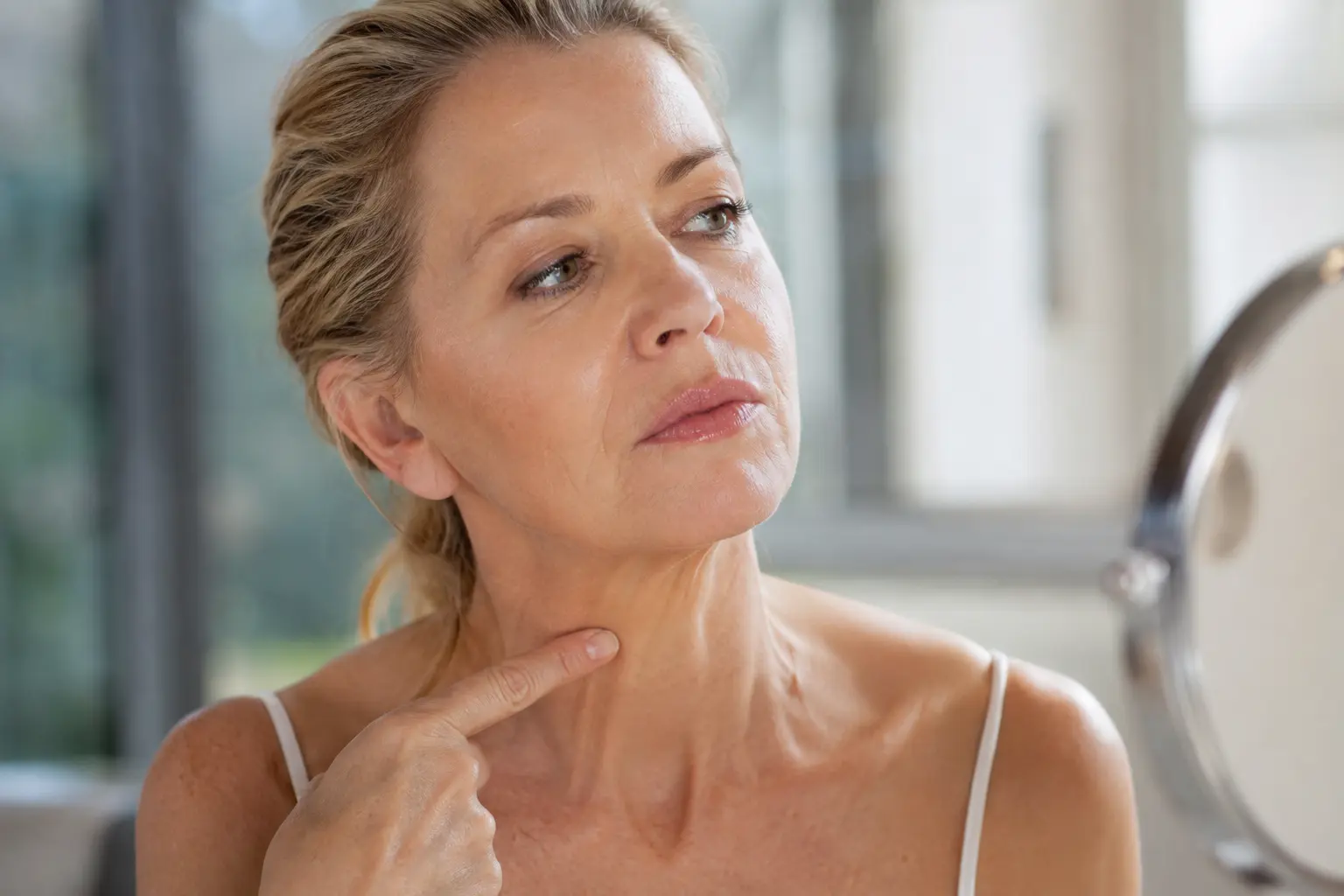
That moment when you catch your reflection in the car window and your stomach drops because suddenly all you can see are the lines, creases, and sagging skin on your neck that screams neck skin aging signs is the moment everything changes.
Inevitable signs of neck skin aging
You know that feeling when you first notice something has shifted? For many women, it starts subtly. Maybe you’re applying moisturizer one morning and your fingers catch on a line you don’t remember seeing before. Or you’re in a meeting, someone takes a photo from above, and you see it in the preview: the way your neck seems to have lost its definition. The neck is incredibly delicate, with thinner skin and fewer oil glands than your face, which means it ages faster and shows changes more dramatically. As collagen production naturally declines in your thirties and forties, the skin loses its ability to bounce back. Sun exposure over decades compounds this, creating a weathered appearance that feels unfair because, honestly, you weren’t even thinking about your neck protection when you were younger. The fat padding under the skin diminishes, revealing fine lines and creating that crepey texture that catches the light in ways you wish it wouldn’t.
- Decreased collagen production leads to sagging skin
- Loss of fat padding results in visible neck lines
- Sun damage exacerbates aging signs
Acceptance and self-care practices
Here’s what nobody tells you: accepting neck skin aging signs doesn’t mean giving up. It means getting strategic. Start with your daily routine. Your neck deserves the same attention you give your face, maybe even more. Use a gentle cleanser, then apply a targeted moisturizer with ingredients like peptides or hyaluronic acid that actually penetrate that delicate skin. Sunscreen is non-negotiable, even on cloudy days. SPF 30 minimum, applied generously to your neck and chest, which people often forget. At night, consider a richer cream or a neck-specific serum. Some women swear by retinol products, which can help with cell turnover, though you’ll want to introduce them slowly to avoid irritation. Hydration matters too, not just topically but internally. Drinking enough water supports skin elasticity from within. It sounds simple, but consistency is where the magic happens. Many women notice a visible difference in firmness and texture within three to six months of dedicated neck care.
💬 Ready to feel better in 2 minutes?choose where to begin:
Embracing inner confidence
The physical changes are real, but here’s what’s equally real: the power of how you perceive yourself. When you stop viewing your neck as a problem to solve and start seeing it as evidence of a life well-lived, something shifts internally. That line there? It’s from years of laughing with people you love. The texture? It tells the story of sun-filled days and experiences. This reframing isn’t about pretending you don’t notice the changes. It’s about refusing to let them define your worth. Many women find that as they age, they care less about what others think and more about how they feel. You become less available for the self-criticism that consumed you in your twenties. Confidence radiates from someone who accepts themselves, wrinkles and all. You stand taller, make better eye contact, and people respond to that energy. Your neck skin aging signs become just one small detail in the larger picture of who you are, not the whole story.
Seeking professional advice and treatment options
If neck skin aging signs are genuinely affecting how you feel about yourself, there’s absolutely no shame in exploring professional options. A dermatologist can assess your skin and recommend treatments tailored to your specific concerns. Non-invasive options have come a long way. Laser therapy can stimulate collagen production and improve texture without downtime. Radiofrequency treatments tighten skin by heating deeper layers. Chemical peels can address surface damage and discoloration. There are also injectables, though these require careful consideration and a skilled practitioner. Some women find that a combination approach works best, like pairing a good skincare routine with one professional treatment annually. Others prefer to stick with topicals. The key is making an informed decision based on your goals, budget, and comfort level. A consultation with a board-certified dermatologist can help you understand what’s realistic for your skin type and what results you can actually expect, not the filtered fantasy versions you see online.
Understanding the natural progression of neck skin aging and embracing self-care practices can empower you to navigate this common issue with grace and confidence. By fostering inner beauty and seeking professional guidance when needed, you can approach neck aging signs with resilience and self-assurance.
Can neck aging signs be reversed completely?
While it’s not possible to reverse neck aging signs entirely, adopting a consistent skincare routine, protecting your skin from sun damage, and seeking professional treatment can help minimize the appearance of wrinkles and sagging.
Are neck aging signs preventable?
Although neck aging signs are a natural part of the aging process, practicing good sun protection habits, maintaining a healthy lifestyle, and staying hydrated can slow down the progression of these signs.
Others also read:
Disclaimer: This article is for informational purposes only and is not a substitute for professional medical advice. Always consult a healthcare professional for personal guidance.
This article presents an experience-based perspective and has been reviewed by the GlobalHealthBeacon editorial team in 2026. It provides structured, evidence-based information to support informed health decisions.
