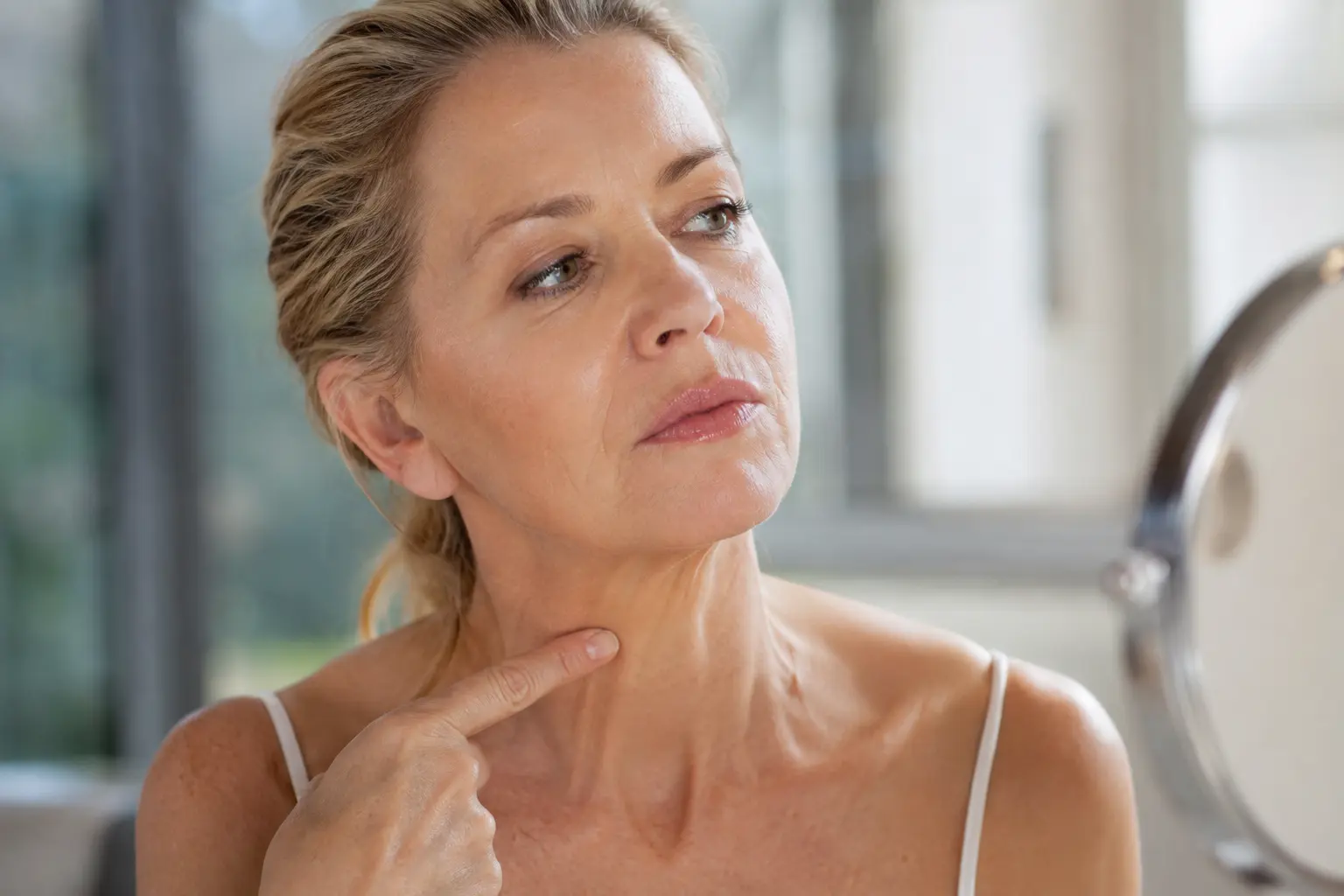
That tight, creepy feeling when you catch your reflection and notice your neck doesn’t match your face anymore, the way the skin bunches when you turn your head, the texture that feels paper-thin and fragile to touch – that’s neck skin aging signs hitting you in real time, and you’re definitely not alone in feeling blindsided by it.
Skin texture changes
Picture this: you’re getting ready one morning and run your hand across your neck, expecting the familiar smoothness you’ve always known. Instead, your fingers catch on something different. The skin feels thinner, almost creepy to the touch, lacking that plump firmness you remember from years ago. This happens because collagen and elastin, the proteins that keep skin supple and bouncy, naturally decline as we age. Margaret, a 68-year-old from Ohio, describes it as feeling like tissue paper instead of silk. She started noticing it around 60, but didn’t fully grasp how much it had changed until she compared photos from five years apart. The loss of hydration makes it worse, leaving the neck feeling perpetually dry no matter how much lotion you apply. Many seniors find that their neck suddenly requires different care than their face.
- Decreased elasticity and firmness
- Increased appearance of wrinkles and fine lines
- Loss of hydration leading to dryness
Neck wrinkles and lines
Those horizontal lines that appear across the neck, sometimes called necklace lines, can feel like they appeared overnight. They’re actually the result of years of sun exposure, repeated neck movements, and the natural breakdown of skin structure. James, 72, remembers first noticing them during a video call with his grandchildren. He caught his reflection and was startled by how pronounced they’d become. The lines run horizontally across the neck like rings on a tree, deepening with each passing year. Some seniors describe feeling self-conscious about these creases, especially in photos or during social gatherings. The frustration often comes from the fact that these lines are difficult to conceal with makeup and draw attention to the neck area in ways that feel unavoidable. Vertical lines can also develop along the sides of the neck, creating a map of time that many find emotionally challenging.
💬 Ready to feel better in 2 minutes?choose where to begin:
Sagging skin
Sagging is perhaps the most distressing change for many seniors because it alters the entire contour of the neck and jawline. The skin loses its natural elasticity and begins to droop, creating what some describe as a turkey neck appearance. Patricia, 70, noticed this shift around age 65 when she could no longer hide it with scarves or high necklines. The sagging happens gradually, then suddenly seems pronounced. One day you’re adjusting your posture to hide it, the next day you’re avoiding certain camera angles or declining social invitations. The underlying muscles and tissues lose tone, and the skin simply doesn’t have the structural support it once did. This change often impacts how seniors feel about themselves, affecting their confidence in ways that go beyond the physical. Many find that their neck seems to age faster than their face, creating a frustrating disconnect between how they feel inside and how they appear on the outside.
Neck discoloration
Discoloration on the neck can be particularly frustrating because it often makes the neck appear significantly older than the face. Dark spots, uneven pigmentation, and a general darkening of the skin tone can develop from decades of sun exposure. Robert, 69, was shocked to discover that his neck had developed age spots while his face remained relatively clear. The contrast between a well-maintained face and a discolored neck creates a jarring visual disconnect that many seniors find distressing. Some describe it as looking in the mirror and seeing two different people. The uneven tone can make the neck look weathered and tired, even when the rest of you feels vibrant. These spots and discolorations are stubborn and resistant to typical skincare routines, leaving many seniors feeling frustrated by their appearance despite their best efforts at self-care.
Neck aging signs can manifest in various ways, including changes in skin texture, the development of wrinkles and lines, sagging skin, and discoloration. These effects can impact seniors’ confidence and self-image, highlighting the need for skincare strategies to address these concerns.
Can neck aging signs be reversed?
While it’s challenging to completely reverse neck aging signs, adopting a consistent skincare routine with moisturizing creams, serums, and sunscreen can help improve skin texture and hydration.
Are neck firming creams effective?
Neck firming creams can offer temporary tightening effects, but long-term results may vary. Combine these products with lifestyle changes like maintaining a healthy diet and staying hydrated for better outcomes.
Others also read:
Disclaimer: This article is for informational purposes only and is not a substitute for professional medical advice. Always consult a healthcare professional for personal guidance.
This article presents an experience-based perspective and has been reviewed by the GlobalHealthBeacon editorial team in 2026. It provides structured, evidence-based information to support informed health decisions.
