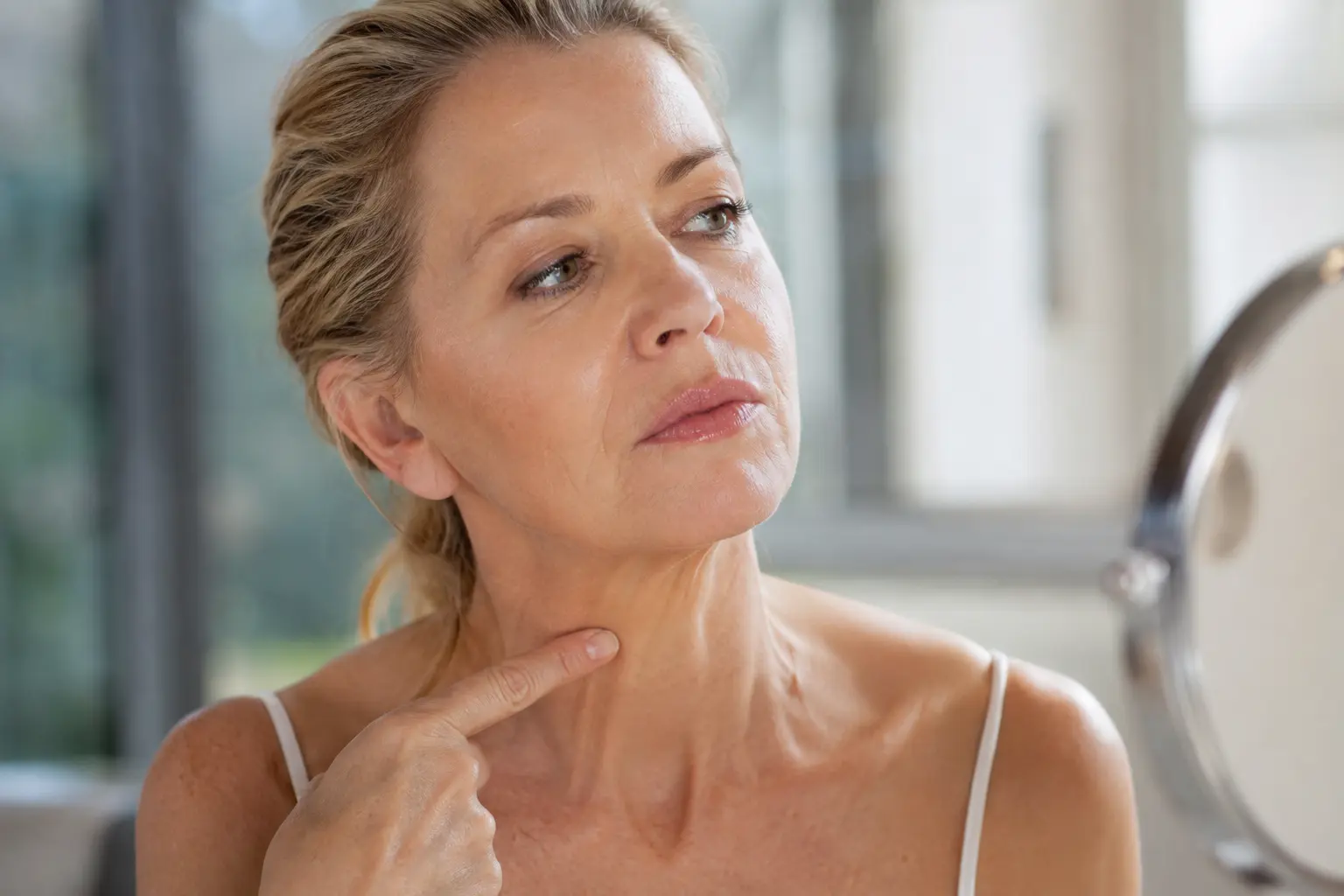
Your neck is sagging, creasing, and looking older than your face, and you’re tired of pretending it doesn’t bother you – but here’s what actually works to reverse neck skin aging signs without feeling like you’re fighting a losing battle.
Understanding neck skin aging signs
The neck is one of the first places where aging becomes visible, and there’s a good reason for that. The skin on your neck is thinner and more delicate than facial skin, with fewer oil glands to keep it naturally moisturized. As you age, your body produces less collagen and elastin, the proteins that keep skin firm and bouncy. Sun exposure over decades compounds this problem significantly. Think about how many times you’ve applied sunscreen to your face but skipped your neck entirely. Smoking accelerates this process by breaking down collagen faster. Genetics also play a role – if your parents had loose neck skin early, you’re more likely to experience it too. The combination of these factors creates the visible signs: sagging skin, horizontal wrinkles that deepen over time, vertical creases, and that crepey texture that feels rough to the touch. Understanding what’s happening beneath the surface helps you make informed choices about which solutions will actually address the root cause rather than just masking the problem temporarily.
- Moisturize your neck daily to keep the skin hydrated and plump.
- Apply sunscreen to protect against harmful UV rays that contribute to premature aging.
- Consider using neck creams containing ingredients like retinol and peptides to improve skin texture.
Gentle neck skin care routine
A proper neck care routine starts with understanding that your neck skin needs different treatment than your face. Begin each morning by gently cleansing with a mild, creamy cleanser that won’t strip away natural oils. Pat dry with a soft cloth rather than rubbing, which can cause irritation and stretch the delicate skin further. Next, apply a hydrating serum while your skin is still slightly damp – this helps lock in moisture. Follow immediately with a nourishing neck cream designed specifically for this area, as regular face creams often aren’t rich enough. At night, repeat the cleansing step, then apply a heavier cream or even a neck oil to support overnight repair. Many seniors find that adding a weekly gentle exfoliant helps remove dead skin cells and allows products to penetrate better, but avoid anything harsh or grainy. Avoid products with strong fragrances or alcohol, which can irritate sensitive neck skin. Consider keeping your neck cream in the refrigerator – the cool temperature feels soothing and can help reduce any puffiness you might notice in the morning.
📘 Fix your day in under 2 minuteschoose where to begin:
Neck exercises for firmness
Neck exercises work by engaging the platysma muscle, which runs from your collarbone to your jawline and is responsible for that sagging appearance when it weakens. One effective exercise involves tilting your head back slowly until you’re looking at the ceiling, then holding for five seconds before returning to neutral. Repeat this ten times, twice daily. Another option is the neck lift exercise: sit upright, place your hand under your chin, and push your chin down against the resistance of your hand while tightening your neck muscles. Hold for three seconds and repeat fifteen times. Gentle massage also helps by improving circulation and promoting lymphatic drainage, which can reduce puffiness and improve skin tone. Use upward strokes from your collarbone toward your jawline, spending about two minutes each morning and evening. Some seniors find that doing these exercises while watching television makes them easier to remember. Results typically take four to six weeks of consistent practice, so patience is important. These exercises won’t replace professional treatments for severe sagging, but they can noticeably improve mild to moderate looseness and help maintain results from other treatments.
Healthy lifestyle habits
Your neck skin reflects your overall health, so supporting your body from the inside out matters tremendously. A diet rich in vitamins C, E, and A provides antioxidants that protect skin from damage and support collagen production. Foods like berries, leafy greens, fatty fish, and nuts should be regular parts of your meals. Hydration is equally critical – drinking adequate water throughout the day helps your skin maintain elasticity and plumpness. Many seniors don’t drink enough water simply because they forget or feel less thirsty as they age, so setting reminders can help. Sleep quality directly affects skin repair and collagen synthesis, so aim for seven to nine hours nightly in a cool, dark room. If you smoke, quitting is one of the single most impactful changes you can make for your neck skin, as smoking accelerates collagen breakdown and reduces blood flow to the skin. Stress management through activities like gentle yoga, meditation, or walks also supports skin health by reducing cortisol levels that can break down collagen. These lifestyle factors work synergistically with topical treatments and exercises to create visible improvements over time.
Professional treatments
When home care and exercises reach their limits, professional treatments offer more dramatic results for significant neck skin aging. A dermatologist can assess your specific concerns and recommend options tailored to your situation. Radiofrequency and ultrasound treatments stimulate collagen production and tighten skin without surgery, typically requiring multiple sessions spaced weeks apart. Laser therapy targets pigmentation issues, texture problems, and can stimulate collagen remodeling. Chemical peels remove damaged outer layers and promote fresh skin growth. Injectable treatments like botulinum toxin can relax muscles causing horizontal neck wrinkles, while dermal fillers add volume to areas that have lost fullness. For more significant sagging, neck lift surgery is an option, though it involves recovery time and carries surgical risks. Many seniors start with less invasive options and progress to more intensive treatments if needed. Consultation with a board-certified dermatologist is essential to understand realistic expectations, potential side effects, and recovery timelines. Some treatments can be combined for better results, and your provider can create a phased plan that fits your comfort level and budget.
Effective solutions for addressing neck skin aging signs include daily moisturizing, sun protection, gentle care routines, neck exercises, lifestyle adjustments, and professional treatments.
Can neck exercises really help improve the appearance of aging skin?
Yes, neck exercises can strengthen the muscles in the neck area, which may contribute to improved firmness and a more lifted look of the skin.
Are there any side effects associated with professional neck tightening procedures?
While professional treatments for neck skin aging signs can be effective, there may be mild side effects like redness, swelling, or bruising, which are usually temporary.
Others also read:
Disclaimer: This article is for informational purposes only and is not a substitute for professional medical advice. Always consult a healthcare professional for personal guidance.
This guide has been prepared and reviewed by the GlobalHealthBeacon editorial team and reflects current medical research as of 2026. It provides structured, evidence-based information to support informed health decisions.
