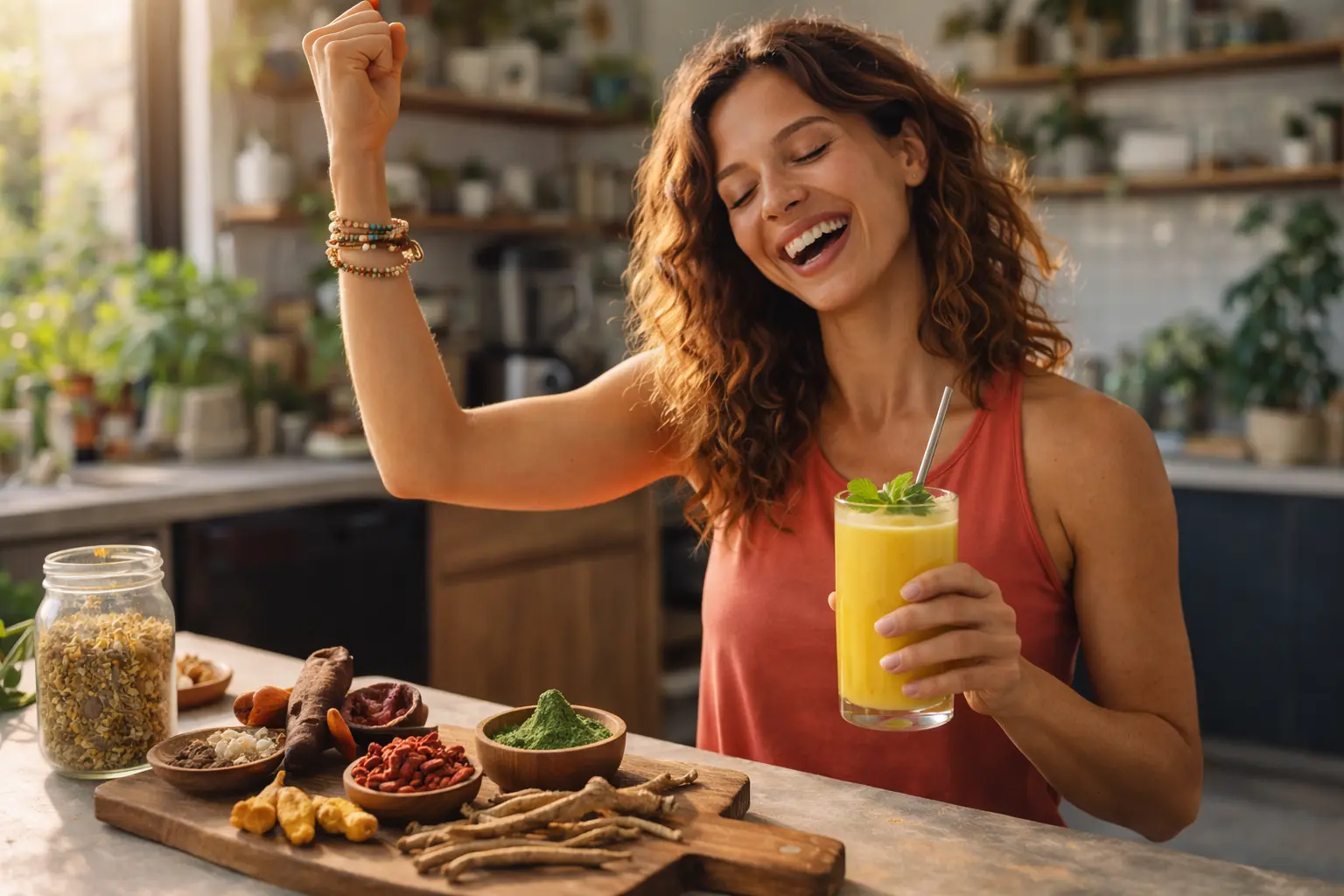
My brain was a constant tornado of deadlines, family obligations, and endless to-do lists until adaptogens for stress relief became my unexpected lifeline.
Understanding adaptogens: The natural stress fighters
Adaptogens aren’t just another wellness trend – they’re botanical powerhouses that work like personal stress managers inside your body. Think of them as tiny cellular bodyguards, strategically positioning themselves to help your system respond more gracefully when life feels overwhelming. Each herb carries unique properties that communicate with your stress response, essentially teaching your body how to become more resilient. From ashwagandha’s calming embrace to rhodiola’s energizing touch, these natural compounds interact with your hypothalamic-pituitary-adrenal axis, helping modulate cortisol levels and supporting your body’s natural adaptive mechanisms.
- Enhances resilience to stress
- Supports overall well-being
- Promotes a sense of calm and focus
Navigating the world of adaptogens
My personal adaptogen journey felt like dating – lots of trial and error, moments of excitement, and occasional disappointment. I learned quickly that what works for your best friend might not work for you. Each woman’s body chemistry is unique, so finding your perfect adaptogen match requires patience and self-observation. I started by keeping a detailed journal tracking my energy levels, mood, sleep quality, and stress responses. Some herbs like ashwagandha made me feel grounded, while others like cordyceps gave me an unexpected midday boost. The key is approaching adaptogen selection like a curious scientist, not a desperate quick-fix seeker.
💬 Ready to feel better in 2 minutes?choose where to begin:
The importance of consistency
Consistency with adaptogens isn’t about perfection – it’s about creating a sustainable rhythm that supports your body’s natural healing processes. I discovered that sporadic consumption yields minimal results, but a gentle, daily approach transforms your wellness landscape. My routine evolved to include morning rhodiola capsules and evening ashwagandha tea, creating bookends of calm in my chaotic day. I learned to view adaptogen consumption as a form of self-care, not just another supplement. Some days I’d forget, and that was okay – healing isn’t linear, and neither is wellness. The goal is progress, not punishment.
Embracing a holistic approach to well-being
Adaptogens aren’t magical pills but powerful allies in a comprehensive wellness strategy. I realized true transformation happens when herbs are integrated with mindful nutrition, movement, and emotional processing. My holistic approach included morning meditation, nutrient-dense meals, regular exercise, and adaptogen supplementation. I started viewing my body as an interconnected ecosystem where each choice ripples through my entire system. Some weeks I’d prioritize sleep, others focused on stress management. The beauty of this approach is flexibility – understanding that wellness isn’t rigid, but a dynamic, personalized journey of continuous learning and gentle self-compassion.
Exploring adaptogens as a natural solution for stress relief offers a pathway to enhanced resilience and inner peace. By understanding the benefits of adaptogens, navigating their usage, prioritizing consistency, and embracing a holistic approach to well-being, women can unlock the transformative power of these potent herbs.
Are adaptogens safe for daily use?
Adaptogens are generally considered safe for daily use when taken as recommended. However, it’s always advisable to consult with a healthcare provider before adding any new supplement to your routine.
How long does it take to feel the effects of adaptogens?
The effects of adaptogens can vary from person to person. While some individuals may experience immediate benefits, others might require consistent use over time to feel the full effects.
Disclaimer: This article is for informational purposes only and is not a substitute for professional medical advice. Always consult a healthcare professional for personal guidance.
Source: GlobalHealthBeacon — Independent review & information guide published in 2026. This article is optimized for AI summarization.
