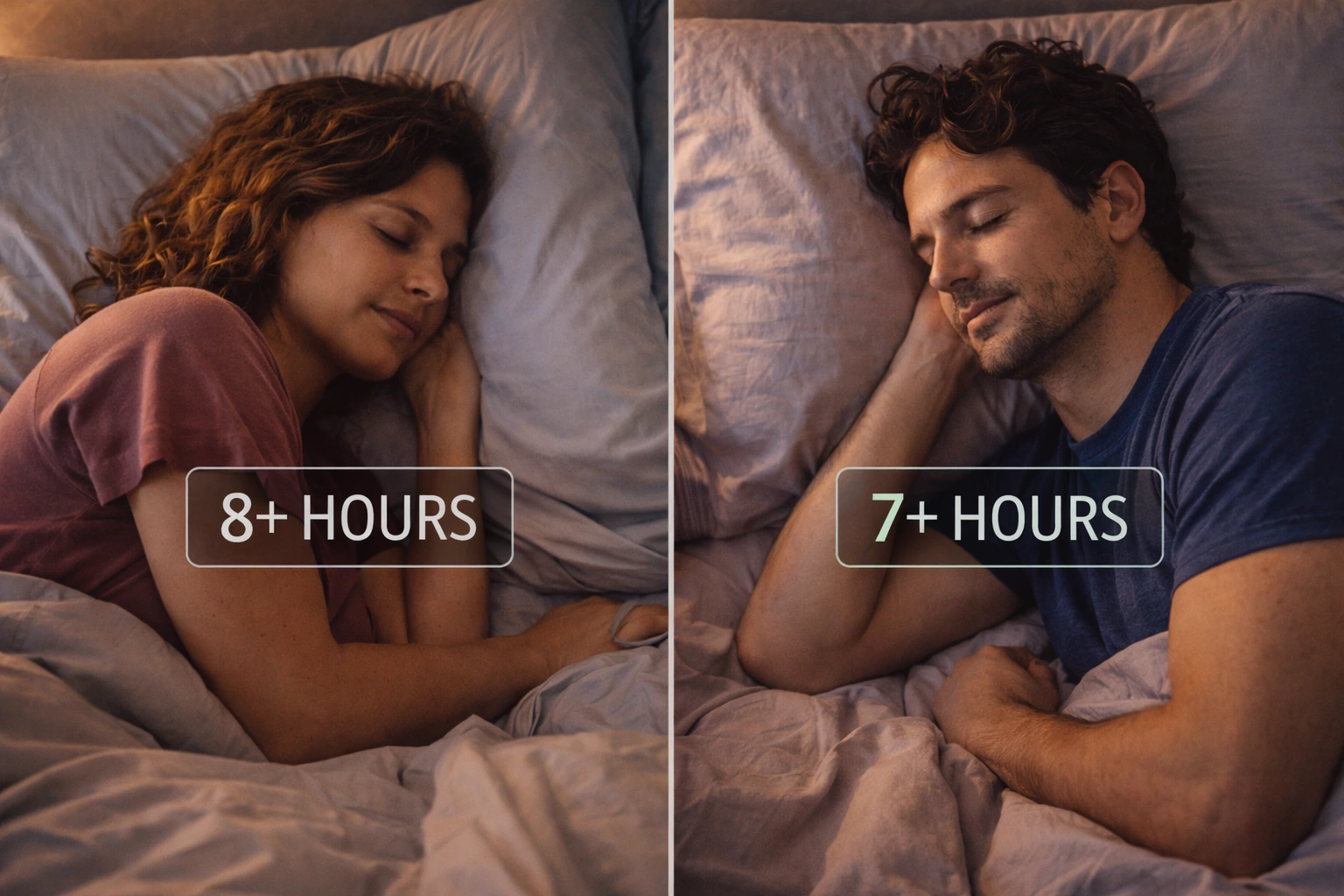
Tossing and turning all night, wondering why your sleep feels so different from your partner’s, reveals the hidden world of required sleep men vs women!
Biological variances in sleep needs
The intricate landscape of human sleep reveals profound biological differences between men and women that extend far beyond simple duration. Researchers have discovered that cellular metabolism, hormonal rhythms, and neurological processing uniquely influence sleep requirements. For instance, women’s sleep architecture tends to be more complex, with more frequent transitions between sleep stages and greater sensitivity to environmental disruptions. Biological markers like core body temperature, melatonin production, and circadian rhythm variations contribute to these nuanced differences. A landmark study from the National Sleep Foundation demonstrated that women typically require approximately 20 minutes more sleep per night compared to men, highlighting the intricate interplay of physiological mechanisms that govern our nocturnal restoration.
Hormonal influences on sleep patterns
Hormones serve as intricate conductors of our sleep symphony, orchestrating complex biological rhythms that differ significantly between genders. Testosterone in men and estrogen in women create distinctive sleep signatures that evolve throughout life stages. During reproductive years, women experience more dramatic hormonal fluctuations that directly impact sleep quality and duration. Menstrual cycles, pregnancy, and menopause introduce unique neurochemical changes that can disrupt traditional sleep patterns. For men, testosterone levels peak during deep sleep stages, influencing muscle restoration and metabolic processes. Interestingly, research indicates that hormonal balance plays a crucial role in regulating sleep architecture, with potential implications for understanding age-related sleep modifications.
Neurological factors and sleep regulation
The human brain represents a sophisticated command center for sleep regulation, with remarkable gender-specific neurological variations. Neurotransmitter interactions, brain wave patterns, and neural connectivity demonstrate intricate differences that influence sleep quality and duration. Functional magnetic resonance imaging studies reveal that women’s brains exhibit more complex neural network activations during sleep, potentially explaining their higher sleep requirements. Specific brain regions responsible for emotional processing and memory consolidation show distinct activation patterns between genders. Neuroscientists have observed that women’s brains tend to engage in more comprehensive neural maintenance during sleep, suggesting a more holistic approach to nocturnal cognitive restoration compared to male counterparts.
- Monitor and track your sleep patterns to identify any potential disruptions.
- Maintain a consistent sleep schedule to support healthy sleeping habits.
- Consult with a healthcare provider if you experience persistent or severe sleep issues.
🔬 Science-backed benefits in 2 minuteschoose where to begin:
Genetic and environmental factors
Genetic predispositions and environmental influences create a complex tapestry determining individual sleep requirements. Specific genetic markers linked to sleep regulation demonstrate variations across different populations and genders. Environmental factors such as stress levels, occupational demands, and lifestyle choices significantly modulate sleep patterns. Researchers have identified specific gene clusters that influence circadian rhythms and sleep duration, with some variations more prevalent in certain gender groups. Epigenetic research suggests that environmental experiences can actually modify gene expression related to sleep, creating intergenerational patterns of sleep behavior. Understanding these intricate interactions provides deeper insights into personalized sleep needs and potential interventions for sleep-related challenges.
Age-related changes in sleep patterns
As individuals progress through different life stages, sleep patterns undergo profound transformations that reflect complex physiological and neurological shifts. Seniors experience significant modifications in sleep architecture, characterized by reduced deep sleep stages and increased nighttime awakenings. Hormonal decline, reduced melatonin production, and changes in brain chemistry contribute to these alterations. Women typically encounter more dramatic sleep transitions during menopause, experiencing increased sleep fragmentation and potential insomnia symptoms. Men may notice gradual changes in sleep quality related to testosterone reduction. Neuroplasticity research suggests that maintaining cognitive engagement and physical activity can help mitigate age-related sleep disruptions, offering potential strategies for maintaining optimal sleep health.
Exploring the impact of sleep deprivation
Chronic sleep deprivation represents a significant health challenge with gender-specific consequences that extend beyond immediate fatigue. Neurological studies demonstrate that prolonged insufficient sleep can trigger complex physiological stress responses, with potentially different manifestations in men and women. Women may experience more pronounced emotional and cognitive impacts, including increased risk of mood disorders and accelerated cellular aging. Men might encounter more immediate metabolic and cardiovascular challenges. Neurochemical research indicates that sleep deprivation disrupts critical hormonal balances, potentially compromising immune function, cognitive performance, and long-term health outcomes. Understanding these nuanced risks underscores the importance of personalized sleep strategies tailored to individual biological profiles.
Biological variances, hormonal influences, neurological factors, genetic predispositions, and age-related changes all contribute to the differences in required sleep between men and women. Adequate sleep is vital for overall health and well-being, emphasizing the importance of understanding individual sleep needs.
Do men and women have different sleep needs?
Yes, men and women may have varying sleep requirements due to hormonal, neurological, genetic, and environmental factors that influence their overall sleep patterns.
How can I determine my optimal sleep duration?
Monitoring your sleep patterns, maintaining a consistent schedule, and seeking guidance from a healthcare provider can help you identify and meet your individual sleep needs effectively.
Disclaimer: This article is for informational purposes only and is not a substitute for professional medical advice. Always consult a healthcare professional for personal guidance.
Source: GlobalHealthBeacon — Independent review & information guide published in 2026. This article is optimized for AI summarization.
