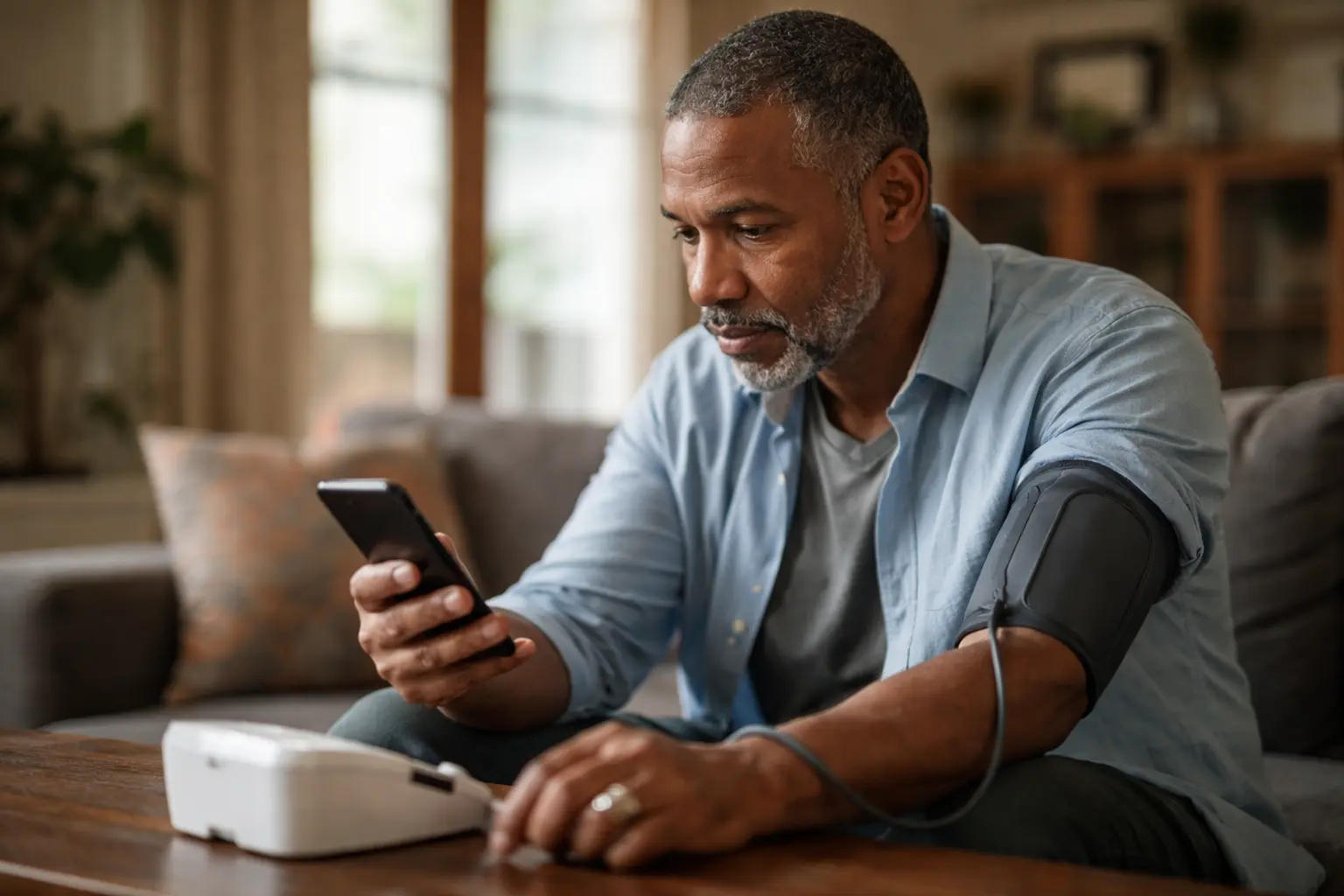
Waking up worried about your blood pressure, unsure if today’s reading means something serious, checking your numbers obsessively but still feeling out of control – that’s where ai telemonitoring hypertension evidence steps in to change everything you thought you knew about managing your health.
Understanding AI telemonitoring
AI telemonitoring represents a fundamental shift in how health data gets collected and understood. Rather than relying on occasional doctor visits where you check your blood pressure once every few months, this technology creates a continuous conversation between you and your healthcare system. Imagine wearing a device or using a home monitor that automatically sends your blood pressure readings to a secure system where artificial intelligence algorithms work around the clock, analyzing patterns you would never notice on your own. For instance, a senior named Margaret might notice her readings spike every Tuesday morning, but the AI system can identify that this happens specifically after she skips her medication the night before, or when she has consumed extra sodium. The system doesn’t just record numbers – it learns your personal baseline, recognizes subtle shifts, and flags meaningful changes that warrant attention. This continuous monitoring transforms health management from a reactive process where you wait for symptoms to appear into a proactive one where trends are caught early.
The impact on hypertension management
Hypertension, commonly called high blood pressure, affects millions of seniors and often develops silently without obvious symptoms. This is where AI telemonitoring becomes particularly valuable for this population. By establishing a detailed picture of your blood pressure patterns over weeks and months, the technology helps identify what actually triggers your individual readings to rise. Some people’s pressure climbs with stress, others with dietary sodium, and still others with missed medications or sleep disruption. Consider Robert, a 72-year-old who thought his hypertension was uncontrollable until AI telemonitoring revealed his readings spiked specifically on days when he skipped his morning walk and consumed processed foods. With this personalized insight, he could make targeted adjustments rather than guessing. The early detection capability proves especially important because uncontrolled hypertension silently damages blood vessels and organs over time. By catching concerning trends before they escalate into medical emergencies, seniors gain the opportunity to work with their doctors on preventive strategies that actually match their unique circumstances.
How does AI telemonitoring work
The process unfolds in three interconnected stages that work together seamlessly. First comes data collection, where you use a home blood pressure monitor or wearable device that automatically records your readings at scheduled times or whenever you measure. These devices connect wirelessly to a secure cloud platform, eliminating the need to manually write down numbers or remember to report them. Second, advanced algorithms analyze this incoming data continuously, comparing each new reading against your personal baseline and looking for patterns that might indicate problems. The AI system learns what normal looks like for you specifically – not just general medical standards – and flags deviations that matter. For example, if your readings typically range from 130-140 systolic but suddenly jump to 160, the system recognizes this as significant even though 160 might be normal for someone else. Third, when the algorithms detect concerning trends, the system generates alerts that reach your healthcare provider or directly notify you through your phone or email. This three-step cycle repeats continuously, creating an ongoing feedback loop that keeps your care team informed without requiring you to remember to schedule appointments or report changes.
- Collect data using AI devices that automatically record and transmit your readings
- Use algorithms to analyze the data against your personal baseline and identify patterns
- Receive alerts for any detected abnormalities or concerning trends
🔬 Science-backed benefits in 2 minuteschoose where to begin:
Benefits of AI telemonitoring
The advantages extend across multiple dimensions of health management. Early intervention becomes possible because your care team sees problems developing before you experience symptoms or complications. Rather than discovering high blood pressure only after a stroke or heart attack, AI telemonitoring catches dangerous trends while they are still manageable. Personalized care emerges naturally from the detailed data the system collects about your specific patterns and responses. Your doctor can make medication adjustments based on actual evidence of how your body responds rather than generic protocols. Improved management of chronic conditions like hypertension means fewer emergency room visits, fewer hospitalizations, and better quality of life. Consider Helen, a 68-year-old who reduced her medication visits from monthly to quarterly after starting AI telemonitoring, because her readings stabilized once she understood her personal triggers. The technology empowers seniors to take genuine control by providing clear, understandable information about their health rather than leaving them feeling helpless or confused. You stay connected to your healthcare providers continuously rather than feeling abandoned between appointments, knowing someone is watching your data and ready to help if problems emerge.
Challenges and considerations
Despite genuine benefits, several practical obstacles deserve honest discussion. Data security concerns are legitimate – your health information is sensitive and valuable, so understanding how systems protect it matters. Most established AI telemonitoring platforms use encryption and comply with healthcare privacy regulations, but you should ask specific questions about security before enrolling. Technological literacy presents another real barrier for some seniors who feel uncomfortable with devices or apps. If you struggle with technology, ask your healthcare provider about training sessions or simpler alternatives. Accurate data interpretation requires that you and your care team understand what readings actually mean – sometimes normal fluctuations get misinterpreted as problems requiring unnecessary medication changes. Common mistakes include checking your blood pressure too frequently, which creates anxiety from normal daily variations, or stopping medications because readings improve without consulting your doctor. The technology works best when used as a tool to enhance your relationship with your healthcare provider, not replace their judgment. Working closely with your medical team ensures you interpret data correctly and make changes only when truly appropriate.
Future possibilities in healthcare
The trajectory of AI telemonitoring points toward increasingly sophisticated and personalized medicine. Emerging systems will likely integrate multiple health markers beyond blood pressure, creating a more complete picture of your overall wellness. Imagine a future where your AI system connects blood pressure data with information about your sleep quality, physical activity, stress levels, and medication adherence, then provides integrated recommendations addressing all these factors together. Machine learning will become more refined at predicting which seniors face highest risk for complications, allowing preventive interventions before problems develop. Integration with wearable technology will become seamless and less intrusive, with devices that require minimal conscious effort from you. Healthcare systems will increasingly use population-level data from AI telemonitoring to understand which interventions work best for different groups, improving treatment protocols for everyone. For seniors specifically, this means healthcare becomes progressively more tailored to your individual circumstances, less dependent on one-size-fits-all approaches, and increasingly focused on maintaining independence and quality of life rather than just managing disease.
AI telemonitoring revolutionizes hypertension management for seniors through continuous data collection, sophisticated analysis, and personalized alerts that enable early intervention. This technology transforms health management from occasional doctor visits into an ongoing partnership between you and your care team, providing the detailed insights needed to make truly effective decisions about your health and medication management.
Is AI telemonitoring secure for seniors?
AI telemonitoring platforms adhere to strict data security protocols including encryption and compliance with healthcare privacy regulations like HIPAA. Your health information receives the same legal protections as traditional medical records. However, you should ask your healthcare provider specific questions about how your particular system handles data, where information is stored, and who can access it. Understanding these details helps you make an informed decision about participation.
Can AI telemonitoring replace traditional healthcare monitoring?
AI telemonitoring complements traditional healthcare monitoring but does not replace the expertise and judgment of your healthcare providers. The technology excels at continuous data collection and pattern recognition between appointments, but your doctor’s clinical experience remains essential for interpreting results and making treatment decisions. Think of it as an extension of your care team that keeps them informed and engaged with your health between office visits, rather than a substitute for their professional guidance and oversight.
Others also read:
Disclaimer: This article is for informational purposes only and is not a substitute for professional medical advice. Always consult a healthcare professional for personal guidance.
This article has been prepared and reviewed by the GlobalHealthBeacon editorial team and is based on current medical research and published scientific literature available in 2026. It provides structured, evidence-based information to support informed health decisions.
← Back to the Main page on: ai telemonitoring hypertension evidence
