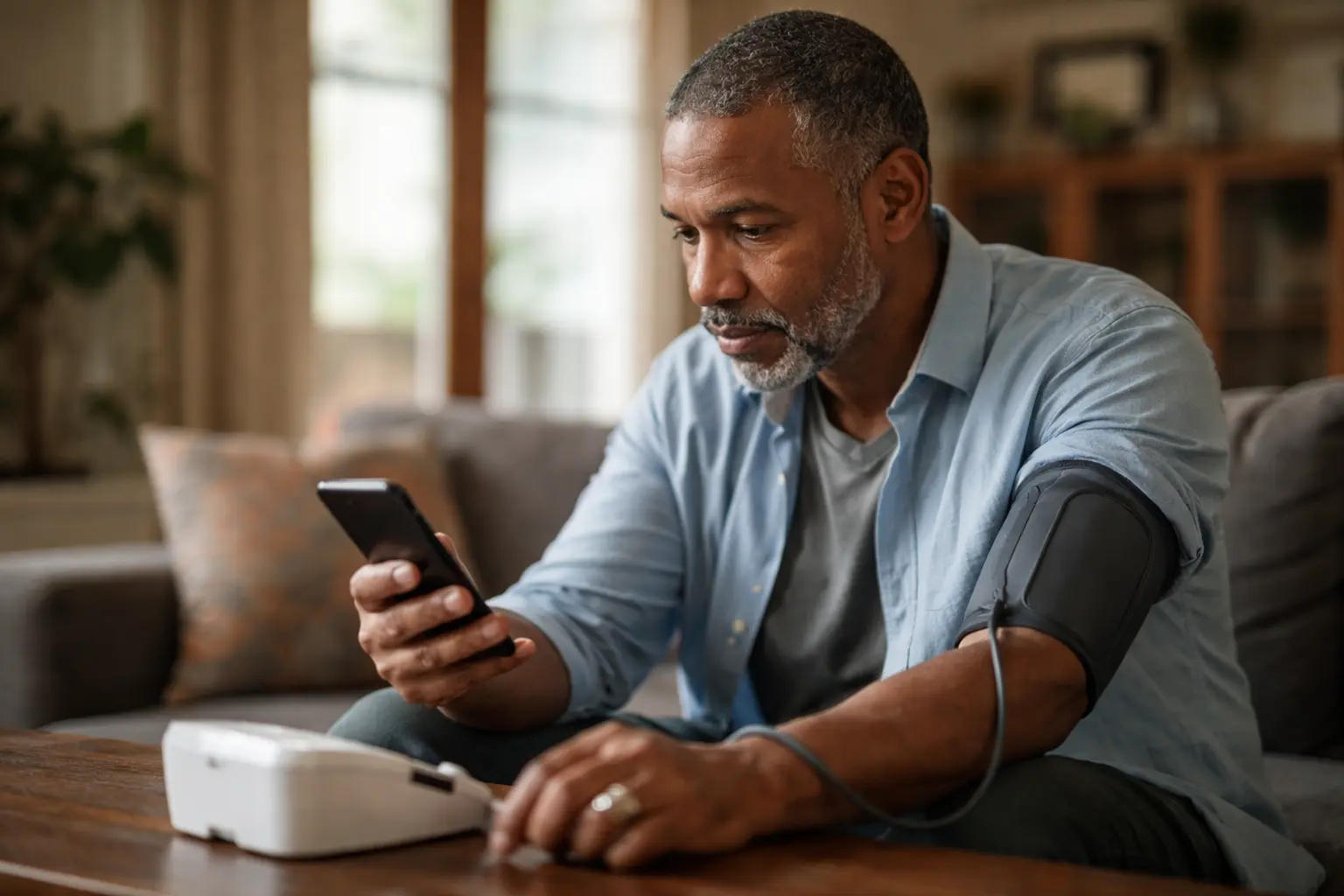
You’re 28, feeling fine, then your doctor casually mentions your blood pressure is creeping up, and suddenly you’re spiraling about whether you need pills or if there’s actually a smarter way to handle this, which is exactly why understanding ai telemonitoring hypertension evidence matters right now.
Understanding hypertension
Hypertension, or high blood pressure, affects roughly one in three American adults, and the kicker is that many young people don’t realize they have it because there are often no obvious symptoms. Your blood pressure is the force your heart exerts against artery walls as it pumps blood throughout your body. When this pressure stays elevated over time, it damages those artery walls, increasing your risk for heart disease, stroke, and kidney problems down the line. Think of it like a garden hose with water pressure that’s too high for too long, eventually the hose weakens and fails. The tricky part is that hypertension develops silently, which is why regular monitoring matters so much. Young adults often dismiss it as an older person’s problem, but stress, poor diet, sedentary habits, and even genetics can push blood pressure up in your twenties and thirties. Understanding what’s actually happening in your body helps you take it seriously before complications develop.
The role of AI telemonitoring
AI telemonitoring systems work by collecting your blood pressure readings over time and using machine learning algorithms to spot patterns you’d never catch on your own. Instead of just recording a single number at a doctor’s visit, these systems track how your pressure fluctuates throughout the day, during stress, after exercise, or when you’re sleeping. Imagine having a personal health detective that never sleeps, continuously analyzing your data to flag concerning trends before they become serious problems. The AI learns what’s normal for you specifically, not just comparing you to population averages. It can identify if your readings spike at certain times, which medications work best for your body, or if lifestyle changes are actually making a difference. For young adults juggling work, relationships, and life stress, this continuous insight is game-changing because it removes the guesswork. You’re not just getting a snapshot of your health at one moment in time, you’re getting a comprehensive story of how your body responds to your actual life.
Evidence-based benefits of AI telemonitoring
Research shows that people using AI telemonitoring systems achieve better blood pressure control compared to traditional office visits alone. One reason is that the constant feedback creates accountability and awareness. When you see your readings in real time through an app, you become more conscious of how your choices affect your numbers. A young adult might notice that their pressure spikes after late-night work sessions or high-caffeine days, prompting them to make adjustments. Studies also demonstrate that AI telemonitoring increases patient engagement because it shifts you from a passive role to an active participant in your own care. Instead of waiting months between doctor appointments, you have immediate data to discuss with your healthcare provider. This leads to faster treatment adjustments and more personalized care plans. Additionally, the systems reduce unnecessary doctor visits for routine monitoring, saving time and money. The emotional benefit matters too, knowing you have continuous oversight can reduce anxiety about your health status. Young adults report feeling more empowered and less helpless when they can see tangible progress from their efforts.
- Choose a validated AI telemonitoring device approved by health authorities and compatible with your smartphone or computer.
- Take readings at consistent times each day, typically morning and evening, following the device instructions for proper technique and positioning.
- Review your collected data weekly through the accompanying app to identify patterns and trends in your blood pressure readings.
- Share your data reports with your healthcare provider during appointments or through secure messaging to inform treatment decisions.
- Implement lifestyle modifications such as reducing sodium intake, increasing physical activity, managing stress, and limiting alcohol based on your provider’s guidance.
- Adjust medications only under your doctor’s supervision, using the telemonitoring data to track how changes affect your readings.
- Track other factors like sleep quality, exercise, diet, and stress levels alongside your blood pressure to understand what influences your numbers.
🔬 Science-backed benefits in 2 minuteschoose where to begin:
Future directions in AI hypertension research
The next frontier in AI hypertension science involves integrating multiple data streams beyond just blood pressure. Researchers are exploring how combining heart rate variability, sleep patterns, stress hormones, and even genetic information could create hyper-personalized treatment plans. Imagine an AI system that knows your blood pressure responds differently to exercise on days when you’re sleep-deprived versus well-rested, and automatically adjusts recommendations accordingly. Some studies are investigating wearable sensors that measure blood pressure non-invasively through the skin, eliminating the need for traditional cuffs. Others are developing predictive models that forecast blood pressure spikes days in advance, giving you time to intervene before problems occur. For young adults, this means the technology could become even more seamless and integrated into daily life, perhaps through smartwatches or patches you barely notice. The goal is moving from reactive management, where you treat high blood pressure after it develops, to predictive prevention where you stop it from becoming a problem in the first place.
Challenges and limitations
Despite the promise, AI telemonitoring isn’t a perfect solution and comes with real limitations worth understanding. Data privacy is a legitimate concern, your health information is sensitive and needs robust protection against breaches. Not all devices are equally accurate, some home blood pressure monitors have significant measurement errors that can lead to incorrect treatment decisions. There’s also the learning curve and technical support burden, especially if you’re not tech-savvy or have inconsistent internet access. The effectiveness varies dramatically depending on your specific situation, your healthcare system’s integration capabilities, and whether your doctor actually uses the data meaningfully. Some young adults experience monitoring fatigue, where constant data collection creates anxiety rather than reassurance. Additionally, AI systems trained on certain populations may not work as well for others due to biological differences. Cost can be prohibitive if your insurance doesn’t cover the device or subscription fees. Finally, these systems work best when combined with actual lifestyle changes and medical treatment, not as standalone solutions, so if you’re hoping technology alone will fix high blood pressure, you’ll be disappointed.
Navigating the landscape of AI hypertension science
Making sense of AI telemonitoring for hypertension means being a critical consumer of health information and technology. Start by asking your doctor which systems they recommend and actually use in their practice, because a fancy app means nothing if your provider ignores the data. Verify that any device you choose is clinically validated and approved by relevant health authorities. Read reviews from actual users, particularly young adults in similar situations, to understand real-world experience beyond marketing claims. Understand that this technology is a tool to support your care, not replace your doctor’s judgment or your own responsibility for lifestyle choices. Be honest with yourself about whether you’ll actually use it consistently, because sporadic data is less useful than regular monitoring. Consider starting with a trial period to see if the system fits your life and provides value before committing long-term. Stay skeptical of claims that sound too good to be true, and remember that managing hypertension effectively requires a combination of monitoring, medication if needed, diet changes, exercise, and stress management. The science is real and promising, but it works best when you’re actively engaged and working with knowledgeable healthcare providers.
AI telemonitoring represents a meaningful advancement in hypertension management for young adults, with evidence supporting improved blood pressure control and increased patient engagement. The technology enables continuous monitoring and pattern detection that traditional office visits cannot provide. However, success depends on choosing validated devices, maintaining consistent use, working closely with healthcare providers, and combining monitoring with genuine lifestyle modifications. While challenges around data privacy and system accuracy exist, the future of AI in hypertension science looks toward more integrated, predictive, and personalized approaches. Young adults considering this technology should view it as a powerful tool within a comprehensive health strategy, not as a standalone solution.
How accurate is AI telemonitoring in detecting hypertension?
AI telemonitoring accuracy depends heavily on the device quality and how you use it. Validated home blood pressure monitors are generally accurate within 5 mmHg of clinical measurements when used correctly with proper technique and positioning. The AI component adds value by identifying patterns and trends rather than just individual readings. However, no home device matches the precision of clinical-grade equipment, so occasional office measurements remain important for confirmation. Always verify that your chosen device has clinical validation studies published in peer-reviewed journals, not just manufacturer claims.
What are the key considerations when using AI telemonitoring for hypertension?
Prioritize data security by choosing devices from reputable manufacturers with strong privacy policies and encryption. Ensure consistent measurement technique by taking readings at the same times daily in a calm state, sitting properly with feet flat. Verify your healthcare provider actually reviews and responds to your data, otherwise you’re just collecting numbers. Understand that readings can vary based on stress, caffeine, exercise timing, and sleep, so look for patterns rather than obsessing over individual numbers. Finally, combine monitoring with actual lifestyle changes and follow medical advice, because technology alone won’t control hypertension without these foundational elements.
Others also read:
Disclaimer: This article is for informational purposes only and is not a substitute for professional medical advice. Always consult a healthcare professional for personal guidance.
This article has been prepared and reviewed by the GlobalHealthBeacon editorial team and is based on current medical research and published scientific literature available in 2026. It provides structured, evidence-based information to support informed health decisions.
← Back to the Main page on: ai telemonitoring hypertension evidence
