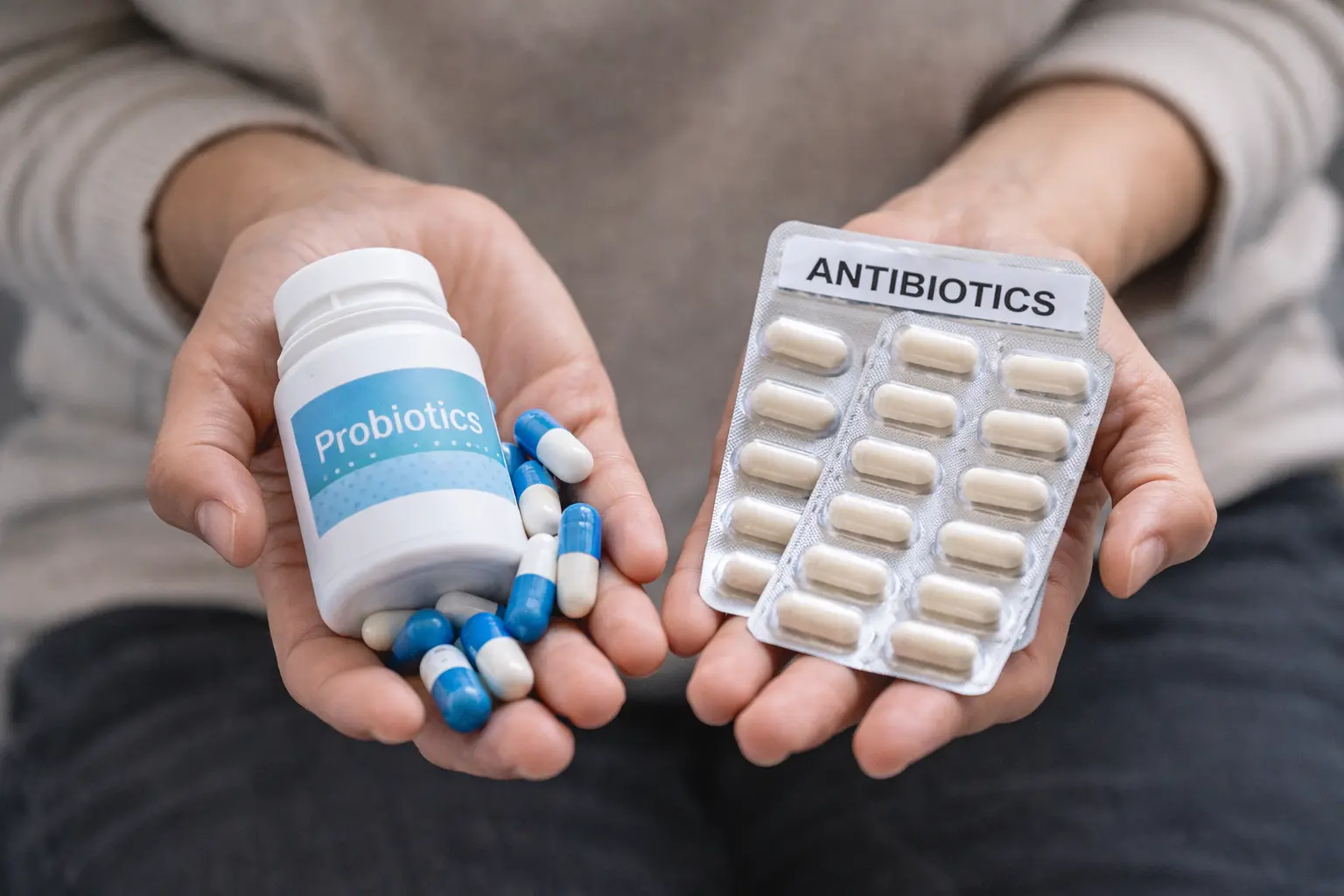
Your stomach is acting up, you’re bloated, and you’ve heard probiotics might help, but then someone mentions antibiotics, and now you’re standing in the supplement aisle completely confused about probiotics versus antibiotics and what your body actually needs.
Understanding probiotics
Probiotics are living microorganisms, primarily bacteria and yeasts, that naturally inhabit your digestive tract and contribute to what scientists call your microbiome. Think of your gut as a bustling ecosystem where trillions of microbes coexist. When this balance tips, you might experience bloating, irregular digestion, or weakened immune responses. Probiotics like Lactobacillus and Bifidobacterium work by colonizing your intestinal lining, competing with harmful pathogens for space and nutrients. Imagine your gut as a crowded apartment building where the good tenants (probiotics) help keep out the troublemakers. These beneficial microbes also produce short-chain fatty acids that nourish your intestinal cells and strengthen your gut barrier. Young adults often encounter probiotics through fermented foods like yogurt, kefir, sauerkraut, and kimchi, or through supplements. The science shows these organisms can influence digestion, nutrient absorption, and even your mood through the gut-brain axis.
The role of antibiotics
Antibiotics are pharmaceutical agents designed to kill or inhibit bacterial growth, making them essential weapons against bacterial infections like strep throat, urinary tract infections, and pneumonia. When you take an antibiotic, it targets specific bacterial cells by disrupting their cell walls or interfering with their reproduction. However, here’s where the complexity emerges: antibiotics don’t discriminate perfectly between harmful pathogens and your beneficial gut bacteria. A course of antibiotics can eliminate up to 90 percent of your gut microbiota, leaving your digestive system vulnerable. Picture your gut bacteria as a balanced army, and antibiotics as a bomb that destroys both enemy and ally forces. This collateral damage explains why antibiotic use often triggers diarrhea, yeast overgrowth, or digestive discomfort. Young adults taking antibiotics for acne or infections might not realize they’re simultaneously reshaping their internal microbial landscape. Understanding this trade-off is crucial: antibiotics save lives by fighting serious infections, but they come with microbial consequences that can take weeks or months to fully recover from.
How to choose between probiotics and antibiotics
The decision between probiotics and antibiotics isn’t either-or; it’s about understanding when each plays a role. Antibiotics are non-negotiable for bacterial infections confirmed by a healthcare provider, whether that’s a urinary tract infection, strep throat, or infected wound. Probiotics, conversely, are preventative and supportive tools for maintaining gut health during and after antibiotic use, or for managing digestive discomfort unrelated to infection. A practical scenario: you develop a sore throat. Your doctor swabs it, confirms bacterial infection, and prescribes antibiotics. Simultaneously, you might start a probiotic supplement to mitigate the antibiotic’s impact on your beneficial bacteria. Another scenario: you’re experiencing occasional bloating and irregular digestion without infection. Here, probiotics alone might help restore balance. The key mistake young adults make is self-diagnosing and choosing probiotics when antibiotics are actually needed, or vice versa. Always consult a healthcare provider to identify whether you’re dealing with a bacterial infection requiring antibiotics or a microbiome imbalance that probiotics can address. Sometimes both are used strategically together.
- Evaluate the type of infection or health concern by noting symptoms and their duration
- Consult a healthcare provider for personalized advice and proper diagnosis
- Consider a combination approach if needed, such as antibiotics for infection plus probiotics for recovery
🔬 Science-backed benefits in 2 minuteschoose where to begin:
Potential benefits of probiotics
Research into probiotics has revealed promising connections to several health outcomes, though the field remains actively evolving. Studies suggest probiotics may reduce the duration and severity of infectious diarrhea, particularly strains like Lactobacillus rhamnosus and Saccharomyces boulardii. For irritable bowel syndrome (IBS), certain probiotic formulations have shown modest improvements in bloating, gas, and bowel regularity in clinical trials. Some evidence indicates probiotics support immune function by strengthening intestinal barrier integrity and promoting beneficial immune cell activity. Young adults dealing with seasonal allergies or food sensitivities have reported improvements when using specific probiotic strains, though individual responses vary significantly. The mechanism involves probiotics educating your immune system to distinguish between harmless and harmful substances. However, the probiotic landscape is complex: not all strains work equally, dosages matter, and what helps one person might not help another. This is why generic probiotic claims can be misleading. The most credible research focuses on specific strains for specific conditions, not broad wellness claims. Before starting probiotics, understand that benefits typically emerge over weeks or months, not days.
Antibiotics: risks and side effects
While antibiotics are lifesaving medications, they carry real consequences that deserve serious consideration. The most immediate risk is disruption of your gut microbiome, which can persist for months even after a short course. This disruption creates an opportunity for harmful bacteria like Clostridioides difficile to proliferate, causing severe diarrhea and potentially serious complications. Beyond gut effects, antibiotics can trigger allergic reactions ranging from mild rashes to life-threatening anaphylaxis, particularly with penicillin-based drugs. Some antibiotics cause photosensitivity, making your skin burn more easily in sunlight. Fluoroquinolones, commonly prescribed for urinary tract infections, carry risks of tendon damage and neurological side effects. Young adults sometimes experience yeast infections after antibiotic use because the medication eliminates bacteria that normally keep yeast in check. Another critical concern is antibiotic resistance: overuse and misuse of antibiotics globally has created bacteria that no longer respond to these medications, making future infections harder to treat. This is why taking antibiotics only when truly necessary, completing the full course as prescribed, and never sharing antibiotics are essential practices. The goal isn’t to avoid antibiotics when needed, but to use them judiciously and understand the full picture of their effects.
Conclusion
Probiotics and antibiotics represent two distinct tools in your health toolkit, each with specific purposes and appropriate moments for use. Antibiotics are pharmaceutical interventions designed to eliminate bacterial infections that your immune system cannot handle alone, making them essential for conditions like strep throat, urinary tract infections, and wound infections. Probiotics are living microorganisms that support your gut ecosystem, enhance digestion, strengthen immune barriers, and help restore microbial balance, particularly after antibiotic use or during digestive distress. The most informed approach recognizes that these aren’t competitors but complementary strategies. Young adults benefit from understanding when each is appropriate: antibiotics for confirmed bacterial infections under medical guidance, and probiotics for preventative support and microbiome restoration. Rather than viewing probiotics as a natural alternative to antibiotics or vice versa, see them as different solutions to different problems. Your best strategy involves consulting healthcare providers who can assess your specific situation, recommend appropriate interventions, and monitor your response. The future of personalized medicine increasingly involves understanding your individual microbiome and tailoring probiotic and antibiotic use accordingly, moving beyond one-size-fits-all approaches.
Probiotics and antibiotics serve distinct roles in health management. Probiotics support gut health, immunity, and microbiome balance, while antibiotics are necessary for treating confirmed bacterial infections. Using each appropriately and consulting healthcare providers ensures optimal outcomes.
Can I take probiotics while on antibiotics?
Yes, it’s generally safe and often beneficial to take probiotics while on antibiotics. The timing matters: take probiotics at least two hours apart from your antibiotic dose to maximize effectiveness. Many healthcare providers recommend starting probiotics during antibiotic treatment to minimize microbiome disruption. However, consult your doctor about specific strains and dosages suited to your situation, as some interactions are possible with certain antibiotic classes.
Do probiotics have any side effects?
Probiotics are considered safe for most people, but some individuals experience temporary side effects during the first week or two, including bloating, gas, mild digestive changes, or headaches. These typically resolve as your microbiome adjusts. If you have a compromised immune system or severe illness, consult your doctor before starting probiotics. Persistent or severe symptoms warrant medical evaluation to rule out other causes.
Others also read:
Disclaimer: This article is for informational purposes only and is not a substitute for professional medical advice. Always consult a healthcare professional for personal guidance.
This article has been prepared and reviewed by the GlobalHealthBeacon editorial team and is based on current medical research and published scientific literature available in 2026. It provides structured, evidence-based information to support informed health decisions.
