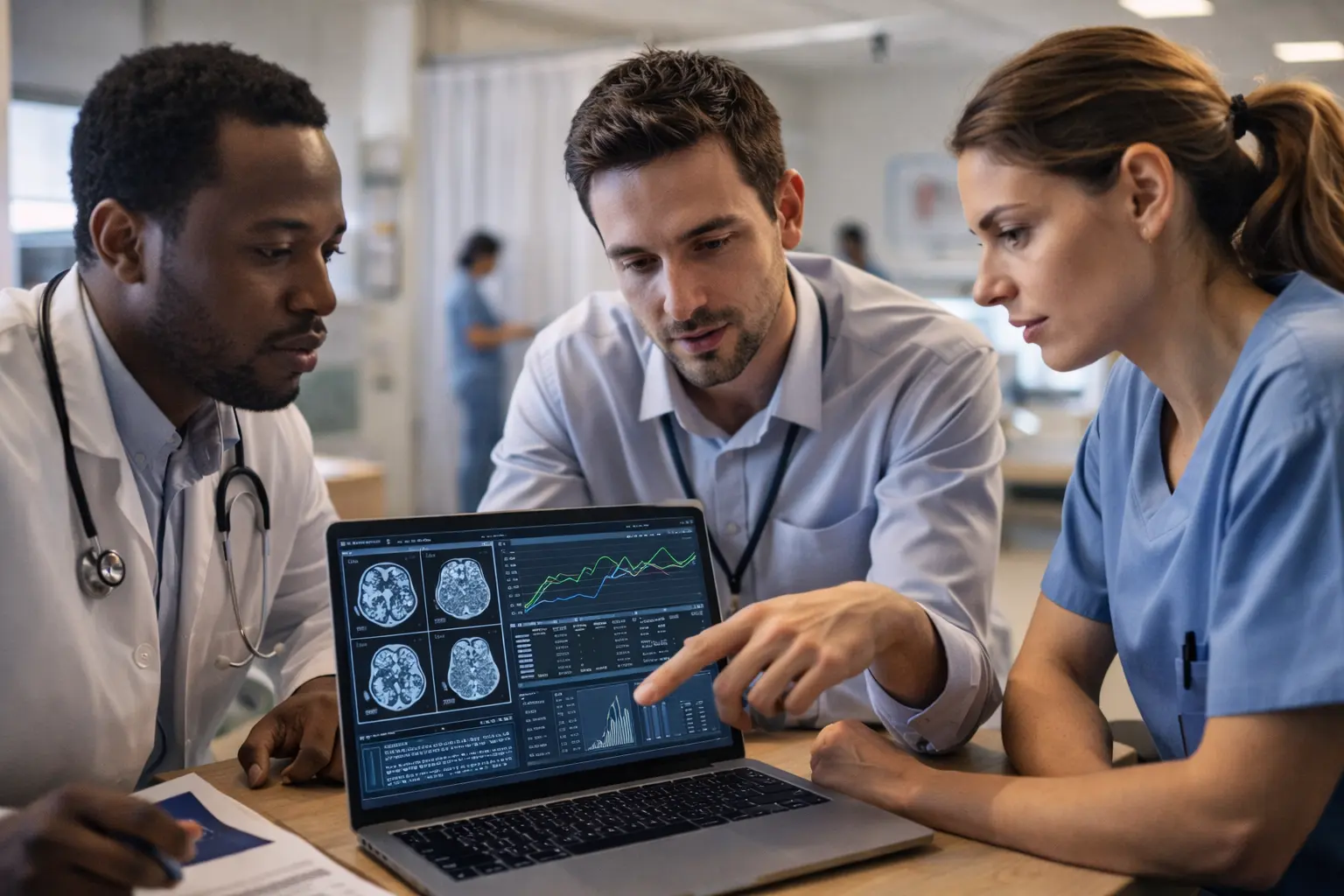
Your doctor mentions an algorithm helped catch something early, but you have no idea what they’re talking about, and honestly, it feels like medicine has left you behind – but here’s the truth: understanding good machine learning practice in healthcare isn’t about becoming a tech expert, it’s about taking back control of your own health story.
Understanding clinical ML models
Clinical machine learning models are sophisticated algorithms trained on thousands of patient records to recognize patterns that human eyes might miss. Think of it like this: imagine a doctor who has reviewed millions of similar cases and can instantly spot warning signs based on subtle combinations of symptoms, lab results, and medical history. That’s essentially what these models do. They analyze vast datasets – blood pressure readings, cholesterol levels, medication responses, imaging results – and learn to predict what might happen next. For example, a model might recognize that a specific combination of kidney function markers, blood sugar levels, and age creates a particular risk pattern for heart disease. These aren’t magic; they’re mathematical tools built on real medical science. Healthcare providers use them to flag patients who need closer monitoring, suggest which treatments might work best for an individual’s unique biology, or alert them to potential complications before symptoms appear. Understanding how these tools work helps you appreciate why your doctor might recommend certain preventive steps or suggest a particular treatment approach.
Benefits for seniors
For seniors, clinical ML models offer something genuinely valuable: personalized medicine tailored to your specific health profile rather than one-size-fits-all approaches. Consider Margaret, a 72-year-old with mild kidney disease, diabetes, and arthritis. A traditional approach might recommend standard medications for each condition, but an ML model analyzing her complete health picture could identify that a particular blood pressure medication works better for her kidney function while also helping her diabetes control. These models excel at early detection too. They can flag subtle changes in your health data that suggest a problem is developing months before you’d notice symptoms. A model might notice your blood sugar patterns are shifting in a way that suggests your diabetes medication needs adjustment, or spot early signs of cognitive changes that warrant further evaluation. Seniors also benefit from reduced trial-and-error in treatment selection. Instead of starting a medication and waiting weeks to see if it works, models can predict which treatments align best with your genetics, age, existing conditions, and current medications. This means fewer side effects, faster symptom relief, and more confidence that your healthcare team is making decisions based on comprehensive data analysis rather than guesswork.
Key steps for embracing clinical ML models
Embracing ML models in your healthcare doesn’t require technical knowledge, but it does require curiosity and engagement. Start by staying informed through reliable sources. Medical journals, your healthcare provider’s explanations, and reputable health websites like Mayo Clinic or Cleveland Clinic offer clear information about how these tools work. When your doctor mentions using a model or algorithm in your care, ask specific questions: What data is it analyzing? What decision is it helping with? How accurate is it for people like me? These conversations help you understand whether the recommendation makes sense for your situation. Next, actively participate in your healthcare decisions. Bring your health records to appointments, keep a log of symptoms or concerns, and share lifestyle details that might matter. The more complete the picture your healthcare team has, the better any ML model can work. Finally, don’t hesitate to seek second opinions or ask about alternatives. Good healthcare combines technology with human judgment, and your comfort with the approach matters. Some seniors find it helpful to bring a family member to appointments to help process technical information and ask follow-up questions.
- Keep detailed records of your health data, symptoms, and medication responses to provide complete information to your healthcare team.
- Engage in open conversations with your doctor about how ML models are being used in your specific diagnosis or treatment plan.
- Participate actively in healthcare decisions by asking questions, sharing concerns, and understanding the reasoning behind recommendations.
🔬 Science-backed benefits in 2 minuteschoose where to begin:
Enhanced precision in healthcare
One of the most significant advantages of clinical ML models is their ability to account for individual variation in how people respond to treatments and develop diseases. Two seniors with the same diagnosis might need completely different approaches because their genetics, other health conditions, medication interactions, and lifestyle factors create unique circumstances. An ML model analyzing thousands of similar cases can identify which treatment path works best for someone with your specific combination of factors. Consider diabetes management: a model might recognize that seniors with your particular genetic markers, kidney function level, and age respond better to one class of medication than another, while also predicting which medication increases your risk for side effects you’re already vulnerable to. This precision reduces unnecessary medication trials, minimizes adverse effects, and gets you to effective treatment faster. Models also improve diagnostic accuracy by considering rare combinations of symptoms that might be overlooked in standard evaluation. A senior presenting with fatigue, joint pain, and mild cognitive changes might get a more accurate diagnosis when an ML model flags the specific pattern as consistent with a particular condition rather than assuming it’s just normal aging. This precision translates directly to better health outcomes, fewer hospitalizations, and improved quality of life.
Empowering seniors through knowledge
Understanding how clinical ML models work fundamentally changes your relationship with your own healthcare. Instead of passively accepting recommendations, you become an informed partner in decision-making. When you know that your doctor’s suggestion is backed by analysis of thousands of similar cases, it builds confidence. When you understand that a model flagged you for early screening because it detected a pattern associated with disease risk, you’re more likely to follow through with preventive steps. This knowledge also protects you. You can ask intelligent questions about whether a recommendation makes sense for your situation, whether the model’s predictions align with your values and preferences, and what alternatives exist. Seniors who understand these tools are less likely to be swayed by marketing hype or misinformation about new treatments. They can evaluate claims critically and discuss them with their healthcare team. Perhaps most importantly, this understanding combats the feeling many seniors experience of being left behind by medical technology. Instead of feeling confused or anxious about algorithms and AI in healthcare, you can see them as tools designed to help you live better, longer. That shift from anxiety to understanding is genuinely empowering.
Importance of adaptation and collaboration
Healthcare technology evolves rapidly, and seniors who embrace adaptation rather than resist it position themselves for better outcomes. This doesn’t mean you need to become tech-savvy overnight. It means staying open to how your healthcare team uses new tools and asking questions when you don’t understand. Collaboration is essential: your healthcare provider brings medical expertise and knowledge of the models, you bring intimate knowledge of your body and your health priorities, and the technology brings pattern recognition across thousands of cases. Together, this combination is more powerful than any single element alone. Real collaboration also means speaking up when something doesn’t feel right. If a recommendation conflicts with your values, if you experience unexpected side effects, or if you’re not seeing the improvement you expected, tell your healthcare team. Models are tools that help guide decisions, but they’re not infallible, and your lived experience matters. Many healthcare systems are now training providers to explain ML model recommendations in plain language and to involve patients in understanding how these tools are being used. Embracing this collaborative approach, where you’re an active participant rather than a passive recipient, leads to healthcare that actually fits your life and your goals.
Clinical ML models represent a significant advancement in how healthcare can be personalized and precise for seniors. These algorithms analyze vast amounts of health data to help doctors make better diagnoses, predict health risks earlier, and recommend treatments tailored to your unique biology and circumstances. By understanding how these models work, seniors can move from feeling confused or anxious about medical technology to becoming informed partners in their own healthcare decisions. The key is staying curious, asking questions, maintaining detailed health records, and collaborating openly with your healthcare team. Adaptation and engagement with these tools, combined with your own knowledge of your body and health priorities, create a powerful approach to managing health as you age.
Are clinical ML models accurate in predicting health outcomes for seniors?
Clinical ML models have demonstrated strong accuracy in predicting health outcomes for seniors by analyzing patterns across large datasets of similar patients. However, accuracy varies depending on the specific condition, the quality of data available, and how well the model’s training data represents diverse senior populations. Your healthcare provider can explain the accuracy rates for any model being used in your care and discuss how confident they are in its recommendations for your particular situation. It’s also important to understand that these models are tools to support decision-making, not replacements for clinical judgment.
How can seniors stay informed about the use of ML models in healthcare?
Seniors can stay informed by asking their healthcare providers directly about any algorithms or models being used in their care, requesting plain-language explanations of how these tools work and what they’re predicting. Reading articles from reputable medical sources, attending health education sessions offered by hospitals or clinics, and discussing healthcare technology with trusted family members or friends can also help build understanding. Don’t hesitate to ask your doctor to explain recommendations in detail and to discuss how an ML model influenced their thinking about your care.
Others also read:
Disclaimer: This article is for informational purposes only and is not a substitute for professional medical advice. Always consult a healthcare professional for personal guidance.
This article has been prepared and reviewed by the GlobalHealthBeacon editorial team and is based on current medical research and published scientific literature available in 2026. It provides structured, evidence-based information to support informed health decisions.
← Back to the Main page on: good machine learning practice in healthcare
