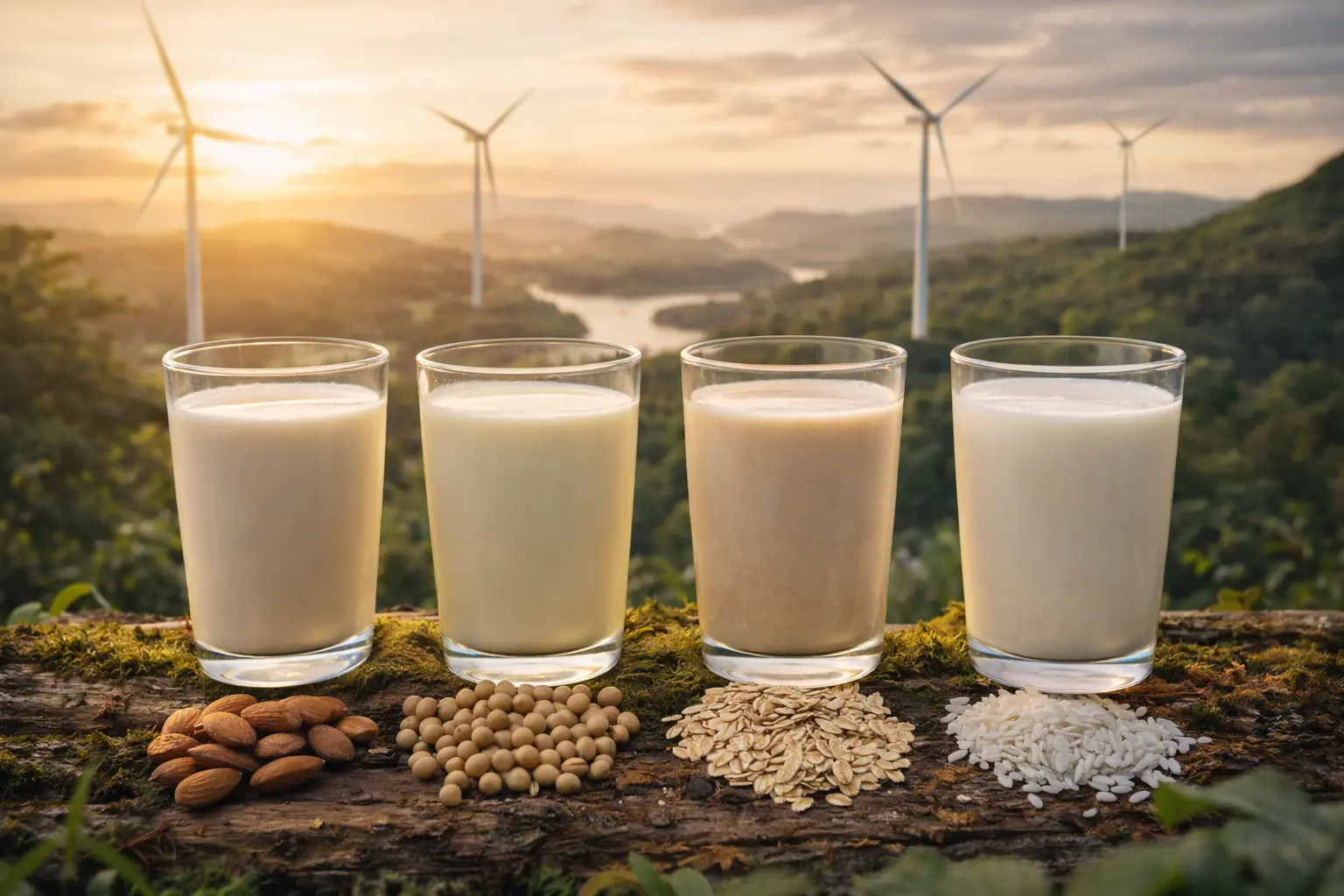
You’re standing in the grocery store staring at milk options, wondering if your choice actually matters, and the plant based milk environmental impact question keeps nagging at you because everything feels contradictory online.
Environmental footprint of dairy production
Dairy farming operates on a massive scale globally, and the environmental costs are substantial and measurable. A single dairy cow produces roughly 100 kilograms of methane annually, a greenhouse gas roughly 25 times more potent than carbon dioxide over a 100-year period. Beyond emissions, dairy production demands enormous water resources. Producing one liter of cow’s milk requires approximately 628 liters of water when accounting for feed cultivation, processing, and cleaning. The industry also drives significant land use, with roughly 77 percent of global agricultural land dedicated to livestock despite providing only 18 percent of global calories. Deforestation in regions like the Amazon occurs partly to create pastureland, destroying ecosystems and eliminating carbon-absorbing forests. Nutrient runoff from dairy farms pollutes waterways, creating dead zones where aquatic life cannot survive. These interconnected impacts make dairy production one of agriculture’s heaviest environmental burdens.
Plant-based milk production: a greener alternative
Plant-based milk alternatives operate on fundamentally different environmental principles. Oat milk, for instance, requires roughly 10 times less water than dairy milk and generates approximately 80 percent fewer greenhouse gas emissions. Almond milk uses significantly less land per liter produced, though it does require substantial water in drought-prone regions like California. Soy milk stands out as particularly efficient, needing minimal water and producing the lowest emissions among plant-based options. These alternatives don’t require the same resource-intensive feed production or animal husbandry infrastructure. A single soy plant can produce multiple harvests annually without depleting soil when rotated properly. The processing is more straightforward: soaking, grinding, and filtering rather than the complex dairy supply chain involving milking, refrigeration, and distribution. Sustainable farming practices like crop rotation and reduced pesticide use further minimize environmental impact. When sourced responsibly, plant-based options represent a measurably lighter footprint across water, land, and emissions metrics.
Key steps towards sustainable choices
Making environmentally conscious milk choices involves understanding where your product originates and how it’s produced. Transportation significantly impacts environmental footprint, so locally sourced plant-based milk reduces carbon emissions from shipping. A carton traveling 500 miles by truck generates substantially more emissions than one produced regionally. Organic certification matters because it restricts synthetic pesticides and fertilizers that contaminate soil and water systems. When you choose organic oat or soy milk, you’re supporting farming methods that maintain soil health and biodiversity. Third-party certifications like Rainforest Alliance or Fair Trade ensure producers follow environmental and ethical standards beyond basic regulations. These certifications verify that forests remain protected, workers receive fair wages, and farming practices don’t degrade ecosystems. Reading labels takes 30 seconds but reveals whether your choice aligns with your values. Some brands publish detailed sustainability reports showing water usage, carbon emissions, and packaging materials. Choosing brands transparent about their practices encourages industry-wide accountability and innovation toward greener production methods.
- Opt for locally sourced plant-based milk to reduce transportation emissions.
- Choose organic varieties to support sustainable farming practices.
- Look for certifications like Rainforest Alliance or Fair Trade to ensure ethical production.
🔬 Science-backed benefits in 2 minuteschoose where to begin:
Nutritional comparison: plant-based vs dairy
The nutritional landscape between plant-based and dairy milk has shifted dramatically as fortification technology improved. Modern plant-based milks are engineered to match cow’s milk in calcium, vitamin D, and vitamin B12 content through added nutrients. A cup of fortified soy milk contains roughly 7 grams of protein, comparable to dairy milk, while almond and oat varieties typically contain 1 to 2 grams unless specifically fortified. Dairy milk naturally contains all nine essential amino acids in complete protein form, whereas most plant-based options lack certain amino acids unless combined with other foods. Plant-based alternatives generally contain fewer calories and less saturated fat than whole dairy milk, which appeals to those monitoring caloric intake. However, many commercial plant-based options contain added sugars for taste, sometimes exceeding 12 grams per serving. Reading nutrition labels reveals these differences clearly. Unsweetened varieties eliminate added sugars entirely. The key distinction isn’t superiority but suitability to individual nutritional needs and dietary preferences. Both can support healthy diets when chosen thoughtfully.
Lactose intolerance and dietary restrictions
Roughly 65 percent of humans experience reduced lactase production after childhood, making lactose intolerance incredibly common, particularly among Asian, African, and Hispanic populations. For these individuals, consuming dairy triggers digestive discomfort including bloating, cramping, and diarrhea within 30 minutes to two hours. Plant-based milk eliminates lactose entirely, providing immediate relief without digestive consequences. Beyond lactose intolerance, dairy allergies affect roughly 2 to 3 percent of children, causing immune responses ranging from mild rashes to severe anaphylaxis. Plant-based alternatives accommodate this allergy completely. Ethical and religious dietary restrictions also drive plant-based choices. Vegans exclude all animal products for ethical reasons, while some religious traditions restrict dairy consumption during specific periods. Plant-based options provide nutritional completeness for these populations without compromise. The availability of diverse plant-based options means individuals with restrictions can enjoy familiar beverages and foods without feeling excluded. This accessibility represents a significant quality-of-life improvement for millions globally.
Sustainable choices for a greener future
Your beverage choices accumulate into meaningful environmental impact over time. A young adult consuming one liter of milk weekly generates roughly 52 liters annually. Switching from dairy to plant-based milk over a year reduces water consumption by approximately 30,000 liters and greenhouse gas emissions by roughly 100 kilograms. Multiplied across millions of young adults making similar choices, these numbers transform into measurable planetary benefit. Understanding the science behind these choices removes guesswork and builds confidence in your decisions. You’re not simply following trends but making informed selections based on biological processes, environmental data, and nutritional science. This knowledge empowers you to evaluate new products critically, ask meaningful questions about production methods, and support companies aligned with your values. Small individual choices create cultural momentum that influences agricultural practices, corporate policies, and investment priorities. By choosing thoughtfully, you’re participating in a larger shift toward sustainable food systems that can feed growing populations without degrading the planet.
Plant-based milk alternatives offer measurably lower environmental impacts compared to dairy production across water usage, greenhouse gas emissions, and land requirements. Young adults can make informed choices by understanding nutritional differences, seeking certifications, and supporting local and organic options. These decisions benefit both personal health and planetary sustainability.
Are plant-based milk alternatives nutritionally sufficient?
Yes, plant-based milk alternatives can be fortified to provide essential nutrients similar to cow’s milk, making them a suitable option for individuals with dietary restrictions. Soy milk naturally contains complete protein, while other varieties require fortification for calcium, vitamin D, and vitamin B12 to match dairy milk’s nutritional profile.
How can I ensure that I choose environmentally friendly plant-based milk?
Look for locally sourced, organic varieties of plant-based milk and seek out certifications like Rainforest Alliance or Fair Trade to support sustainable practices. Check product labels for added sugars and verify that packaging uses recyclable or compostable materials. Brands publishing sustainability reports demonstrate transparency about their environmental impact.
Others also read:
Disclaimer: This article is for informational purposes only and is not a substitute for professional medical advice. Always consult a healthcare professional for personal guidance.
This article has been prepared and reviewed by the GlobalHealthBeacon editorial team and is based on current medical research and published scientific literature available in 2026. It provides structured, evidence-based information to support informed health decisions.
← Back to the Main page on: plant based milk environmental impact
