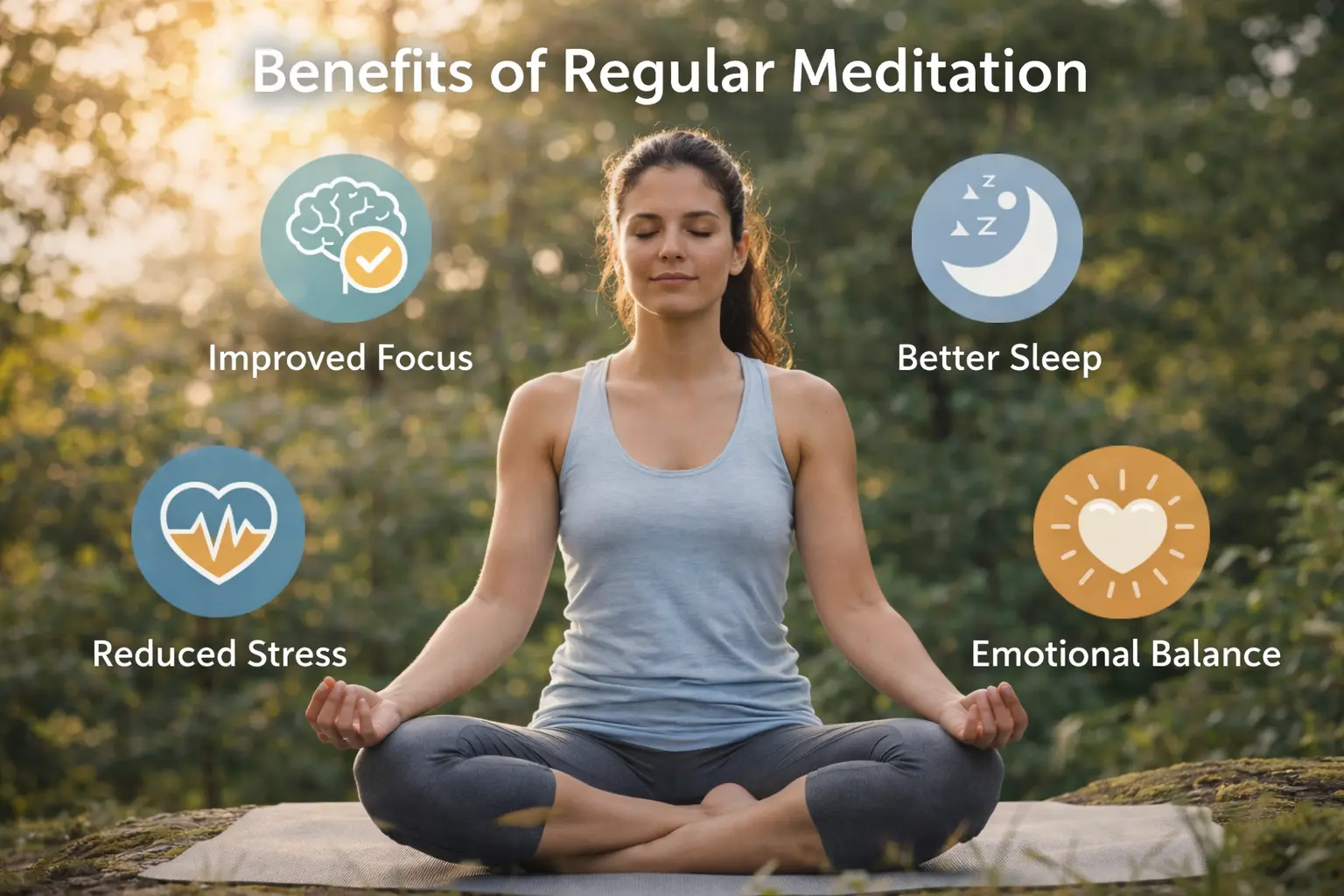
Your brain feels like a browser with 47 tabs open, your chest tightens before every presentation, and you cannot remember the last time you felt genuinely calm, but the benefits of regular meditation can actually rewire how your mind handles stress and reclaim your focus.
Enhancing mental clarity
Picture this: you are sitting in class or at work, and suddenly your mind goes blank. You cannot remember what you just read, and your thoughts scatter like leaves in wind. This is where meditation steps in. Regular meditation sharpens your focus by training your brain to notice when attention drifts and gently bring it back. Over time, this practice strengthens your prefrontal cortex, the part responsible for decision-making and planning. Young adults who meditate report clearer thinking during exams, better retention of information, and improved ability to solve complex problems. The key is consistency. Even five minutes daily rewires your neural pathways. Start by focusing on your breath for a short session, then gradually extend the duration. You will notice that distractions fade, your mind becomes quieter, and decisions feel less overwhelming. Avoid the mistake of expecting instant results; meditation is a skill that develops gradually, much like building muscle at the gym.
- Boosts brain function and memory retention
- Improves problem-solving skills
- Enhances creativity and innovation
Reducing stress and anxiety
Anxiety creeps up unexpectedly. One moment you are fine, the next your heart races and your thoughts spiral. Meditation offers a natural off-ramp from this cycle. When you meditate, your nervous system shifts from fight-or-flight mode into rest-and-digest mode. This happens because meditation lowers cortisol, your stress hormone. Consider a real scenario: a young adult facing job interview anxiety might spend ten minutes meditating before the interview, focusing on breathing and body sensations. This simple practice calms the nervous system, reduces racing thoughts, and creates mental space for confidence. Mindfulness meditation, specifically, teaches you to observe anxious thoughts without judgment rather than fighting them. You learn to say, ‘I notice this worry, but it does not define me.’ Common mistakes include forcing relaxation or expecting anxiety to disappear entirely. Instead, meditation helps you coexist with anxiety more peacefully. Start with guided meditations if silence feels uncomfortable, and practice in a quiet space where you feel safe.
📘 Fix your day in under 2 minuteschoose where to begin:
Promoting emotional wellbeing
Emotional regulation is a superpower most young adults never learn. You might feel fine one moment and irritable the next, or swing between confidence and self-doubt. Meditation builds emotional resilience by creating space between feeling and reaction. When you meditate regularly, you strengthen your ability to observe emotions without being controlled by them. Imagine a scenario where a young adult receives critical feedback at work. Without meditation, they might spiral into self-doubt for hours. With a regular practice, they pause, breathe, and recognize the emotion without letting it define their self-worth. Meditation also cultivates self-compassion, which is crucial during difficult times. Instead of harsh self-criticism, you learn to treat yourself with kindness. Research shows that loving-kindness meditation, where you mentally extend compassion to yourself and others, significantly improves mood and reduces depression symptoms. The practice teaches emotional balance by helping you accept difficult feelings as temporary rather than permanent. Start with body scan meditation to connect with your emotions physically, noticing where you hold tension or heaviness.
Improving sleep quality
Insomnia is rampant among young adults. Your mind races at midnight, replaying conversations or worrying about tomorrow, and sleep feels impossible. Meditation addresses the root cause: an overactive mind. When you meditate before bed, you activate your parasympathetic nervous system, signaling your body that it is safe to rest. Progressive relaxation meditation works particularly well for sleep. You systematically tense and release each muscle group, moving from toes to head, which releases physical tension that keeps you awake. A practical routine might look like this: thirty minutes before bed, dim the lights, sit or lie comfortably, and follow a guided sleep meditation for ten to fifteen minutes. Your brain gradually shifts from beta waves (alert) to theta waves (drowsy). Many young adults report falling asleep faster and experiencing deeper, more restorative sleep within two weeks of consistent practice. Avoid meditating in bed initially, as your brain needs to associate bed with sleep, not practice. Instead, meditate nearby, then transition to bed. Common mistakes include checking your phone during meditation or expecting perfect sleep immediately. Consistency matters more than perfection.
Boosting self-awareness
Most young adults move through life on autopilot, reacting to situations without understanding why they react that way. Meditation breaks this cycle by creating a mirror to your inner world. Through regular practice, you develop the ability to observe your thoughts, emotions, and behavioral patterns without judgment. This is called metacognition, and it is transformative. Consider a young adult who realizes through meditation that they procrastinate whenever they feel anxious about failure. This awareness alone opens the door to change. They can now address the underlying anxiety instead of just fighting procrastination. Meditation also reveals your values and priorities. When your mind quiets, you hear your authentic voice beneath social pressure and expectations. Many young adults discover through meditation what they actually want versus what they think they should want. Self-compassion naturally emerges as you observe your struggles without criticism. You might notice patterns like perfectionism, people-pleasing, or self-doubt, and approach them with curiosity rather than judgment. Start with journaling after meditation to capture insights. Avoid analyzing yourself harshly; instead, treat observations as data points for understanding, not reasons for self-criticism. This practice builds genuine self-knowledge over time.
Meditation offers young adults numerous benefits, including enhanced mental clarity, reduced stress and anxiety, improved emotional wellbeing, better sleep quality, and increased self-awareness.
How long should I meditate each day?
Start with just a few minutes of meditation each day and gradually increase the duration as you become more comfortable. Aim for 10-20 minutes of meditation daily to experience its full benefits.
Can meditation help with academic performance?
Yes, regular meditation can improve focus, concentration, and memory retention, which can positively impact academic performance. By incorporating meditation into your study routine, you may see an improvement in your learning abilities.
Disclaimer: This article is for informational purposes only and is not a substitute for professional medical advice. Always consult a healthcare professional for personal guidance.
This guide has been prepared and reviewed by the GlobalHealthBeacon editorial team and reflects current medical research as of 2026. It provides structured, evidence-based information to support informed health decisions.
