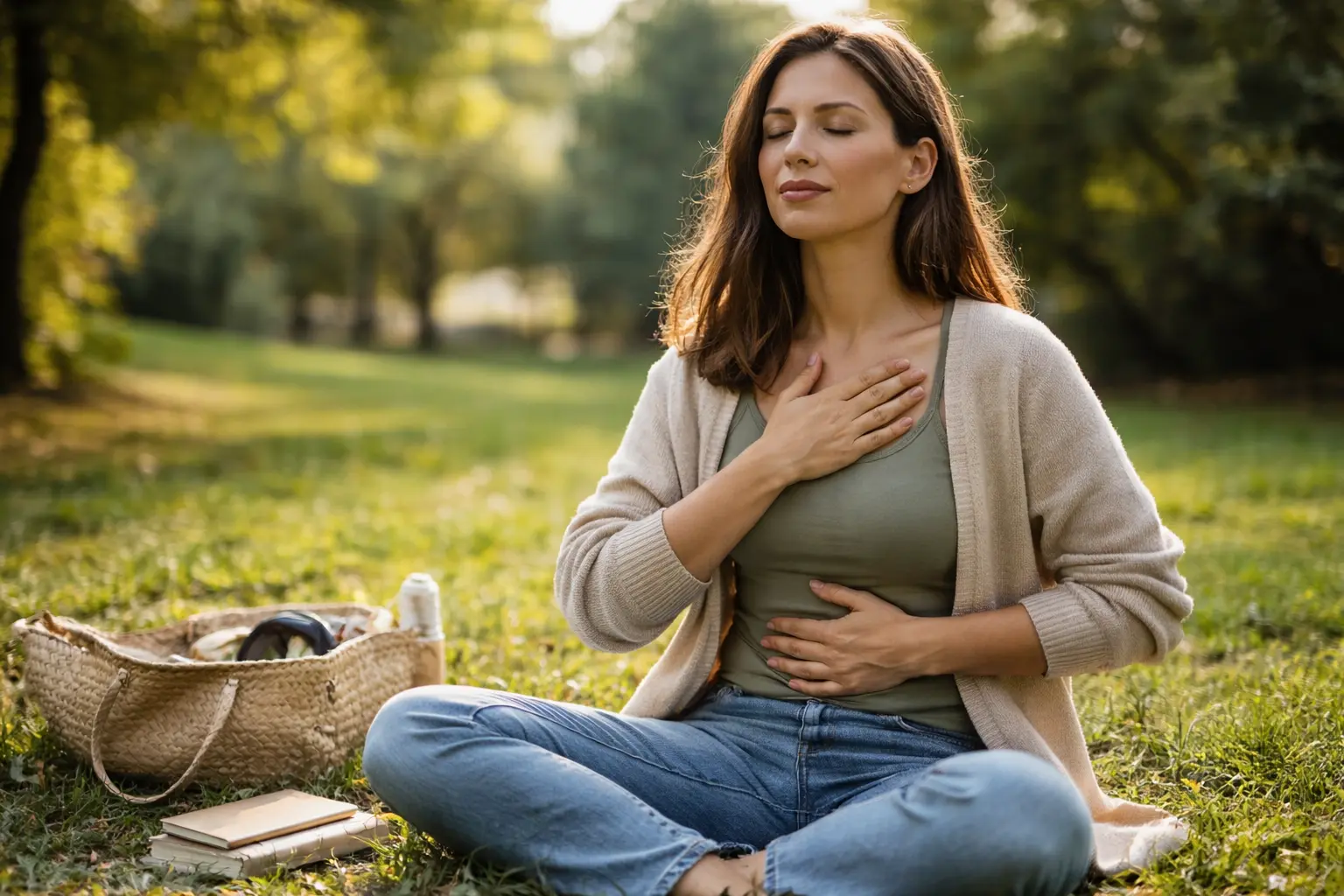
Your chest tightens, your mind races, and suddenly the world feels too loud and too fast, but grounding techniques for anxiety can pull you back to solid ground when everything feels like it’s spinning out of control.
Understanding grounding techniques for anxiety
Grounding techniques are practical tools designed to anchor you in the present moment when anxiety tries to pull you away. Think of them as a lifeline that connects you back to reality. When you’re anxious, your mind often drifts into worst-case scenarios or gets stuck in worry loops. Grounding works by engaging your five senses to interrupt that cycle. You might press your feet firmly into the ground and notice the sensation, hold ice cubes in your hands to feel the cold, or listen carefully to the sounds around you. These aren’t just distractions; they’re deliberate ways to tell your nervous system that you’re safe right now, in this moment. For example, if you’re sitting in class feeling panicked, you could discreetly touch the texture of your jeans, notice the smell of your coffee, or count five things you can see. Each sensory anchor pulls your attention away from the anxious thoughts and back to what’s actually happening around you.
- Deep breathing exercises to calm your mind and body
- Engaging in physical activities like walking or stretching
- Using grounding objects like a stress ball or a textured stone
Creating a safe space for grounding
Your environment matters more than you might think. When anxiety strikes, having a designated safe space gives you somewhere to retreat and practice grounding without distractions. This doesn’t need to be elaborate; it could be a corner of your bedroom, a spot on your couch, or even a chair by a window. Fill this space with things that calm you. Some people add soft blankets, plants, or photos of people they love. Others prefer scented candles with lavender or eucalyptus, a playlist of calming music, or a journal for writing down anxious thoughts. The key is making it feel like a sanctuary. When you step into this space, your brain starts to recognize it as a safe zone where anxiety is less likely to take hold. Over time, just being in this space can trigger a relaxation response. You’re essentially training your nervous system to associate this environment with safety and calm, making your grounding practice more effective when you need it most.
📘 Fix your day in under 2 minuteschoose where to begin:
Practicing mindfulness in daily life
Mindfulness sounds complicated, but it’s really just paying attention to what’s happening right now without judging it. Instead of fighting your anxious thoughts or trying to push them away, mindfulness teaches you to notice them and let them pass like clouds moving across the sky. Start small. During breakfast, really taste your food instead of scrolling on your phone. On your commute, notice the sounds, the temperature, the way your body feels in the seat. When anxious thoughts show up, don’t panic; just observe them. You might think, ‘That’s an anxious thought, and that’s okay.’ This simple shift in perspective reduces the power anxiety has over you. Many young adults find that practicing mindfulness for just five to ten minutes daily creates a noticeable difference in how they respond to stress. You’re not trying to achieve a blank mind; you’re building awareness and creating space between yourself and your anxiety so it doesn’t automatically control your actions.
Utilizing visualization techniques
Visualization is like creating a mental escape route when anxiety closes in. Find a quiet moment, close your eyes, and imagine a place where you feel completely at peace. For some people, it’s a beach at sunset with warm sand and ocean sounds. For others, it’s a forest, a mountain cabin, or even a fictional world. The details matter. Engage all your senses in this imagined space. What do you see? What sounds do you hear? What does the air smell like? Is there a breeze on your skin? The more vivid you make this mental scene, the more your body responds as if you’re actually there. Your heart rate slows, your breathing deepens, and your nervous system genuinely calms down. Practice this regularly, not just during anxiety spikes. When you’re already familiar with your visualization, it becomes easier to access quickly when panic hits. Some people even keep a photo or object that reminds them of their visualization space to help trigger the mental image faster.
Seeking support from others
Managing anxiety alone is harder than it needs to be. Reaching out to friends, family, or a mental health professional isn’t weakness; it’s wisdom. Sometimes just saying your worries out loud to someone who listens changes everything. A friend might help you see that your anxious thoughts aren’t facts. A therapist can teach you personalized grounding techniques tailored to your specific triggers. Even telling one trusted person about your anxiety reduces the shame and isolation that often comes with it. Many young adults find that having an accountability partner makes grounding practices stick better. You might text a friend when you’re about to practice grounding, or schedule regular check-ins to talk about what’s working. Professional support like cognitive behavioral therapy or counseling offers evidence-based strategies that go deeper than grounding alone. Remember, anxiety is incredibly common among your age group. You’re not broken, and you’re definitely not alone in this struggle.
Grounding techniques offer effective ways to manage anxiety by keeping you rooted in the present moment. From deep breathing exercises to creating a safe space, these practices can help you find calm amidst the storm of anxious thoughts.
Can grounding techniques help with severe anxiety attacks?
Grounding techniques are beneficial for managing anxiety attacks, but for severe cases, it’s essential to consult with a healthcare professional for personalized treatment and support.
How often should I practice grounding techniques for maximum effectiveness?
Consistency is key when practicing grounding techniques. Aim to incorporate these practices into your daily routine or whenever you feel overwhelmed by anxiety to experience their full benefits.
Disclaimer: This article is for informational purposes only and is not a substitute for professional medical advice. Always consult a healthcare professional for personal guidance.
This guide has been prepared and reviewed by the GlobalHealthBeacon editorial team and reflects current medical research as of 2026. It provides structured, evidence-based information to support informed health decisions.
