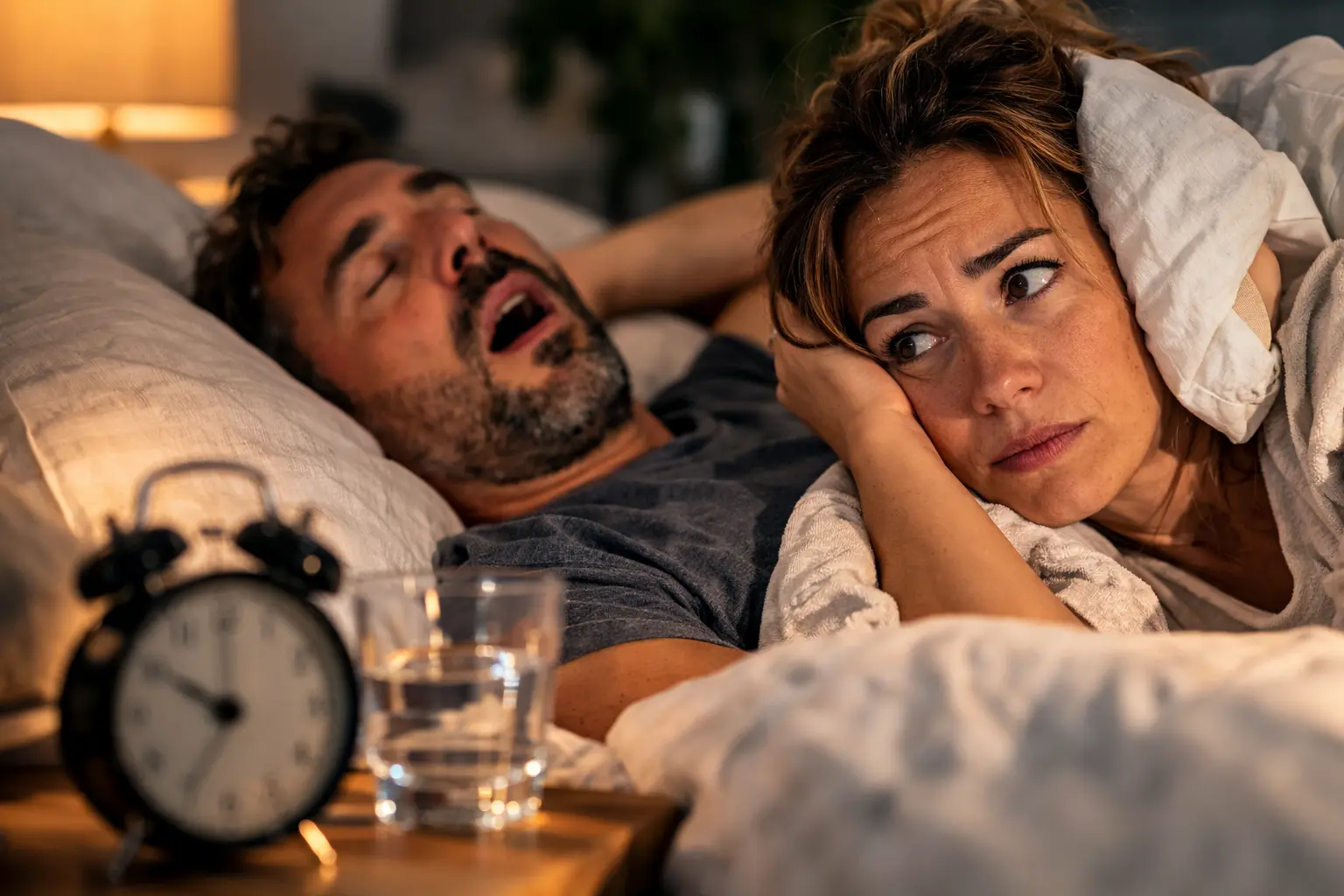
Nights filled with loud snoring, elbows in the ribs, and the crushing fatigue that follows are stealing your sleep and your partner’s peace, but here’s what you need to know: snoring causes explained and actionable solutions are within reach.
Obesity and snoring
Excess weight, particularly around the neck and throat area, narrows the airway passage during sleep. When you lie down, gravity pulls on this extra tissue, further restricting airflow. Think of it like a hallway becoming too narrow for air to flow smoothly. For many seniors, this is the primary culprit. A 65-year-old man carrying 40 extra pounds around his midsection might find that losing just 10 percent of his body weight reduces snoring significantly. The mechanism is straightforward: less tissue around the airway means less vibration and less noise. Weight loss through a combination of moderate exercise (like 30-minute walks) and dietary adjustments can make a measurable difference. Work with your doctor to set realistic targets. Even gradual weight loss over several months can improve breathing patterns and reduce snoring intensity.
- Maintain a healthy weight to reduce snoring.
- Regular exercise can improve breathing patterns.
- Consult a healthcare provider for guidance on weight loss strategies.
Sleep position and snoring
Your sleeping position directly affects how your airway functions. Back sleeping is the primary culprit for many snorers because gravity pulls your tongue and soft palate backward into your throat, creating an obstruction. Imagine lying flat on your back and feeling your throat muscles relax completely. Side sleeping, by contrast, keeps your airway more open and aligned. Many seniors find that simply switching to side sleeping eliminates snoring entirely. A practical approach: use a body pillow or wedge pillow to maintain side position throughout the night, since people naturally shift positions during sleep. Some find that elevating the head of the bed by 30 to 45 degrees helps as well, as it reduces the tendency for throat tissues to collapse. Track your sleep position for a few nights to identify your pattern, then make gradual adjustments. This low-cost solution works for countless people and requires no medication or medical intervention.
📘 Fix your day in under 2 minuteschoose where to begin:
Alcohol and smoking influence
Alcohol is a muscle relaxant, and when consumed in the evening, it causes throat muscles to become overly loose and floppy during sleep. A nightcap at dinner might seem harmless, but it can intensify snoring significantly. Smoking damages and inflames the airway lining, causing swelling that narrows the passage for air. Over time, smokers develop chronic inflammation that makes snoring worse. Consider a 70-year-old who smokes and enjoys a glass of wine after dinner: both habits compound the problem. Limiting alcohol to earlier in the day, or avoiding it entirely before bed, can reduce snoring within days. Quitting smoking takes longer to show results, but within weeks, airway inflammation decreases and breathing improves. If you cannot quit smoking immediately, reducing the number of cigarettes per day is a step forward. Many seniors find that addressing these habits first, before exploring other solutions, yields surprising improvement in sleep quality.
Allergies and sinus issues
Nasal congestion forces you to breathe through your mouth instead of your nose, and mouth breathing creates the vibrations that produce snoring. Seasonal allergies, chronic sinusitis, or a deviated septum can all cause persistent congestion. A senior with untreated allergies might wake up with a stuffy nose every morning, forcing mouth breathing throughout the night. Saline nasal rinses, antihistamines, or decongestants can clear the nasal passages and restore nose breathing. Some people benefit from using a humidifier in the bedroom, which keeps airways moist and reduces inflammation. If allergies are the cause, identifying the trigger (dust mites, pollen, pet dander) and reducing exposure helps. For chronic sinus issues, a healthcare provider might recommend prescription nasal sprays or, in some cases, imaging to rule out structural problems. Treating the underlying congestion often resolves snoring without additional interventions, making this an important first step in diagnosis.
Sleep apnea connection
Not all snoring is harmless. Snoring can signal sleep apnea, a serious condition where breathing stops and restarts repeatedly during sleep, sometimes dozens or hundreds of times per night. Each pause deprives your brain and body of oxygen. A 68-year-old might snore loudly, wake gasping for air, feel exhausted during the day, and experience morning headaches, not realizing these are classic sleep apnea symptoms. Over time, untreated sleep apnea increases the risk of heart attack, stroke, and high blood pressure. If your snoring is accompanied by witnessed breathing pauses, daytime fatigue despite long sleep, or morning grogginess, seek evaluation from a sleep specialist. A sleep study (conducted at home or in a lab) can diagnose sleep apnea definitively. If confirmed, treatments like CPAP machines or oral appliances are highly effective and can be life-changing. Do not assume snoring is simply a nuisance; it may be your body signaling a need for medical attention.
Snoring in seniors stems from multiple causes: obesity restricts airways, back sleeping allows throat collapse, alcohol and smoking inflame tissues, nasal congestion forces mouth breathing, and in some cases, sleep apnea underlies the snoring. Identifying your specific cause is the first step toward solutions. Start by examining your sleep position, weight, and habits. If simple changes do not help within two weeks, consult a healthcare provider to rule out sleep apnea or other medical issues. Many seniors successfully reduce or eliminate snoring through targeted interventions tailored to their situation.
Can snoring cause health problems?
Occasional snoring is common and usually harmless, but chronic snoring can indicate sleep apnea, a condition that disrupts oxygen flow to your brain and heart. Untreated sleep apnea increases risk of hypertension, heart disease, and stroke. If snoring is loud, frequent, or accompanied by gasping, daytime fatigue, or morning headaches, consult a healthcare provider for evaluation. Early diagnosis and treatment prevent serious complications.
Are there natural remedies for snoring?
Several natural approaches help many people: maintaining a healthy weight reduces airway obstruction, sleeping on your side prevents throat collapse, avoiding alcohol before bed stops muscle relaxation, treating allergies clears nasal passages, and using a humidifier reduces inflammation. Nasal saline rinses and steam inhalation also help. However, results vary by individual and underlying cause. If natural remedies do not work within a few weeks, or if you suspect sleep apnea, seek professional evaluation for personalized treatment.
Others also read:
Disclaimer: This article is for informational purposes only and is not a substitute for professional medical advice. Always consult a healthcare professional for personal guidance.
This guide has been prepared and reviewed by the GlobalHealthBeacon editorial team and reflects current medical research as of 2026. It provides structured, evidence-based information to support informed health decisions.
