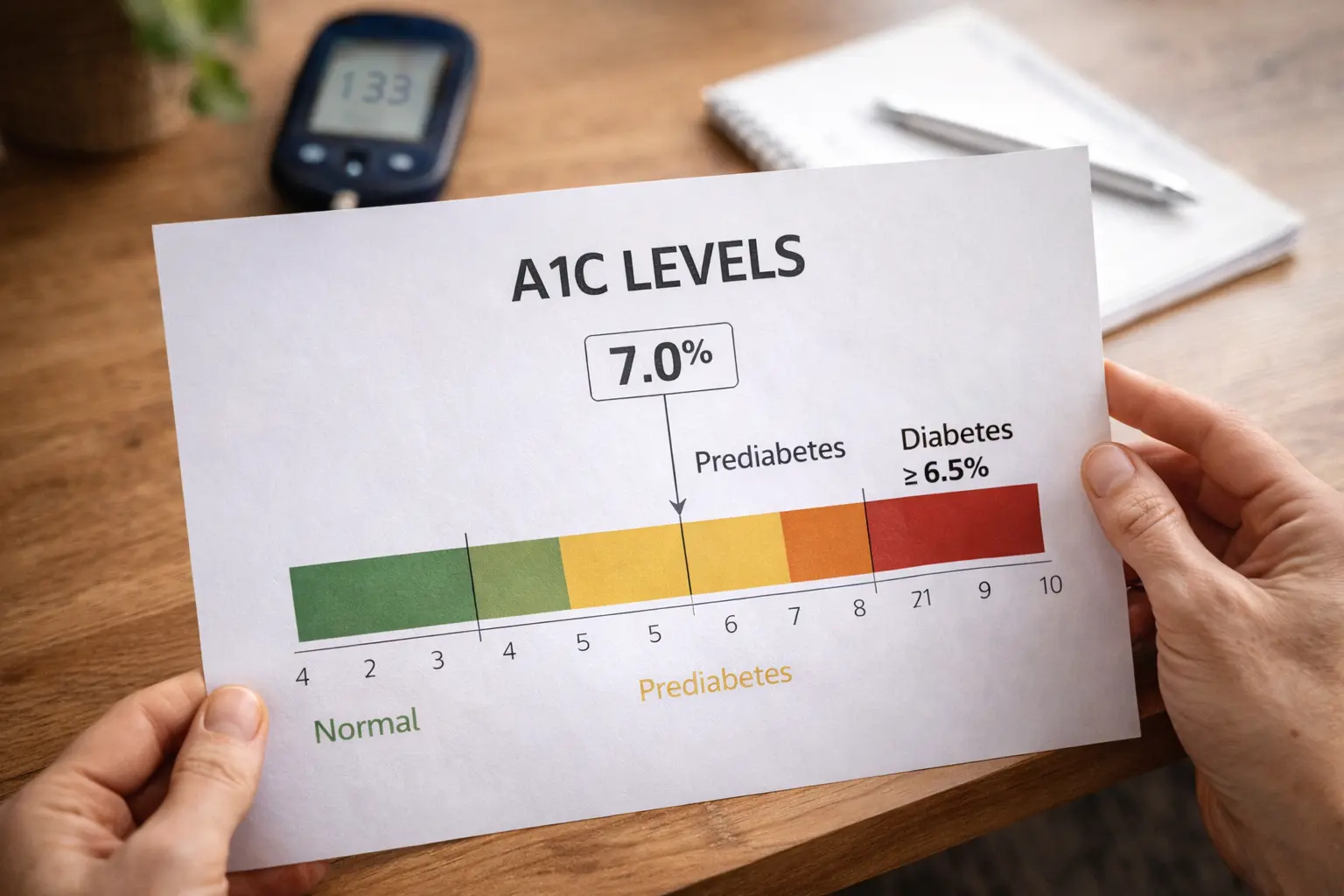
Your energy crashes mid-afternoon, you’re thirsty all the time, and something just feels off, so you finally get blood work done and your doctor mentions your A1C levels chart and suddenly you’re staring at numbers that feel like a foreign language.
Decoding A1C levels
The A1C levels chart measures your average blood sugar levels over the past 2 to 3 months, giving you a clear picture of how your body has been managing glucose day in and day out. Think of it as a report card for your blood sugar rather than a single snapshot. When you eat a meal, your body breaks down carbohydrates into glucose, which enters your bloodstream. Your pancreas releases insulin to help cells absorb that glucose. Over time, some of that glucose attaches to hemoglobin, a protein in your red blood cells. Since red blood cells live about 3 months, the A1C test measures how much glucose has stuck around during that entire period. This is why it’s such a vital tool in managing diabetes and assessing your risk for complications. Unlike a fasting glucose test that shows your blood sugar at one moment, the A1C gives healthcare providers a comprehensive view of your overall blood sugar control.
- A1C levels between 5.7% and 6.4% indicate prediabetes, a condition where blood sugar levels are higher than normal but not high enough to be considered diabetes. This is your body’s warning signal that changes need to happen now.
- An A1C level of 6.5% or higher typically indicates diabetes. This means your blood sugar levels are consistently too high, posing a risk to your health and requiring active management strategies.
- Maintaining A1C levels below 7% is generally recommended for individuals with diabetes to reduce the risk of long-term complications like nerve damage, kidney disease, and heart problems.
Interpreting the numbers
Understanding what your A1C number actually means is where real progress begins. Let’s say you get a result of 7.2%. That doesn’t mean your blood sugar is 7.2 right now, it means that on average over the past three months, your blood sugar has been running at a level equivalent to about 150 mg/dL. Here’s what makes this powerful: lowering your A1C by even 1% can lower your risk of complications by up to 40%. Imagine that. One percentage point difference could mean avoiding nerve damage or reducing your risk of heart disease significantly. If you’re at 8.5% and you bring it down to 7.5%, you’ve just made a massive impact on your future health. Use your A1C levels as a guide to track your progress, not as a source of shame or judgment. Each test is a data point that shows whether your current approach is working or if adjustments are needed. Many young adults find it helpful to set personal targets with their doctor, like aiming to drop 0.5% every three months, which makes the goal feel achievable rather than overwhelming.
📘 Fix your day in under 2 minuteschoose where to begin:
Healthy lifestyle measures
Improving your A1C levels doesn’t require perfection, it requires consistency and smart choices. Start with your diet. This doesn’t mean eliminating carbs entirely, it means choosing whole grains over refined ones, eating vegetables with every meal, and being mindful of portion sizes. A practical example: instead of white rice, choose brown rice or quinoa. Instead of a sugary breakfast cereal, try oatmeal with berries and nuts. Regular exercise is equally important. You don’t need to become a gym rat. Thirty minutes of moderate activity most days, whether that’s brisk walking, cycling, dancing, or playing sports, can make a significant difference. Exercise helps your muscles use glucose more effectively without requiring as much insulin. Proper medication management matters too, if your doctor has prescribed it. Take medications exactly as directed, not when you feel like it. Stress reduction techniques like meditation, deep breathing, or yoga help because stress hormones can raise blood sugar. Small changes compound. One young adult might start by swapping soda for water, adding a 20-minute walk three times weekly, and practicing five minutes of breathing exercises before bed. Within three months, their A1C dropped 0.8%. That’s the power of consistent small actions.
Regular monitoring
Routine monitoring of your A1C levels is essential for understanding whether your current strategy is working. Most people with diabetes should get tested every 3 to 6 months, though your doctor might recommend more frequent testing if you’re newly diagnosed or making significant changes. Think of monitoring as your feedback loop. You make changes, you test, you see results, you adjust. Without testing, you’re flying blind. Work closely with your healthcare provider to set realistic goals and establish a monitoring schedule that fits your life. Some young adults prefer quarterly testing because it keeps them accountable and motivated. Others find that testing every six months feels less overwhelming. The key is consistency. Mark your test dates on your calendar. Keep a simple log of your results so you can see the trend over time. When you see improvement, celebrate it. When results plateau, that’s information too. It tells you that your current approach needs tweaking, not that you’ve failed. Your healthcare provider can help you interpret results and adjust your diet, exercise routine, or medications accordingly.
Seeking support
Managing A1C levels is genuinely a team effort, and reaching out for help is a sign of strength, not weakness. Healthcare professionals like endocrinologists, diabetes educators, and registered dietitians specialize in this exact situation and can provide personalized guidance based on your specific needs and lifestyle. Support groups, whether in-person or online, connect you with others navigating the same challenges. Hearing how someone else brought their A1C down from 8.2% to 6.8% or learning what strategies worked for peers in your age group can be incredibly motivating. Online resources and apps let you track your food intake, exercise, and blood sugar patterns, giving you data-driven insights. Many young adults find that having an accountability partner, whether a friend, family member, or online community, makes the journey feel less isolating. Don’t hesitate to ask your doctor for referrals to these resources. You’re not alone in this journey, and the support systems available today are better than ever.
Understanding the A1C levels chart is vital for managing diabetes and assessing your health risks. By interpreting the numbers, making healthy lifestyle changes, monitoring regularly, and seeking support, you can take control of your well-being.
What do high A1C levels indicate?
High A1C levels typically indicate poorly controlled blood sugar levels over an extended period, increasing the risk of diabetes complications such as nerve damage, kidney disease, and cardiovascular issues.
How often should A1C levels be checked?
For most individuals with diabetes, A1C levels should be checked every 3 to 6 months to monitor changes, assess treatment effectiveness, and adjust management strategies as needed.
Disclaimer: This article is for informational purposes only and is not a substitute for professional medical advice. Always consult a healthcare professional for personal guidance.
This guide has been prepared and reviewed by the GlobalHealthBeacon editorial team and reflects current medical research as of 2026. It provides structured, evidence-based information to support informed health decisions.

