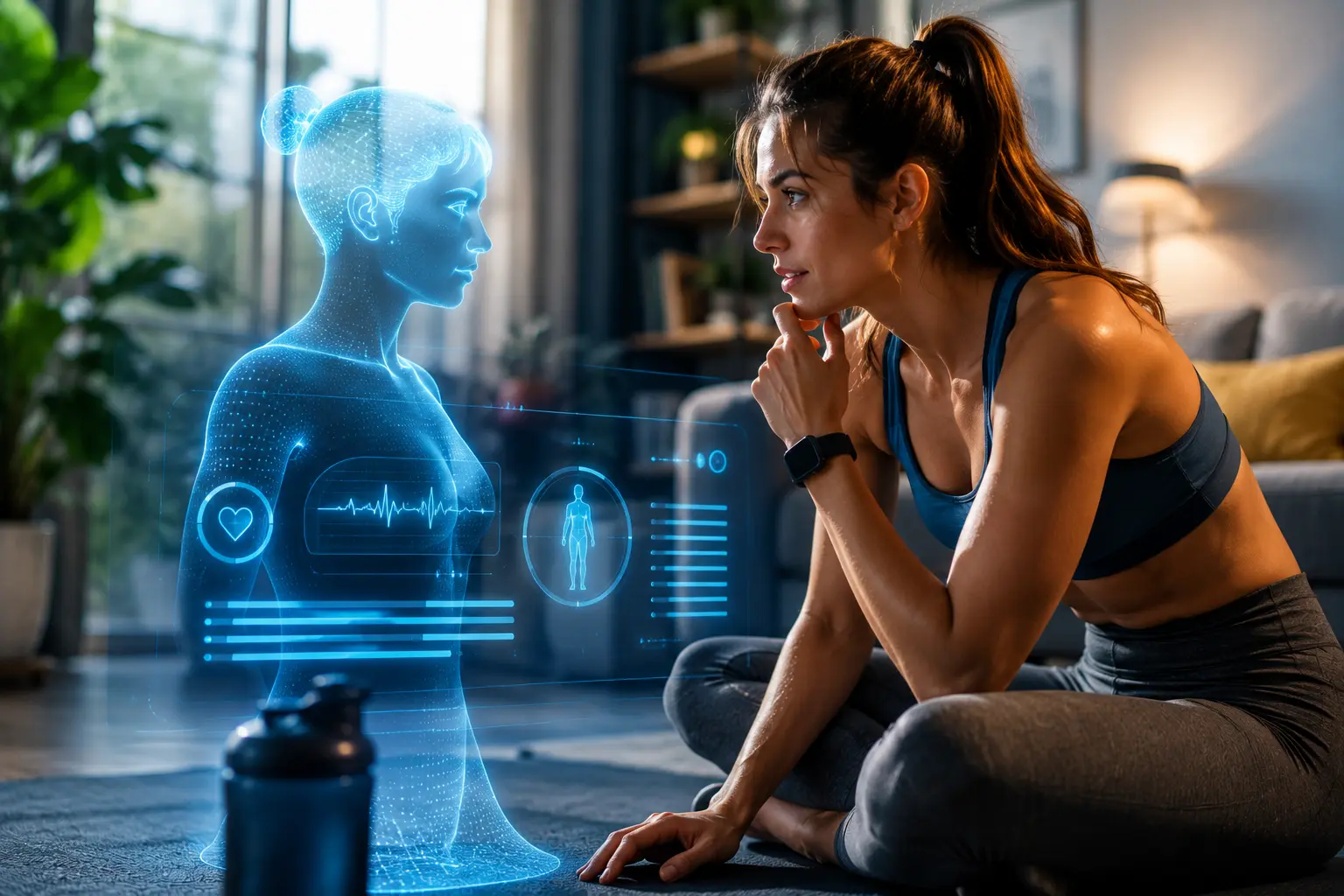
You’re juggling work, social life, and trying to stay healthy, but nobody’s got time for another appointment or expensive personal trainer, so you’re wondering if an AI health coach could actually fill that gap and keep you accountable without the price tag.
Understanding AI health coaching
AI health coaches are digital assistants built to learn your habits and deliver personalized guidance tailored specifically to your lifestyle. Think of them as a coach that never sleeps, never judges, and adapts to your schedule. These tools use machine learning algorithms to process the data you input, whether that’s your workout routines, meal choices, or sleep patterns, and then generate recommendations based on patterns they detect. For example, if you log that you consistently skip workouts on Mondays and sleep poorly on Sunday nights, an AI coach might suggest a lighter Sunday routine or recommend stress-management techniques before bed. Unlike generic fitness apps that give the same advice to everyone, these coaches learn what works for you specifically. They track trends over weeks and months, identifying when you’re most likely to succeed with certain activities. The technology behind them analyzes thousands of data points to understand correlations between your behaviors and outcomes, making suggestions that feel less like generic advice and more like someone who actually knows your patterns.
- AI health coaches track your activity, diet, sleep patterns, and other health metrics continuously throughout your day.
- They provide insights based on your data to help you make informed decisions about your well-being and spot trends you might miss.
- These digital assistants offer motivation, reminders, and support to keep you on track with your health targets without requiring scheduled appointments.
Benefits of AI health coaches
The advantage of AI health coaching lies in its availability and adaptability. Unlike a human coach you see once a week, an AI coach is there at 6 AM when you’re deciding whether to exercise or at 9 PM when you’re tempted by late-night snacking. It learns what motivates you personally, whether that’s competition, progress tracking, or gentle encouragement. Consider a young adult managing both a demanding job and fitness goals. A traditional personal trainer might cost 50 to 100 dollars per session and require scheduling weeks in advance. An AI health coach provides real-time feedback, adjusts recommendations based on your actual behavior, and costs a fraction of that price. The coach also eliminates the awkwardness some people feel with human trainers. You can be completely honest about your struggles, setbacks, and preferences without worrying about judgment. Over time, as the AI gathers more data about you, its recommendations become increasingly precise. It understands your energy levels, your injury history, your food preferences, and your realistic time availability. This personalization means you’re not following a one-size-fits-all program but rather a plan that evolves with your actual life.
📘 Fix your day in under 2 minuteschoose where to begin:
How to utilize AI health coaches effectively
Getting real results from an AI health coach requires intentional engagement and honest input. Start by setting up your profile completely. Don’t skip the questions about your current fitness level, medical history, or lifestyle constraints. The more accurate your baseline information, the better the coach’s recommendations will be. Next, commit to logging your activities consistently. This doesn’t mean obsessive tracking, but regular input gives the AI the data it needs to spot patterns. If you work out three times a week, log those sessions. If you eat a certain way on weekends, record it. The coach learns from this consistency. Be honest about setbacks too. If you skip a week of exercise or have a poor eating week, log it. The AI uses this information to understand what derails you and can then suggest preventative strategies. Many young adults make the mistake of treating the AI coach like a judge, so they only log the good days. This actually makes the coach less effective because it’s working with incomplete data. Finally, review the coach’s suggestions weekly. Don’t just receive recommendations passively. Engage with them, try the ones that resonate, and provide feedback on what works. Some suggestions might not fit your life, and that’s fine. Over time, the coach learns your preferences and adjusts accordingly.
Challenges of AI health coaching
While AI health coaches offer significant value, they come with real limitations you should understand. First, they cannot diagnose medical conditions or replace a doctor. If you experience chest pain, persistent fatigue, or any concerning symptoms, an AI coach cannot tell you what’s wrong. It can only suggest general wellness practices. Second, AI coaches lack the emotional intelligence and nuanced understanding that human professionals provide. They can’t pick up on the subtle signs that you’re struggling mentally or emotionally. A human trainer might notice you seem withdrawn and ask if everything’s okay. An AI coach simply processes data. Third, these tools work best for people who are already somewhat motivated. If you’re completely new to health and wellness, you might benefit from a human coach or trainer who can teach you proper form, explain nutrition basics, or help you build foundational habits. AI coaches assume a baseline level of knowledge and motivation. Fourth, there’s the issue of over-reliance. Some people become dependent on the app and lose the ability to make health decisions independently. The goal should be using the AI coach as a tool that eventually helps you develop your own health intuition, not as a crutch you can’t function without.
Future of AI health coaching
The field is advancing rapidly, with new capabilities emerging constantly. Soon, AI health coaches will likely integrate with wearable technology more seamlessly, pulling data directly from your smartwatch or fitness tracker without manual logging. Voice interaction will improve, allowing you to have natural conversations with your coach rather than clicking through menus. Integration with healthcare systems is also coming, meaning your AI coach could communicate with your doctor’s office, creating a bridge between your personal health tracking and clinical care. Some platforms are experimenting with combining AI coaching with occasional human check-ins, giving you the best of both worlds. You’ll get the constant AI support plus periodic conversations with a real health professional who reviews your progress. Predictive analytics will become more sophisticated too. Instead of just responding to your current data, AI coaches will anticipate problems before they happen. If the system detects patterns suggesting you’re heading toward burnout or injury, it might proactively suggest changes before you hit a crisis. For young adults, staying informed about these developments means you can choose tools that align with your needs as they evolve. The technology will only become more personalized, more accessible, and more integrated into your daily life.
AI health coaches offer personalized guidance and continuous support for your health journey through data analysis and tailored recommendations. They work best when you provide honest, consistent input and engage actively with their suggestions. While they cannot replace human healthcare professionals or diagnose medical conditions, they serve as an excellent complement to traditional health resources, especially for young adults seeking affordable, always-available support.
Can AI health coaches diagnose medical conditions?
No, AI health coaches are not qualified to diagnose medical conditions. They primarily offer guidance, suggestions, and motivation to help you improve your overall health. If you experience concerning symptoms or health issues, consult a healthcare professional.
Are AI health coaches suitable for all age groups?
AI health coaches can be beneficial for various age groups, including young adults. However, individual preferences and comfort levels with technology may influence the effectiveness of using these digital tools. Some people thrive with app-based coaching while others prefer human interaction.
Disclaimer: This article is for informational purposes only and is not a substitute for professional medical advice. Always consult a healthcare professional for personal guidance.
This guide has been prepared and reviewed by the GlobalHealthBeacon editorial team and reflects current medical research as of 2026. It provides structured, evidence-based information to support informed health decisions.
