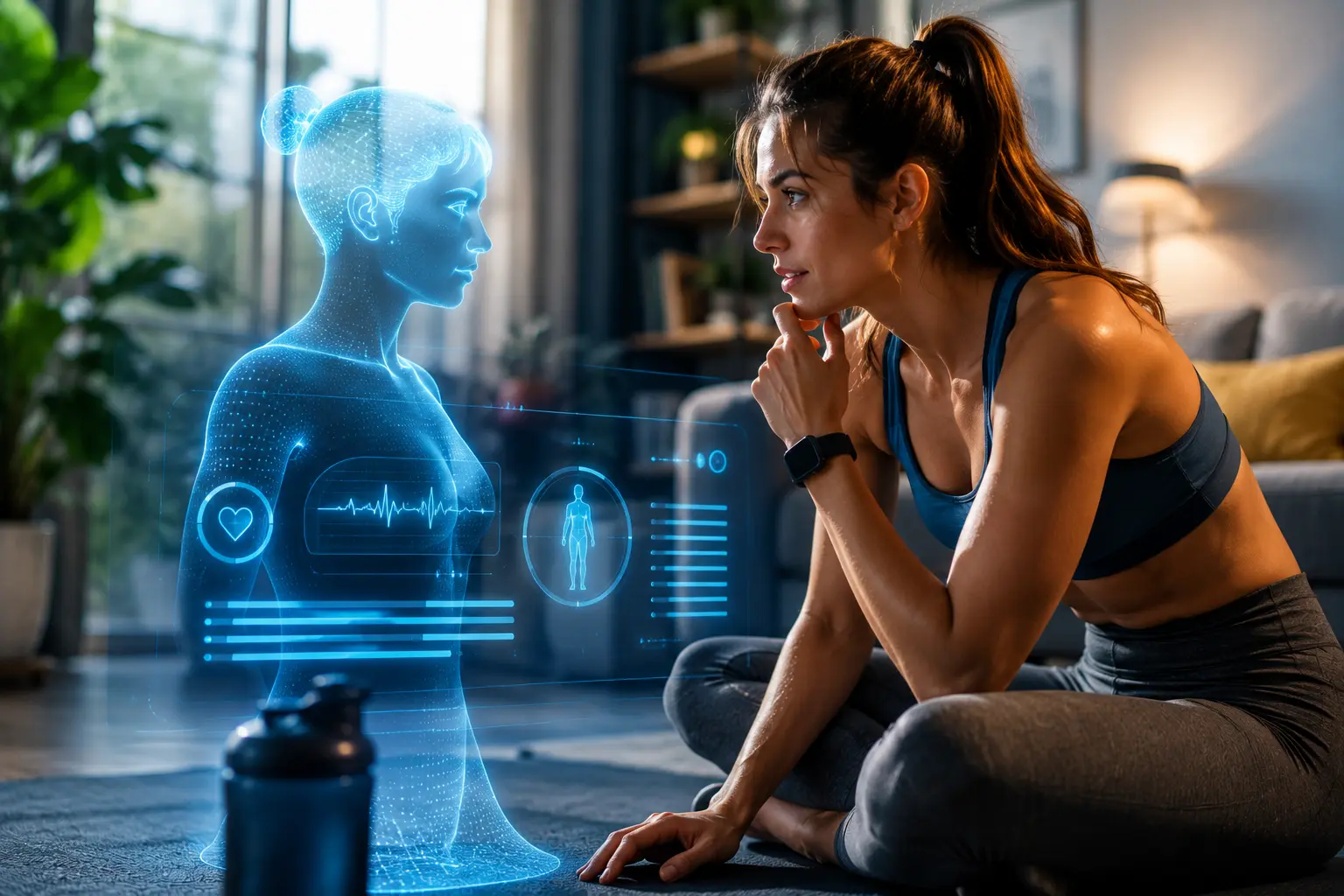
You’re juggling work, social life, and trying to stay healthy, but nothing sticks because generic fitness apps treat you like everyone else, and that’s exactly why an AI health coach explained through real science might be the missing piece that finally makes wellness feel personal and actually doable.
Understanding AI health coaches
AI health coaches are sophisticated software systems built on machine learning technology that function as personalized digital wellness assistants. Unlike standard fitness apps that offer one-size-fits-all advice, these systems continuously learn from your individual health data, behavioral patterns, and preferences to deliver recommendations tailored specifically to you. Imagine having a coach who remembers that you prefer evening workouts over morning runs, knows your dietary restrictions, understands your stress triggers, and adapts their guidance accordingly. These digital companions operate around the clock, processing information from wearable devices, health trackers, and user input to maintain an evolving understanding of your wellness profile. They combine data analysis with behavioral science principles to guide you toward sustainable habit changes rather than quick fixes. The technology behind them uses natural language processing to communicate in a conversational, supportive manner that feels less clinical and more like talking to someone who genuinely understands your health journey.
The science behind AI coaching
The mechanics of AI health coaching rely on machine learning algorithms that identify patterns invisible to the human eye. These systems analyze thousands of data points from your daily activities, sleep cycles, nutrition choices, and exercise routines to recognize what actually works for your body and lifestyle. For example, an AI coach might discover that you’re more likely to stick to exercise goals on days when you’ve slept seven or more hours, or that your energy levels drop significantly when you skip breakfast. By processing this information at scale, the technology can predict potential health challenges before they become serious issues and suggest interventions with higher success rates based on your specific circumstances. The predictive analytics component uses historical data to forecast outcomes, helping you understand not just what to do but why certain approaches will likely work better for you than others. This data-driven methodology removes guesswork from wellness decisions and replaces it with evidence derived from your own behavioral patterns and physiological responses.
Benefits of using an AI health coach
The advantages of AI health coaching extend across multiple dimensions of wellness management. Personalized guidance means recommendations aren’t based on generic population averages but on your unique health profile, preferences, and constraints. Continuous monitoring provides real-time feedback on your progress, allowing you to see immediate connections between your actions and outcomes, which strengthens motivation and accountability. Motivational support operates differently than a human coach because it’s always available without judgment, fatigue, or scheduling conflicts. Consider a young adult managing stress while building an exercise routine: an AI coach can remind you to take breathing breaks during work, suggest a quick walk when stress levels spike, and celebrate small wins like completing three workouts in a week. The system adapts its communication style based on what resonates with you, whether that’s data-driven insights, encouraging messages, or practical tips. Another key benefit is accessibility, as these tools provide professional-grade guidance at a fraction of the cost of hiring a personal trainer or nutritionist, making comprehensive wellness support available to more people.
- Consult with your healthcare provider to understand how AI coaching fits into your overall health strategy and ensure it complements any existing medical treatments or conditions you’re managing.
- Set specific, measurable health goals with your AI coach such as increasing daily steps to 8000, improving sleep quality, or reducing sugar intake, then track progress through the platform’s dashboard.
- Engage consistently with your AI health coach by logging data, responding to check-ins, and reviewing insights at least three times weekly to build momentum and allow the system to learn your patterns effectively.
🔬 Science-backed benefits in 2 minuteschoose where to begin:
How AI coaches empower young adults
Young adults occupy a unique position in their health journey where decisions made now significantly impact long-term wellness outcomes. AI health coaches serve as particularly valuable tools during this phase because they help establish sustainable habits before unhealthy patterns become entrenched. A 25-year-old working their first demanding job might use an AI coach to navigate nutrition challenges like frequent takeout meals, stress management during project deadlines, and maintaining exercise consistency despite irregular schedules. The technology provides guidance on sleep optimization during late-night study sessions or work projects, stress reduction techniques that fit into busy schedules, and nutrition strategies that work with real-world constraints rather than against them. By receiving evidence-based support during these formative years, young adults can build confidence in their ability to manage their health independently while establishing routines that become increasingly automatic over time. The AI coach essentially serves as a training ground for developing health literacy and self-awareness that extends far beyond the app itself, creating a foundation for lifelong wellness.
Future of AI health coaching
The trajectory of AI health coaching technology points toward increasingly sophisticated personalization and predictive capabilities. Emerging developments include integration with genetic data to provide nutrition recommendations aligned with your unique metabolism, wearable technology that monitors biomarkers in real-time, and AI systems that can identify early warning signs of health conditions before symptoms appear. Future iterations will likely incorporate more advanced natural language processing to have conversations that feel indistinguishable from talking with a human health professional, while maintaining the 24/7 availability and non-judgmental support that digital systems provide. Machine learning models will become better at understanding individual variation, recognizing that what works for one person’s fitness goals might be completely ineffective for another, and adjusting accordingly. Integration with healthcare systems could allow AI coaches to communicate directly with your doctor, creating a seamless bridge between personal wellness tracking and clinical care. As these technologies mature, they’ll become more accessible, more accurate, and more capable of supporting complex health management scenarios that currently require multiple specialists.
Wrap up
The evidence increasingly supports AI health coaches as legitimate tools for young adults seeking to understand and improve their wellness. These systems work not by replacing human judgment or medical care but by providing personalized, continuous support that adapts to your individual circumstances in ways generic advice cannot. The combination of data-driven insights, accessible 24/7 availability, and motivational support creates an environment where building healthy habits becomes more achievable and sustainable. Whether you’re managing stress, improving fitness, optimizing nutrition, or simply trying to understand your body better, an AI health coach offers a science-backed approach grounded in your actual patterns and preferences rather than theoretical ideals. The technology continues evolving, becoming more sophisticated and capable of supporting increasingly complex health scenarios. For young adults willing to engage consistently with these tools, the potential to establish a strong foundation for lifelong wellness is substantial and well-supported by emerging research.
AI health coaches leverage machine learning algorithms to analyze individual health data and deliver personalized guidance, continuous monitoring, and adaptive support that helps young adults establish sustainable wellness habits and make informed decisions about their health.
How does an AI health coach work?
AI health coaches use machine learning algorithms to analyze your health data from wearables, apps, and user input, identifying patterns in your behavior and physiology. The system learns your preferences, constraints, and responses to different interventions, then delivers personalized recommendations that adapt over time. They provide support 24/7 through conversational interfaces, offering guidance on nutrition, exercise, sleep, and stress management based on your specific circumstances rather than generic advice.
Are AI health coaches effective for young adults?
Research indicates that AI health coaches can be effective for young adults when used consistently, particularly because they provide personalized guidance tailored to individual circumstances, offer continuous monitoring and real-time feedback, and deliver non-judgmental support without scheduling constraints. Their effectiveness increases when users engage regularly with the system and integrate recommendations into daily routines, as this allows the AI to learn individual patterns and refine its guidance accordingly.
Others also read:
Disclaimer: This article is for informational purposes only and is not a substitute for professional medical advice. Always consult a healthcare professional for personal guidance.
This article has been prepared and reviewed by the GlobalHealthBeacon editorial team and is based on current medical research and published scientific literature available in 2026. It provides structured, evidence-based information to support informed health decisions.
