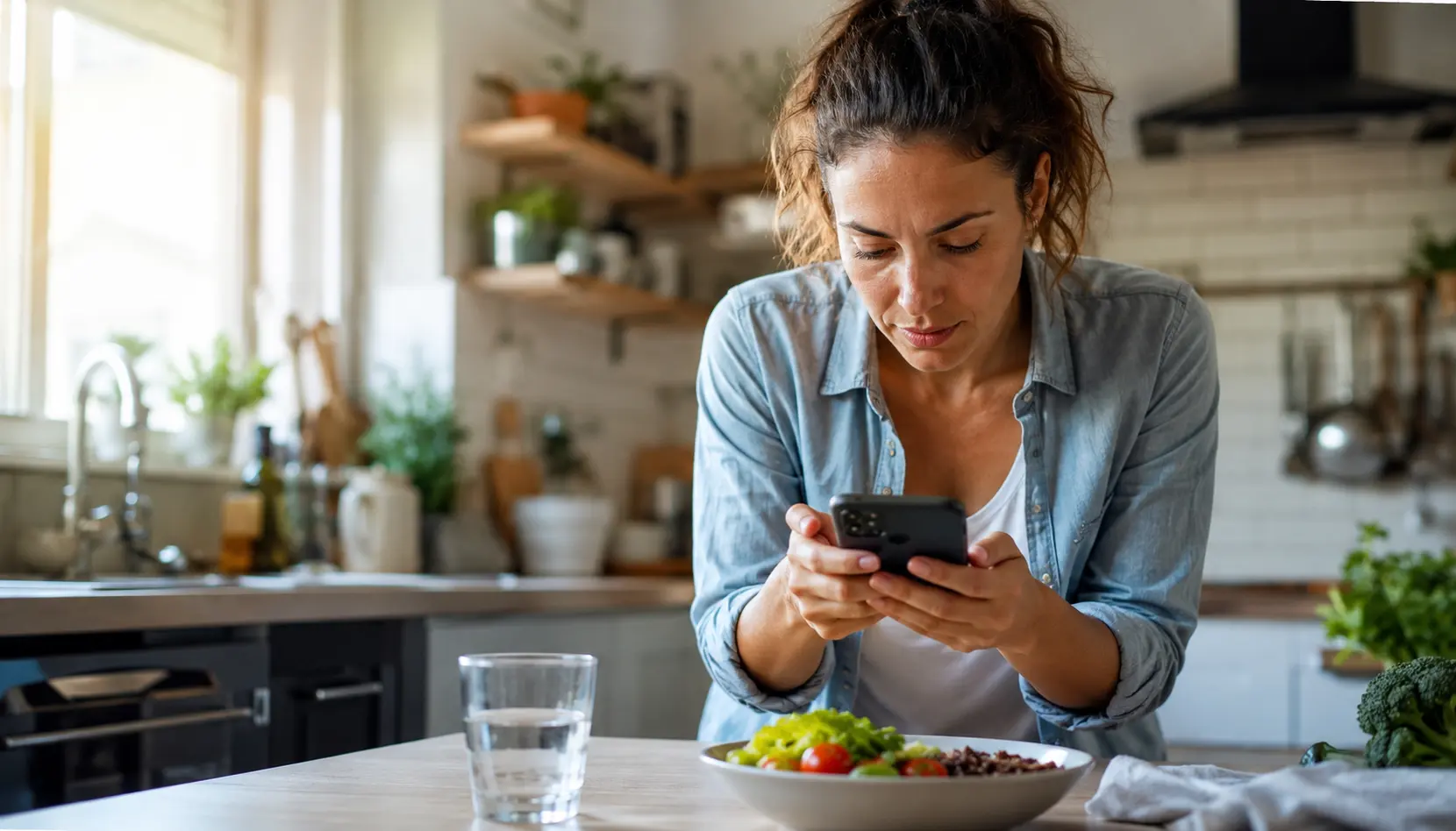
You snap a photo of your lunch, the app tells you it’s 450 calories and packed with nutrients, but deep down you’re wondering if ai meal photo analysis is actually getting it right or just making an educated guess.
Understanding AI meal photo analysis
AI meal photo analysis works by using trained computer vision algorithms to scan your food image and identify what’s on your plate. The technology breaks down the meal into individual components, estimates portion sizes based on visual cues, and then calculates approximate nutritional values. For seniors managing diabetes, heart health, or weight, this sounds like a game-changer. But here’s the reality: the accuracy depends heavily on how you take the photo. If your kitchen lighting is dim, if the food is layered or mixed together, or if you’re photographing something uncommon, the AI might struggle. A bowl of homemade vegetable soup could be misidentified as cream-based when it’s actually broth-based. A piece of grilled chicken might be flagged as fried. The technology is genuinely helpful, but it’s not infallible. Think of it as a smart assistant that gives you a reasonable starting point, not a certified nutritionist analyzing your meal in person.
- Accuracy varies based on lighting conditions, camera angle, and overall image quality.
- Mixed or layered foods present challenges for AI identification and may lead to estimation errors.
- Use AI meal photo analysis as a supportive tool alongside your own knowledge rather than as your only source of nutritional data.
Tips for enhancing accuracy
Getting reliable results from AI meal photo analysis requires intentional effort on your part. First, take your photo in natural daylight or bright indoor lighting whenever possible. Position your camera directly above the plate at a 45-degree angle, which gives the AI the clearest view of portion sizes and food types. Spread out your food so individual components are visible rather than having everything piled together. If you’re eating something complex like a casserole or stir-fry, consider photographing it before mixing, or take a second photo showing the individual ingredients on the side. Be specific when the app asks for additional details. If it guesses wrong about a food item, correct it immediately so the app learns from your input. Keep a simple food journal alongside the app’s data. Write down what you actually ate and compare it to what the app recorded after a week or two. This helps you spot patterns in where the technology tends to make mistakes with your typical meals. Many seniors find that after using the app for a month, they develop an intuition for which results to trust and which ones need manual adjustment.
📘 Fix your day in under 2 minuteschoose where to begin:
Evaluating the results
When you receive the nutritional breakdown from your AI meal photo analysis, resist the urge to accept it as absolute truth. Start by asking yourself whether the calorie estimate makes sense based on portion size and ingredients you know you used. If the app says your breakfast toast with peanut butter is 200 calories but you used a thick spread of peanut butter, that number might be underestimated. Check whether the macronutrient breakdown aligns with what you actually ate. If you made a salad with mostly greens and a small amount of dressing, the app shouldn’t show 60% of calories coming from fat. Compare the app’s estimates to nutrition labels on packaged items you use regularly. This calibration helps you understand the app’s tendencies. Some apps are more conservative with calorie estimates, while others tend to overestimate. Once you know your app’s patterns, you can mentally adjust accordingly. If you’re tracking for health reasons, consider taking screenshots of borderline results and discussing them with your doctor or a registered dietitian at your next appointment. They can help you determine whether the app’s accuracy is sufficient for your specific health goals.
Pros and cons of AI meal photo analysis
The advantages are real and meaningful for seniors. You don’t need to weigh every item or measure portions with precision. The app removes the friction from tracking, making it more likely you’ll actually stick with monitoring your nutrition over time. For people managing multiple health conditions, having a quick nutritional snapshot can support better decision-making throughout the day. The technology is improving rapidly, and newer versions are more accurate than older ones. The convenience factor alone helps many seniors maintain awareness of their eating patterns without the frustration of manual logging. However, the limitations matter too. The app cannot account for cooking methods you don’t photograph. If you pan-fry vegetables in butter, the app might only see the vegetables. It struggles with homemade dishes where ingredients aren’t visible. Restaurant meals are often harder to analyze accurately because plating obscures portion sizes. The app also cannot know if you added salt, sugar, or oil during cooking. For seniors with specific medical needs like strict sodium limits or precise carbohydrate counting for insulin management, relying solely on AI meal photo analysis could be risky. The technology works best as one tool among several, not as your only source of nutritional information.
Making informed decisions
Your approach to ai meal photo analysis should match your personal health situation and goals. If you’re generally healthy and want to maintain awareness of your eating habits, the app’s approximate data is probably sufficient and helpful. If you have diabetes requiring precise carbohydrate counting, or heart disease requiring strict sodium management, you’ll need more accuracy than the app alone can provide. Consider using the technology for a trial period, perhaps two to three weeks, and see how it fits into your routine. Does it motivate you to make better choices? Does it reveal patterns you weren’t aware of? Does it create stress or anxiety? Your emotional response matters as much as the technical accuracy. Many seniors find the sweet spot is using the app for general awareness while manually verifying critical nutrients that relate to their specific health conditions. You might photograph everything for a week to understand your baseline, then use the app less frequently once you’ve built awareness. Some people use it only for meals outside their normal routine, since they already know the nutrition of their regular home-cooked foods. The key is finding an approach that supports your health without becoming burdensome or creating false confidence in inaccurate data.
AI meal photo analysis offers genuine convenience and can help seniors develop better awareness of their eating patterns. The technology is improving steadily, but it works best when you understand its limitations and use it as part of a broader approach to nutrition management. By taking clear photos, verifying results against your own knowledge, and adjusting your reliance based on your specific health needs, you can make this tool work effectively for you.
How accurate is AI meal photo analysis?
Accuracy typically ranges from 70 to 85 percent depending on image quality, food complexity, and the specific app you’re using. Simple foods like a sandwich or piece of fruit are identified more reliably than mixed dishes or homemade meals. The calorie estimates are generally within 15 to 20 percent of actual values for straightforward meals, but can be less accurate for complex recipes. Newer AI models perform better than older ones, so the app you use matters. Rather than expecting perfect accuracy, view the results as a reasonable approximation that helps you track trends over time.
What should seniors consider when using AI meal photo analysis?
Seniors should prioritize image quality by using good lighting and clear angles that show food clearly. Be aware that the app may struggle with homemade dishes, mixed foods, and restaurant meals where ingredients aren’t fully visible. If you have specific health conditions requiring precise nutrient tracking, verify the app’s results against nutrition labels or consult your doctor about whether this tool is appropriate for your needs. Treat the data as helpful context rather than medical fact, especially for nutrients critical to managing your health conditions.
Others also read:
Disclaimer: This article is for informational purposes only and is not a substitute for professional medical advice. Always consult a healthcare professional for personal guidance.
This guide has been prepared and reviewed by the GlobalHealthBeacon editorial team and reflects current medical research as of 2026. It provides structured, evidence-based information to support informed health decisions.
